
Tuesday, October 14, 2008
A glimpse into the annals of the internet
Because some things are eternal, I give you the Peanut Butter Jelly Time video. Ahhhh...2001 how I long for thy innocence.


Tuesday, October 07, 2008
In Memoriam Ten Years Later: Eugenie Lela-Ilsa Johnson 05/04/1952 - 10/07/1998
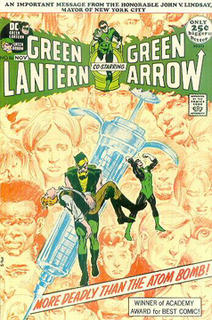
Those of you who have been long time readers will have to forgive me once more for a "repeat" post, on an annual basis today is a day that I don't feel like posting about popular culture. Today is the tenth anniversary of my mother's death, and I always feel a need to share on this day. I thought about writing something entirely original, but then I reread what I wrote in 2004 and it captures most of what I want to say. So instead of trying to reinvent the wheel, I will post the contents of a prior entry. Before you move on to the piece, I'd like to make two comments. I have added two paragraphs today (I also updated my age and the length of time since my mom died), they are in italics, and my statement below that my mother will never get to meet her grandchildren has come true. My mom will never get to meet her lovely granddaughters Nora Thekla Lindke and Clio Millie Lindke. I don't often include photos of family on this blog, but I'll make a rare exception today.

Here are Nora and Clio. Do you see how much they look like their grandmother?

This is a picture of my mom in 1971, that blob on her lap is me.
A Day to Listen to the Velvet Underground
I am only 37 years old, but today marks the end of my first ten years without a mom. That is an awkward sentence, but it best captures my sentiments. I am not an orphan, I still have a father. In fact, he should be receiving his Halloween card shortly. Yet a part of me is still very much missing, a large part. October 7th, 1998...10,7,98...those numbers loom large and ominous in my heart and this is the first year I am not completely overwhelmed by them.
My wife and I have intimate conversations often, it is one of the joys of marriage, and she and I were discussing death the other day. Her grandmother had just died at the age of 92. My wife explained it this way, "When someone dies, the world feels a little less complete. Bird songs aren't as joyful, and sunrises are slightly less beautiful." Displaying, as she often does, the magnificence of unedited, awkward, and spontaneous verbal poetry. She was also correct. C.S. Lewis opens his book A Grief Observed with another observation about death:
No one ever told me that grief felt so like fear. I am not afraid, but the sensation is like being afraid. The same fluttering in the stomach, the same restlessness, the yawning. I keep on swallowing.
I still feel this way, not everyday...today.
There are two things that are still difficult for me to do seven years after my mom died when I was 27 (she was 46).
I have a hard time remembering truly happy moments with her...on command. Happy moments enter my consciousness at random moments and seldom on the anniversary of her death. Glimpses of her nymph-like smile...brief auditory illusions of her laughter enter my mind. But the majority of my memories are neither happy nor sad, they are the memories of everyday activities, evening dinners and the question which ever looms over the head of a teenager, "Have you finished your homework?" I remember watching videotapes with her on many occasions, though none as awkward as the time we watched The Hunger, just the two of us and an erotic vampire film. I remember feeling both uncomfortable being aroused by the film, in my mom's presence, while at the same time finding the situation hilarious. This moment just came to mind. There are many more like it, I just can't remember them on demand. In all honesty, I remember my mom as a happy person, a person who added joy to the world. Which is why I have my other difficulty.
I can't understand my mom's addiction, and eventual death due to how it ravaged her body, to heroin. I try, by reading/watching/listening to and about other addicts. I know the narrative of my mom's addictive cycle, I can see each step of her hopeless journey. That's not what I can't understand. I know the things that led to her addiction. What I can't understand is the overwhelming power of it, how addiction stole my mom from me...day by day. Oddly, some really shallow things help. They are a poor substitute for true knowledge, and seem trite when I think hard on them, but they help. These things include the music of the Velvet Underground (in particular, you guessed it, Heroin) and Iggy Pop, the films Permanent Midnight (which I saw just after her death) and Trainspotting, the book and film versions of Razor's Edge, and the writings of C.S. Lewis among other things.
I am the only member of my immediate family I know of who attends church. I was raised secularly. Strange as it sounds my mom found comfort in, though she was baffled by, my belief. She once asked -- before I was a regular church attendee -- if I believed in God, expecting me (the first college student in my family) to laugh at the absurdity of the question. I told her I did and her response lingers with me to this day, "Really?" Her eyes looked at me...proud, confused, unbelieving, yet hopeful. I never was able to tell her that hope was what faith was all about ("Faith is the realization of what is hoped for and evidence of things not seen" Hebrews 11:1). It isn't about "knowledge," little of life is about actual knowledge. This is why Socrates asked us to know ourselves, that is a difficult enough task. Let alone the ability to acquire actual knowledge of something else.
I was notified of my mom's death by answering machine. I was in classes all day and didn't have a cell phone. A series of messages of an ever-worsening condition. Seizures...followed by emergency medical action. My wife and I later read the medical records to piece together a time line, to see if there was an heroic effort to save my mom. There was. It is not the best way to be notified of death, answering machine, I think it is the worst. I also wish that my mom had been buried not cremated, I would have liked to have had the chance to speak, to say my own words. Instead, I will share the two poems I think best capture the way I feel. One is gender confused (for my situation not its own) and the other is written from an older generation to a younger one, but they will have to do. In addition I would like to add a part of Philip K. Dick's author's note from A Scanner Darkly.
The first poem is by W.H. Auden (and yes it's the poem from Four Weddings and a Funeral but the scene it is in is one of my favorites in all of cinema).
Stop all the clocks, cut off the telephone,
Prevent the dog from barking with a juicy bone,
Silence the pianos and with muffled drum
Bring out the coffin, let the mourners come.
Let aeroplanes circle moaning overhead
Scribbling on the sky the message He Is Dead,
Put crepe bows round the white necks of the public doves,
Let the traffic policemen wear black cotton gloves.
He was my North, my South, my East and West,
My working week and my Sunday rest,
My noon, my midnight, my talk, my song;
I thought that love would last for ever: I was wrong.
The stars are not wanted now: put out every one;
Pack up the moon and dismantle the sun;
Pour away the ocean and sweep up the wood.
For nothing now can ever come to any good.
The second poem is by Wordsworth:
SURPRISED by joy--impatient as the Wind
I turned to share the transport--Oh! with whom
But Thee, deep buried in the silent tomb,
That spot which no vicissitude can find?
Love, faithful love, recalled thee to my mind--
But how could I forget thee? Through what power,
Even for the least division of an hour,
Have I been so beguiled as to be blind
To my most grievous loss?--That thought's return
Was the worst pang that sorrow ever bore,
Save one, one only, when I stood forlorn,
Knowing my heart's best treasure was no more;
That neither present time, nor years unborn
Could to my sight that heavenly face restore.
Wordsworth wrote Suprised by Joy (C.S. Lewis titled one of his autobiographies after this poem), for his daughter Catherine who had died at the age of four. This poem masterfully captures the grief I feel over the loss of my mom. Every time I have wonderful event in my life, I want to call her and share the news. That can never happen and it brings the event of her death immediately to mind and my sorrow and feeling of loss are renewed. Every time...without fail. My mom missed my graduation, my wife's master's, my acceptance to graduate school, my wife completing her MFA in film at USC. She will not be there to see her first grandchild, or any of the joy that her grandchildren will bring into the world.
As I stated before, I have continually looked to fiction and biographical narrative to understand my mom's addiction and that is why I am including the following by Philip K. Dick.
This has been a novel about some people who were punished entirely too much for what they did. They wanted to have a good time, but they were like children playing in the street; they could see one another of them being killed --run over, maimed, destroyed -- but they continued to play anyhow...
Drug misuse is not a disease, it is a decision, like the decision to step out in front of a moving care. You would call that not a disease but an error in judgment. When a bunch of people begin to do it, it is a social error, a life-style. In this particular life-style the motto is "Be happy now because tomorrow you are dying," but the dying begins almost at once, and the happiness is a memory..."Take the cash and let the credit go," as Villon said in 1460. But that is a mistake if the cash is a penny and the credit is a whole lifetime...
If there was any "sin" it was that these people wanted to keep on having a good time forever, and were punished for that, but, as I say, I feel that, if so, the punishment was far to great...
I don't entirely agree with P.K. Dick's statement above. Certainly I agree that "the punishment was far to great," but I disagree with his statement that "drug misuse is not a disease." I absolutely believe that an individual has some -- though not always complete -- control over the initial decision whether to use or not use a drug. Some people are self-diagnosing their psychological state and self-medicating to heal themselves, others are being "happy now because tomorrow they are dying."
It does not matter why a person first used drugs, whether for "happiness" or to feel normal, there is a point in the addict's life where the drug takes over. The addict's brain chemistry is altered and they begin to experience the disease that is addiction. I firmly believe that addiction is a disease. Drug use? Not necessarily, but addiction is. When you've seen addiction in one person, you begin to recognize it when you witness it elsewhere. It is an eerie phenomenon to see the addicted personality because no matter who the addict is, no matter what their personal pain or prior life, no matter that every person is unique, the addicted personality is strikingly familiar.
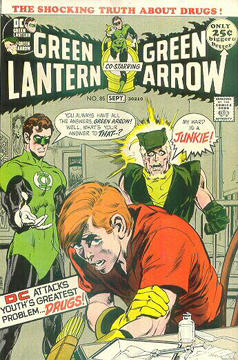
When my mom first told me of her addiction to heroin she expected me to be angry. A lot of my family was, I think the thought of my mother using heroin was too alien to them to even imagine. I think they viewed her use as somehow a failure on their part. I didn't, I only wanted to know if she was okay. By which I meant was she okay at the time she told me. My mom thought that heroin could make life more pleasant, for her it wasn't a selfish desire for more fun than anyone else was having, because she felt empty and sad on a regular basis. Heroin made her feel happy, like she could live life. But in making her think she could live life, heroin took life from her.
I don't "forgive" my mom for dying, I have never thought there was anything to forgive. I miss my mom and wish she were here. I love her and knowing that makes the missing part not so bad, because (as C.S. Lewis would say) the pain we feel now is a part of the love we have.
Thursday, October 02, 2008
Quick Cuts: Friends of Cinerati Speak Up. The Pirates vs. Ninja's Edition.
Two weeks ago was "International Talk Like a Pirate Day," or as I more inclusively call it "International Play Like a Pirate Day." Playing like a pirate, board games/video games etc., allows people to avoid irritating their co-workers and friends with random "arrs" and "avasts." In belated celebration of that day, I asked the "Friends of Cinerati" (insert Harlan Ellison-esque registered trademark here) the following question:
"When it comes to movies, do you prefer Ninja movies or Pirate movies? Given that preference, what is your favorite ninja/pirate film and why?"
"When it comes to movies, do you prefer Ninja movies or Pirate movies? Given that preference, what is your favorite ninja/pirate film and why?"
William Jones
While I enjoy both Ninja and Pirate films, I think there is a soft spot - or maybe a hard spot - in my heart for pirate films. There is a long history of them, and there are even a number of good ones. Although, the not-so-good ones tend to be enjoyable for me as well.
As for my favorite pirate film, my first thought was Captain Blood (with Errol Flynn and Olivia de Havilland). This film doesn't have all of the pirate tropes that come later, but it does have enough: parrot speak, slaves (indentured servants) rebellion, a love triangle, flamboyant clothes, sword play, duels, and sea battles. What Captain Blood does lack are some of the martial art style combats that appear in modern pirate films (a bit of ninja with the pirates, I suppose).
But then I started thinking, and I was reminded of Monty Python's Crimson Permanent Assurance - the brief "pirate" film at the opening of Meaning of Life. Crimson Permanent Assurance is short, but in a few minutes, it heaps the pirate tropes into the film, replacing the high seas and tall ships with high finance districts and tall glass buildings. It is modern adventure into piracy and capitalism. In many ways it parallels Captain Blood - and includes the popular pirate "plank walk." Keeping with the tradition of pirate movies, the aged building with its indentured employees prowl Wall Street, preying upon bloated multi-national corporations. Like all good pirate films, rebellion is at the center of the story. Pigeons replace parrots, and file cabinets replace cannon, but it's all there - even sailing into the horizon.
William Jones is a writer and editor who has worked across genres, including mystery, horror, science fiction, dark fiction, historical and young adult. He has edited several fiction anthologies and magazines. His writing also reaches into the role-playing industry, where he has published articles and gaming supplements for a variety of publishers. Presently William is the editor of Dark Wisdom magazine. When not writing and editing, he teaches English at a university in Michigan.
Aaron Rosenberg
That's a tough call! I love ninja movies but I also love pirate flicks! I guess I'd have to go with pirates, though, since I actually own four great pirate movies—Against All Flags, Captain Blood, The Sea Hawk, and Pirates of the Caribbean. The four three are classic Errol Flynn movies, of course, with great swashbuckling, rousing scenes, and lovely damsels. And Pirates of the Caribbean is just plain fun, with its undead pirates and the lovely Elizabeth Swann and the odd but amusing Captain Jack Sparrow. I love pirate movies because of the action, the daring, and the fact that often you wind up rooting for the bad guy!
Aaron Rosenberg has written novels for Star Trek, StarCraft, WarCraft, Warhammer, and Exalted. He also writes roleplaying games, children’s books, and educational books. He lives and works in New York City.
Richard Scott Nokes
I prefer pirate movies, of course. By definition, good ninja movies cannot be seen, so silently do they slip off into the night. A really good ninja movie would have to be viewed frame-by-frame to even catch a glimpse of the ninjas.
My favorite pirate movie is Yellowbeard. While it is actually a rather bad film, it does have the last film appearance of Marty Feldman, perhaps the most handsome comic actor to grace the silver screen. In fact, the history of film should be divided into BM (Before Marty) and AM (Anno Marty).
Richard Scott Nokes is a professor of medieval literature at Troy University. Dr. Nokes enjoys reading, film, and all things medieval. He is interested in looking at representations of the medieval in modern culture, a phenomenon he calls Popular Medievalism.
Monday, September 22, 2008
What's in a Film Rating: 4 Stars? Five Stars? Letter Grade? or Jumping Happy Man?
Last week, Roger Ebert posted a journal entry discussing his own use of the four-star rating system and contrasted it with the San Francisco Chronicle's "Little Man." The post makes for interesting reading. Go read it and come back...
Did you notice the something interesting about Ebert's methodology? Here's the quote, "I consider 2.5 stars to be thumbs down; they consider 62.5 to be favorable." For Ebert 2.5 Stars is "thumbs down." I find this quite odd, and you should too for a few reasons. First, it is lunacy to use a system that provides a median value and have anything at or above that median value be "thumbs down." Second, it is counter-intuitive to American audiences, particularly those in the GPA obsessed era, to think of a 2.5 (mid-point between a C+ at 2.3 and a B- at 2.7) as a failing grade. Third, Ebert admits that he once "considered 2.5 stars to be a perfectly acceptable rating for a film I rather liked in certain aspects." This is an admission that demonstrates an inconsistency in his rating system. Some might argue growth, but I'd argue inconsistency since one reading his older reviews might misinterpret the meaning if they are familiar with his current use of 2.5 stars. The internets, and Lexis/Nexis, allow us to do such things without buying books collecting his reviews -- books which can be "retconned" easily.
For my part, I can't understand why any critic using the 4 point system wouldn't automatically convert any such ratings into a grade point scale. I know I do it -- almost subconsciously. A four star rating is an A, a 3 star is a B, 2 stars C, 1 star D, and no stars is an F. I'll avoid most D movies, but if there's no grade inflation a C should be "average."
And essentially this gets to the core of what I'm trying to say, which is to say that Ebert -- as he alludes in the title to his entry -- does indeed rate too highly. He's a grade-inflator. If he likes a movie, it's automatically a B or better. From a less skilled critic, I would blame it on a lack of subtlety of thought or to an exaggeration of the critic's Primal Screen. In this case, I'll write it off as another case of grade inflation...something we certainly need less of in our teachers, and apparently our reviewers.
If you haven't guessed, this is why I use a 5 point scale. That way a 2.5 might be a film that has some small elements I enjoy, but it is still a film that shouldn't be recommended. But then MetaCritic, Rotten Tomatoes, and I get into a disagreement. I think that a median rated film should be viewed as a median film, neither good nor bad. I don't like binary systems. Certainly, there are some films I would recommend to everyone and there are some films I would warn everyone to avoid. But there are also some films that I would recommend for some people and not others and that doesn't necessarily mean they are bad films, just that they aren't universal.
Did you notice the something interesting about Ebert's methodology? Here's the quote, "I consider 2.5 stars to be thumbs down; they consider 62.5 to be favorable." For Ebert 2.5 Stars is "thumbs down." I find this quite odd, and you should too for a few reasons. First, it is lunacy to use a system that provides a median value and have anything at or above that median value be "thumbs down." Second, it is counter-intuitive to American audiences, particularly those in the GPA obsessed era, to think of a 2.5 (mid-point between a C+ at 2.3 and a B- at 2.7) as a failing grade. Third, Ebert admits that he once "considered 2.5 stars to be a perfectly acceptable rating for a film I rather liked in certain aspects." This is an admission that demonstrates an inconsistency in his rating system. Some might argue growth, but I'd argue inconsistency since one reading his older reviews might misinterpret the meaning if they are familiar with his current use of 2.5 stars. The internets, and Lexis/Nexis, allow us to do such things without buying books collecting his reviews -- books which can be "retconned" easily.
For my part, I can't understand why any critic using the 4 point system wouldn't automatically convert any such ratings into a grade point scale. I know I do it -- almost subconsciously. A four star rating is an A, a 3 star is a B, 2 stars C, 1 star D, and no stars is an F. I'll avoid most D movies, but if there's no grade inflation a C should be "average."
And essentially this gets to the core of what I'm trying to say, which is to say that Ebert -- as he alludes in the title to his entry -- does indeed rate too highly. He's a grade-inflator. If he likes a movie, it's automatically a B or better. From a less skilled critic, I would blame it on a lack of subtlety of thought or to an exaggeration of the critic's Primal Screen. In this case, I'll write it off as another case of grade inflation...something we certainly need less of in our teachers, and apparently our reviewers.
If you haven't guessed, this is why I use a 5 point scale. That way a 2.5 might be a film that has some small elements I enjoy, but it is still a film that shouldn't be recommended. But then MetaCritic, Rotten Tomatoes, and I get into a disagreement. I think that a median rated film should be viewed as a median film, neither good nor bad. I don't like binary systems. Certainly, there are some films I would recommend to everyone and there are some films I would warn everyone to avoid. But there are also some films that I would recommend for some people and not others and that doesn't necessarily mean they are bad films, just that they aren't universal.
Friday, September 19, 2008
Quick Cuts: Friends of Cinerati Speak Up
In this entry in newly renamed "Quick Cuts," the friends of the Cinerati blog answer the following question:
"Was there a particular book (or television show, or film) that you read (or watched) as a child that inspired you into your current career?"
How about you Cinerati readers out there? What do you have to say?
"Was there a particular book (or television show, or film) that you read (or watched) as a child that inspired you into your current career?"
David Chute
I sometimes think the key issue is at which stage one's development gets arrested. I liked monsters (and Famous Monsters) as a kid but was never into the classic "guy movies," the war films and Westerns that were basically about groups of boys playing in the backyard, with no gurls allowed. For me the light bulb went on watching Ann-Margret in "Bye Bye Birdie." "Viva Las Vegas" and "Dr. No" were not far behind, and Claudia, Romy and Barbara (Bouchet) were strong favorites. But that opening back-projected image of A-M being massaged by a wind machine was the real thunderbolt. My interest in movies ever since has been as much about sex as anything else. Make of this what you will.
David Chute is a film critic who has written for LA Weekly, Premiere Magazine (both print and online), The Los Angeles Times, Film Comment, and Vanity Fair. In addition to his work as a critic, David has also written press kits for films like THE SHADOW, HARD TARGET, JACKIE BROWN, and IRON MONKEY.

Matt Forbeck
The blue book version of Dungeons & Dragons launched me into the world of games, fantasy, and adventure and swept me through my middle-school and teenage years, right through into adulthood. I don't know if you can call the many varied things I do a career in the traditional sense, but if it hadn't been for that thin, little booklet my friend's mom picked up for Christmas on a blue-light special, I'd have probably wound up in engineering or law instead!
Matt Forbeck has worked full-time on games and fiction since 1989. Projects Matt has worked on have been nominated for 23 Origins Awards and won 12. This includes the Best Roleplaying Game for Deadlands and The Lord of the Rings Roleplaying Game, Best Miniatures Rules for Warzone and The Great Rail Wars, Best Roleplaying Adventure for Independence Day, Best Fantasy Board Game for Genestealer, and Best Short Story for “Prometheus Unwound” from The Book of All Flesh.

Dale Launer
Woody Allen's Take the Money and Run. It really wasn't very funny, or coherent, no plot and it looked cheap. It was inspirational because I thought "Shit, I could do that!"
Dale Launer is writer and director of motion pictures. His movie-biz break came after the producing team of Lancaster/Wagner optioned his screenplay of RUTHLESS PEOPLE. It was produced and released in 1986. This was followed by BLIND DATE, for which Launer neither takes blame nor credit since it was heavily re-written. Launer followed this effort by optioning the rights to the film BEDTIME STORY, which was re-written and re-titled to DIRTY ROTTEN SCOUNDRELS (which he also produced). He also wrote and directed LOVE POTION #9, which was followed by MY COUSIN VINNY, which he wrote and produced.
He is currently finishing up TOM'S NU HEAVEN, a movie he made very, very independently.

Richard Scott Nokes
I think I was more influenced by people and events then by a single book, mostly because I was such a bookworm it would have taken a lot for one book to influence me over all the others.
Even though it's a cliche, The Lord of the Rings was probably the most influential book. As a child I really identified strongly with Sam, and liked to imagine when I grew older I would construct an underground hobbit hole and live in it. Even though I've grown up to have a career as more than of wizard than a hobbit, that book created my initial interest in the medieval.
Richard Scott Nokes is a professor of medieval literature at Troy University. Dr. Nokes enjoys reading, film, and all things medieval. He is interested in looking at representations of the medieval in modern culture, a phenomenon he calls Popular Medievalism.

Susan Palwick
Star Trek. (The original one; my third crush was on Spock. My first crush was on a parrot keeper in Florida, and my second crush was on Don Rickles. Yeah, I'm weird. That's why I write science fiction.)
Susan Palwick is a Science Fiction and Fantasy author who holds a doctoral degree from Yale. She currently teaches as an associate professor of English at the University of Nevada, Reno. She is the author of three novels (FLYING IN PLACE, THE NECESSARY BEGGAR, and SHELTER) and a collection of short stories entitled (THE FATE OF MICE). She is currently working on her fourth novel, DRIVING TO NOVEMBER, which is historical fantasy set in central Nevada. Her fiction often centers on concepts of identity, belonging, and sense of place.

How about you Cinerati readers out there? What do you have to say?
Play Like A Pirate Day: Cinerati's Replacement for Talk Like A Pirate Day
Nothing is more irritating than hearing your co-workers say, "Aaaargh, Avast, Ye Mateys." Potentially worse is the evergreen, "Dead Men Tell No Tales...Yar." For years, we have be scourged with International Talk Like A Pirate Day. It is time for that phenomenon to die.
That doesn't mean that we should no longer have a day celebrating piracy and the outlaw attitude, or as the founder of Talk Like A Pirate Day called it "Piratitude." Pirates are still awesome, it's just talking like a pirate that is lame. So we hear at Cinerati have decided to reclaim the holiday by creating "International Play Like A Pirate Day."
From now on September 19th will be a day when families and friends get together and enjoy some form of Piratical Recreation. Such recreation can include celebrating by talking like pirates, certainly role play (in the traditional sense) is play. Our celebration is inclusive, not exclusive. But families and friends will no longer be limited to listening to the "yars" and "aaarghs" of everyone around them. Some might choose more formal ludographic participation -- that's game play.
We here at Cinerati have some recommended Play Like A Pirate Day activities. These include:
If you don't own a copy of Broadsides, try one of these two excellent pirate games from GMT Games.
Or your can sing "For I am a Pirate King!"
That doesn't mean that we should no longer have a day celebrating piracy and the outlaw attitude, or as the founder of Talk Like A Pirate Day called it "Piratitude." Pirates are still awesome, it's just talking like a pirate that is lame. So we hear at Cinerati have decided to reclaim the holiday by creating "International Play Like A Pirate Day."
From now on September 19th will be a day when families and friends get together and enjoy some form of Piratical Recreation. Such recreation can include celebrating by talking like pirates, certainly role play (in the traditional sense) is play. Our celebration is inclusive, not exclusive. But families and friends will no longer be limited to listening to the "yars" and "aaarghs" of everyone around them. Some might choose more formal ludographic participation -- that's game play.
We here at Cinerati have some recommended Play Like A Pirate Day activities. These include:
1) Play a pirate themed roleplaying game. In particular, we recommend Pinnacle Entertainment Group's excellent PIRATES OF THE SPANISH MAIN. This is highly recommended for those who want to talk like a pirate. It encourages such behavior in an appropriate venue. Besides, by role playing (in the game sense) participants can act far more Piratical than is allowed under modern mores and laws.
If you want a more heroic bent with mystical aspects, you can always play Pinnacle's 50 Fathoms instead.

2)If you own a copy -- and not many do -- play an exciting session of the classic Broadsides and Boarding Parties

If you don't own a copy of Broadsides, try one of these two excellent pirate games from GMT Games.
3) Blackbeard: The Golden Age of Piracy. The game is a redesign of Avalon Hill's classic game of the same name. The new version is suitable for 1 to 5 players and has less "down time" for players who aren't in their current turn.

4) Winds of Plunder is a quick and fun game that is more in the style of the "Eurogame" than Blackbeard or Broadsides.
5) You can play the previously reviewed Sword and Skull.
6) Lastly, we recommend watching one of your favorite pirate films. We've included some of our favorites in the carousel below.
Or your can sing "For I am a Pirate King!"
Thursday, September 18, 2008
Shatner on Shatner at LA Times
Geoff Boucher has a post covering a recent conversation he had with William Shatner over at the LA Times' HERO COMPLEX blog. Naturally, the subject of Shatner's disappointment in being excluded from the JJ Abrams movie is discussed. Shatner wishes he had been Bobby Ewing'ed into the movie, as does -- secretly for some -- everyone else.
Everyone, dammit!
Including JJ!
Some random blog carried a story, based on what a best friend said he heard from his cousin, that she read on Ain't It Cool news that stated that JJ had a screenplay where Kirk comes back as his virile young self, seduces a couple of women, and then rapidly ages. Then he realized he couldn't use it because he'd already done that narrative in FOREVER YOUNG. -- If you believe this regarding the screenplay, some huckster wants to talk about a real estate venture with you.
One finds it difficult to imagine STAR TREK without Shatner. For some, like the editors at GEEK MONTHLY, Shatner is the franchise.
Here at Cinerati, we're Shatner fans first -- STAR TREK fans second. KINGDOM OF THE SPIDERS is more palatable than ST: GILLIGAN'S ISLAND (aka ST: VOYAGER). Denny Crane is pure genius.
But we know that Shatner is a controversial figure. It's fun reading through the comments section, fake former cast member posts and all. They are really amusing and indicative of how first impressions with actors in public places can shape one's opinions regarding the merit of an individual.
For the record, I have two Shatner autographs. One attained through his assistant and one signed in person while Shatner was suffering from a massive flu that failed to prevent him from signing autographs at GenCon SoCal. Shatner's dedication to his fans, and to exposure certainly, was admirable. Far more admirable than Walter Koenig's "reading" from his as yet unpublished (if it will ever be published) novel. Koenig's act of reading the book, which contained an annoying ad nauseum "itsy bitsy spider" refrain, before adoring fans seemed more selfish than any act that Shatner has been accused of perpetrating.
The most credible description, in my opinion, of Shatner behind the camera is the book CAPTAIN QUIRK which shows him as odd, at odds with the non-leads, friendly with the guest stars, and friends with the extras and stunt men. QUIRK presents a version of Shatner that isn't fawning, but allowed me to keep my own hero worship, it also matched my personal experience.
For a quote that best personifies what we here at Cinerat love about the Shatner, let me quote Cory from the HERO COMPLEX comments section:
As Stan Lee would put it, "'Nuff Said."

Everyone, dammit!
Including JJ!
Some random blog carried a story, based on what a best friend said he heard from his cousin, that she read on Ain't It Cool news that stated that JJ had a screenplay where Kirk comes back as his virile young self, seduces a couple of women, and then rapidly ages. Then he realized he couldn't use it because he'd already done that narrative in FOREVER YOUNG. -- If you believe this regarding the screenplay, some huckster wants to talk about a real estate venture with you.
One finds it difficult to imagine STAR TREK without Shatner. For some, like the editors at GEEK MONTHLY, Shatner is the franchise.
Here at Cinerati, we're Shatner fans first -- STAR TREK fans second. KINGDOM OF THE SPIDERS is more palatable than ST: GILLIGAN'S ISLAND (aka ST: VOYAGER). Denny Crane is pure genius.
But we know that Shatner is a controversial figure. It's fun reading through the comments section, fake former cast member posts and all. They are really amusing and indicative of how first impressions with actors in public places can shape one's opinions regarding the merit of an individual.
For the record, I have two Shatner autographs. One attained through his assistant and one signed in person while Shatner was suffering from a massive flu that failed to prevent him from signing autographs at GenCon SoCal. Shatner's dedication to his fans, and to exposure certainly, was admirable. Far more admirable than Walter Koenig's "reading" from his as yet unpublished (if it will ever be published) novel. Koenig's act of reading the book, which contained an annoying ad nauseum "itsy bitsy spider" refrain, before adoring fans seemed more selfish than any act that Shatner has been accused of perpetrating.
The most credible description, in my opinion, of Shatner behind the camera is the book CAPTAIN QUIRK which shows him as odd, at odds with the non-leads, friendly with the guest stars, and friends with the extras and stunt men. QUIRK presents a version of Shatner that isn't fawning, but allowed me to keep my own hero worship, it also matched my personal experience.
For a quote that best personifies what we here at Cinerat love about the Shatner, let me quote Cory from the HERO COMPLEX comments section:
William Shatner is made of pure awesome. Even awesome thinks Bill is awesome.
Cheers to you for years of entertainment, laughs and all-round awesomeness.
As Stan Lee would put it, "'Nuff Said."

Subscribe to:
Posts (Atom)