Monday, October 15, 2007

Ursula K LeGuin, Cory Doctorow, and Copyright

I have been wondering for some time now just how long the SF/Fantasy community will allow themselves to be swindled by Cory Doctorow's attempts to undermine copyright protections for writers. He's been incredibly crafty in his arguments. He has adeptly, and accurately, demonstrated how corporations often claim the copyright instead of the authors who created a product, but he uses this to shift the issue away from "creator ownership" issue into an "us vs. the corporate overlords" argument. Doing so he simultaneously points out a genuine injustice while misdirecting our ire toward the concept of copyright, which in fact protects creators (at least when corporate overlords don't hijack the rights). He has also pointed out that SF/Fantasy fans tend to both download and purchase hard copies of the things they like. In essence, the SF/Fantasy fan steals a peek, then buys the product, thus doing no "real" damage to the right holder.

I have never found Mr. Doctorow's arguments, and he has others, all that convincing. They seem to be overly concerned with "audience" rights and not with creator rights, which are necessary if people want to be able to make a living from this stuff. Certainly, there is some pretty wacky copyright legislation out there (lifetime plus how many years?), but that doesn't mean that the creator of a product doesn't have the right to profit from his or her creation. They should, and do, and current laws protect such rights.

In the past, the majority of the people I've read who seem to have any agreement with me have been corporate shills, and I don't want to just hang out with corporate shills -- or just them and Harlan Ellison (registered trademark) for that matter. So you can imagine my joy at finding that Ursula K. LeGuin also finds Mr. Doctorow's crusade a little too aggressive. It appears that Mr. Doctorow printed "in its entirety, a one-paragraph story that Ms Le Guin sent to the fanzine Ansible." LeGuin took issue and Mr. Doctorow eventually took action and apologized. You can read the original story at LeGuin's website.

LeGuin has accepted Mr. Doctorow's apology, but I'd like you to look at a couple of key phrases in Doctorow's apology which hint that he is also practicing more than a little self-righteous self-justification.

Andrew Burt, the person whom Ms Le Guin chose to communicate the matter to me, is someone with whom I had put in a killfile following an altercation. I delete all emails from him unread, and if he sent me a message, I did not see it.


Unless Andrew Burt (you can read a copy of a letter he wrote Jerry Pournelle here) and Mr. Doctorow engaged in a serious brawl, it seems a bit petty for Mr. Doctorow to have put his emails in a "killfile." I don't believe that Judd Apatow put Mark Brazill in his killfile, even after being told to "Get cancer." But I don't know the nature of the "altercation," I just know that Mr. Doctorow has used a word which has some heavy implications. Though given his frequent use of rhetorical techniques which might make Gorgias blush, I think it might be little more than a heated email/comment section/message board flame war.

In fact, it seems that Burt's major sin (according to the Doctorow piece) is that Burt believes in copyright protection, "Burt is the Science Fiction Writers of America VP who had previously sent a fraudulent takedown notice that resulted in my novel being removed from an Internet document server." So Burt tries to protect Doctorow's copyright, making an error that forces a takedown notice, something LeGuin describes as "An overworked committee mistakenly identified a few works, among many, as infringing copyright; the mistakes were promptly admitted and redressed, with apologies." That appears to be our "altercation." Which makes me think that Mr. Doctorow is a bit like Mark Brazill in all of this, even his apology seems snide and canned. This is implied by his assertion that, "My understanding is that she is unsatisfied and remains upset with me." When LeGuin is on the record as writing, "It may be a bit clouded with arguments and self-justification, but apologising is hard, and apologies are rare and valuable. I accept his in all good faith." Who seems to be the one most in need of justification here?

As for me, I agree with LeGuin's hope that, "In my view, the best thing that could come out of my brush with the Doctorow Doctrine would be this: the honorable reinstatement of the SFWA e-piracy committee, with an expression of appreciation from SFWA officers and members of the honest and effective work they have done for us for so long."

Friday, October 12, 2007

Does DEXTER IN THE DARK Spell Lights Out for the Franchise?

Dexter is back -- or most of him is back—in DEXTER IN THE DARK: A Novel(those of you who support independent bookstores can buy it at Mysterious Galaxy), Jeff Lindsay’s latest installment detailing the brutal exploits of his charmingly witty and only half-heartless serial killer, preying and slaying by his uniquely strict if lethal Harry Code of Conduct. This newest book finds Dexter in crisis – not of conscience, of course. He doesn’t have one. But in a crisis of identity, for Dexter’s mysterious inner fiend -- that giddy playmate that guides his death-dealing and leaves him elated after bouts of marvelous moonlit mayhem –- Dexter’s Dark Passenger is absent without leave.

As if prepping for a wedding and fatherhood aren’t enough to put Dexter off his game, a peculiar crime scene with macabre theological overtones sends Dexter’s Dark Passenger scurrying away, with troubling results for Dexter and his readers. Being out of communion dulls Dexter’s normally razor instincts, humor, and murderous talents when he, and we, need them most. Once again, he attracts the attention of a very dangerous intelligence, this time with a taste for children, but don’t expect the usual combination of chase, wit, twist, and surprise. Dexter is not only in the dark, he’s down right depressed. Jeff Lindsay takes a daring departure from the optimistic mayhem of America’s favorite avenging monster, but it’s a sad, fumbling new path.

Unlike DARKLY DREAMING DEXTER(at Mysterious Galaxy) and DEARLY DEVOTED DEXTER (at Mysterious Galaxy), DEXTER IN THE DARK leaves the complex realm of psychological vagary and broken psyches to dabble in something entirely outside Dexter’s universe: theology. Sans Dark Passenger, Dexter is befuddled, frustrated, and at risk of becoming normal, with all the emotions and vulnerabilities of any normal person, yet his world turns suddenly (and unjustifiably, despite ample narrative exposition) supernatural. Just when Dexter has no powers (not insight, not humor, and the boy can’t even seem to kill), Miami is overrun with them. The sum effect is a kind of amorphous melancholy, both for Dexter and his dear readers. Little help comes from the other characters made so vibrant in previous pages – the few times Dexter isn’t shuffling around in his own empty head, he’s avoiding conversations or being himself avoided. If you crave the slay-and-play criminology twice before scribed so ingeniously by Jeff Lindsay’s pen, brace yourself for page after unfunny, derivative, ill-conceived, if-it-had-to-be-supernatural-why-couldn’t-it-be-Lovecraftian-good page.

Spoiled until now navigating two books of vicious, psychotic violence on the shoulders of a fantastically entertaining monster, this clumsy foray into Anne Rice/DaVinci Code-esque old-god theology and conspiracy is by comparison plodding, simplistic, and dull. Lindsay abandons his established finesse of raising questions without answers, of suggestion and nuance, of abrasive yet oddly loveable and infinitely entertaining characters, and instead offers an obtuse, paint-by-numbers explanation for evil which abdicates Dexter from all moral responsibility for who and what he is, for his adherence to or abandonment of the Harry Code, and ultimately advocates an incoherent pseudo-loyalty to controlled evil. If Harry had read this book, he would have killed Dexter on sight. I found myself by the end rooting for the kids to get run over, shot, or drowned. Poor Rita.

For those who enjoy the Cthulhu mythos or tales with supernatural explanations, DEXTER IN THE DARK might be a fun romp, but this reader prays, to whatever Dark Gods will listen, that Lindsay returns to the world he tells so well –- Dexter’s Miami: wickedly funny, refreshingly mortal, splendidly violent, and mildly-sociopathic.

Wednesday, October 10, 2007

A History of Pulp Role Playing Games Part 1: The Dawn of Roleplaying Games

Those who wonder how old the connection between "The Pulps" and Roleplaying Games is need look no further than the introduction to the original (three book) Dungeons and Dragons boxed set. In this introduction, Gary Gygax describes who might be interested in playing his new creation:

These rules are strictly fantasy. Those wargamers who lack imagination, those who don't care for Burroughs' Martian adventures where John Carter is groping
through black pits, who feel no thrill upon reading Howard's Conan saga, who do
not enjoy the de Camp & Pratt fantasies or Fritz Leiber's Fafhrd and the Gray
Mouser pitting their swords against evil sorceries will not be likely to find
DUNGEONS and DRAGONS to their taste.


The introduction is filled with names near and dear to the pulp aficionado. Edgar Rice Burrough's character John Carter first appeared in the February through July issues of The All-Story in 1912. TSR also designed an early miniatures wargame on the adventures of John Carter, it was called Warriors of Mars.


Robert E. Howard's famous barbarian Conan debuted at the height of his power in Weird Tales December 1932 issue in "The Phoenix on the Sword," a rewrite of a rejected Kull story titled "By This Axe I Rule." In the tale, Conan is already a mature man and king of Aquilonia and deals swift justice to a band of would be assassins. If you look carefully at the cover of the issue, you will notice that the advertised story, "Buccaneers of Venus," is a John Carter pastiche by Otis Adelbert Kline. Kline eventually became Howard's literary agent. As a gamer, I can't help but speculate that the amphibious antagonist on the cover is an inspiration behind the Kuo-Toa in the D&D game (H.P. Lovecraft's Deep Ones are another obvious influence.)


L. Sprague deCamp and Fletcher Pratt's everyman hero psychologist/enchanter Harold Shea wandered into his first fantastic landscape in the May 1940 issue of Unknown.


To be fair, most fantasy of the pre-Tolkien era was published in the pulps and as influential as these early fantasy tales were to the Dungeons and Dragons game (and are to the current D&D Eberron setting), they are not what most people mean when they are referring to "Pulp Roleplaying Games." Which is a shame since the pulps were filled with dynamic, original, and action packed tales that many modern Game Masters should look to for inspiration. Not every adventure need be a macguffin quest inspired by Tolkien's Lord of the Rings.

The lack of familiarity with, and I mean familiarity with and not awareness of, the underlying pulp inspirations that influenced the creation of role playing games is one of the largest failings of some of today's game designers. When I read Jesse Decker and David Noonan's discussion regarding why modern Dungeons and Dragons avoids explicit attempts at humor in its rulebooks, I near wept.

At no time was there a discussion about why the early rulebooks had humor in them, as opposed to the central reason they gave why there isn't humor any longer. They write, "In short, we worry that it isn't necessarily part of the shared D&D experience, and we don't want to mess up the flow of the game at the table." And in writing that one sentence, they ignore one of the major literary influences on the development of the Dungeons and Dragons game, the stories of Harold Shea by deCamp and Pratt. How can stories, and the tone they inspired, be not "necessarily part of the shared D&D experience?" Without these stories, you might not even have the game itself, particularly considering the deCamp/Pratt stories.

I am not saying this because I believe Gary Gygax to have been intimately familiar with Fletcher Pratt's Naval War Game, though he may have been. I am saying this because of two things. First, the underlying conceit of the Harold Shea stories themselves was probably inspirational to the creation of the "proto role playing game." Second, the humor that continually reared its head in early D&D books was the same kind of humor one found in the deCamp/Pratt stories.

To fully understand the above statement, you must understand the central conceit of the Harold Shea stories. Essentially, the central conceit is that Harold Shea (and his mentor) are able to travel to other dimensions -- many of which contain magic -- if they can alter their perceptions through the analysis of particular equations and logical proofs. When Harold Shea studies his first proof, which sends him to Ragnarök, a gamer can easily see the parallel between Shea looking at the pages upon pages of logic problems and their own experience looking at pages upon pages of rules. When roleplayers study the rules of a game, it is so they can fluidly experience the milieu the game is offering. This is exactly what Shea does in the stories. It should be noted that J. Eric Holmes, the editor of the first Dungeons and Dragons Basic Set, wrote in his book Fantasy Roleplaying Games (Hippocrene Books, 1981 pp. 209-210):

"Years before Dungeons and Dragons was invented, L. Sprague de Camp wrote a story called "Solomon's Stone," published in 1942 in the magazine Unknown Worlds...The story was a fantasy in which the hero exchanges personalities with his alter-ego in the astral world. Here he discovers that the astral self of each living person on earth is the self he imagines or fantasies himself to be in his most private dreams...I am always reminded of "Solomon's Stone," though, when I see the bizarre and wonderful characters created by my friends for the game."


Holmes, who was an adapter and not a creator of the rules, saw the connection between one of de Camp's stories and the underlying concept of role playing games. It isn't hard to imagine Gary Gygax and Dave Arneson being inspired by a character who even more explicitly used a "rules set" to experience fantasy adventure.

Decker and Noonan are fine designers, and they have developed some of my favorite products, but they seem to have lost the connection between the pulps and the game they are working on. Dungeons and Dragons is the scion of pulp literature and we do the game a disservice when we don't acknowledge this fact. And we do the players of the game a disservice when we don't point them in the direction of the things that inspired their hobby. Early editions of the game included bibliographies of inspirational materials, many other roleplaying games still do, but the three core books of the Dungeons and Dragons game lack such references (the Eberron sourcebook does contain some). Decker and Noonan may be aware that roleplaying was influenced by pulps, but they aren't familiar with what those pulps had to offer and it shows in their reticence to include humor in the D&D experience.

Tuesday, October 09, 2007

Listen to the Geekerati Episode on Popular Medievalism

Last night we had a wonderful chat with Professor Richard Scott Nokes of Troy University about Popular Medievalism. We talked about what it is and where it is, and it's everywhere. We also talked about the connection between playing Dungeons and Dragons and studying Medieval History, and we got a little hint that the reason we call the Middle Ages the Dark Ages is due to bad press from certain people during the Renaissance.

We discussed a lot of different topics, but we spent a great deal of time discussing some of our favorite Popular Medieval movies. Some of the movies we mentioned were: Excalibur, The Lion in Winter, A Knight's Tale, Henry V, The Last Valley, The Lord of the Rings Trilogy, The Sword and the Sorcerer, Krull, and Ladyhawke.

What are some of your favorite Popular Medieval films? Books? Comics? Television Shows?

Listen to the episode and let us know.

Monday, October 08, 2007

Some Thoughts Before We Return to Posts About Popular Culture

When I put up my post regarding my mom's death, it is a very personal action in more ways than one. It is personal in that I am revealing a little bit of my life to the world, but it is also personal in that I am only writing about how I feel (or felt) about the event. In a way, this is very unfair to a number of people that I care deeply about who were also affected by my mom's death.

I am not writing about how they felt, or even about how we dealt with the situation together. I am writing just from my perspective. But I am do this because it is the only point of view I really have. I have no real way of knowing what these other people are experiencing, nor what they experienced, because I have had different experiences. My dad knew my mom years before I did, and I knew her for years before my sister did. Each of us, in a very real way, came to know a very different woman. That said, I would like to try to share what I think some of those differences are.

I am 9 years 8 month and 8 days older than my sister Krista. I was born on "Elvis' Birthday" and she was born on the anniversary of his death, January 8th and August 16th for those of you wondering. Which means that I have 9-plus years of memories about my mom that Krista will never have. It also means, because like many 20-somethings I was very independent of my family for a time, that Krista has some memories that I will never have. And a lot of the memories that my sister has are of my mom's struggle with, and loss to, addiction.

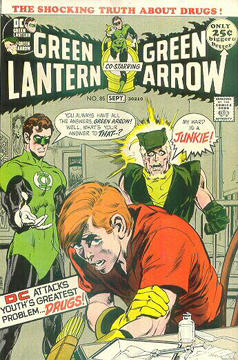
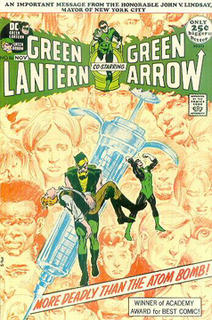
I have no personal experience of what it is like to live in the same apartment as a heroin addict, for which I am grateful. Moreover, I have no experience of what it is like to be a teenager living in the same apartment as a heroin addict. In the grand scheme of life, it is probably one of the last things I would ever want to experience. But my sister did just that, the combination of love and frustration must have been near unbearable. I don't know how I would have dealt with the situation, I hope I would do alright. My sister did much better than I imagine the average person in her circumstances would have.

It is one of the many things I admire about my sister, that she was able to survive that situation. I actually don't think my sister understands how much I admire her period, let alone for her strength in this situation. I think she sometimes thinks that I look down on her for not making some of the same choice that I have made, but that isn't true at all. Being almost 10 years older than my sister meant that I spent a lot of time babysitting her, taking her to the park, or even to concerts I wouldn't have otherwise attended. I changed her diapers on many occasions and must seem, in some way, to be a bit of a parental figure to her and, given my stodginess and geekdom, not even the "cool" parent. So I can see why my opinion is important to her, and how my own life experiences might make her think that I believe the choices I made are the only way to happiness. But I don't believe that at all.

In fact, if people knew a formula to happiness, there wouldn't be philosophy and a lot of life would be a lot easier.

Sunday, October 07, 2007

Nine Years Ago Today.


Those of you who have been long time readers will have to forgive me for a "repeat" post, but today is a day that on an annual basis I don't feel like posting about popular culture. Today is the ninth anniversary of my mother's death, and I always feel a need to share on this day. I thought about writing something entirely original, but then I reread what I wrote in 2004 and it captures most of what I want to say. So instead of trying to reinvent the wheel, I will post last year's entry.
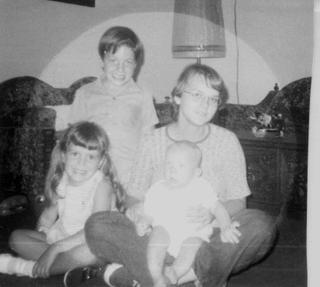
This is a picture of my mom in 1971, that blob on her lap is me.

A Day to Listen to the Velvet Underground

I am only 34 years old, but today marks the end of my first seven years without a mom. That is an awkward sentence, but it best captures my sentiments. I am not an orphan, I still have a father. In fact, he should be receiving his Halloween card shortly. Yet a part of me is still very much missing, a large part. October 7th, 1998...10,7,98...those numbers loom large and ominous in my heart and this is the first year I am not completely overwhelmed by them.

My wife and I have intimate conversations often, it is one of the joys of marriage, and she and I were discussing death the other day. Her grandmother had just died at the age of 92. My wife explained it this way, "When someone dies, the world feels a little less complete. Bird songs aren't as joyful, and sunrises are slightly less beautiful." Displaying, as she often does, the magnificence of unedited, awkward, and spontaneous verbal poetry. She was also correct. C.S. Lewis opens his book A Grief Observed with another observation about death:


No one ever told me that grief felt so like fear. I am not afraid, but the sensation is like being afraid. The same fluttering in the stomach, the same restlessness, the yawning. I keep on swallowing.


I still feel this way, not everyday...today.

There are two things that are still difficult for me to do seven years after my mom died when I was 27 (she was 46).

I have a hard time remembering truly happy moments with her...on command. Happy moments enter my consciousness at random moments and seldom on the anniversary of her death. Glimpses of her nymph-like smile...brief auditory illusions of her laughter enter my mind. But the majority of my memories are neither happy nor sad, they are the memories of everyday activities, evening dinners and the question which ever looms over the head of a teenager, "Have you finished your homework?" I remember watching videotapes with her on many occassions, though none as awkward as the time we watched The Hunger, just the two of us and an erotic vampire film. I remember feeling both uncomfortable being aroused by the film, in my mom's presence, while at the same time finding the situation hilarious. This moment just came to mind. There are many more like it, I just can't remember them on demand. In all honesty, I remember my mom as a happy person, a person who added joy to the world. Which is why I have my other difficulty.

I can't understand my mom's addiction, and eventual death due to how it ravaged her body, to heroin. I try, by reading/watching/listening to and about other addicts. I know the narrative of my mom's addictive cycle, I can see each step of her hopeless journey. That's not what I can't understand. I know the things that led to her addiction. What I can't understand is the overwhelming power of it, how addiction stole my mom from me...day by day. Oddly, some really shallow things help. They are a poor substitute for true knowledge, and seem trite when I think hard on them, but they help. These things include the music of the Velvet Underground (in particular, you guessed it, Heroin) and Iggy Pop, the films Permanent Midnight (which I saw just after her death) and Trainspotting, the book and film versions of Razor's Edge, and the writings of C.S. Lewis among other things.

I am the only member of my immediate family I know of who attends church. I was raised secularly. Strange as it sounds my mom found comfort, though she was baffled by it, in my belief. She once asked if I believed, expecting me (the first college student in my family) to laugh at the absurdity of the question. I told her I did and her response lingers with me to this day, "Really?" Her eyes looked at me...proud, confused, unbelieving, yet hopeful. I never was able to tell her that hope was what faith was all about ("Faith is the realization of what is hoped for and evidence of things not seen" Hebrews 11:1). It isn't about "knowledge," little of life is about actual knowledge. This is why Socrates asked us to know ourselves, that is a difficult enough task. Let alone the ability to acquire actual knowledge of something else.

I was notified of my mom's death by answering machine. I was in classes all day and didn't have a cell phone. A series of messages of an ever-worsening condition. Siezures...followed by emergency medical action, my wife and I later read the medical records to piece together a timeline, to see if there was an heroic effort to save my mom. There was. It is not the best way to be notified of death, answering machine, I think it is the worst. I also wish that my mom had been buried not cremated, I would have liked to have had the chance to speak, to say my own words. Instead, I will share the two poems I think best capture the way I feel. One is gender confused (for my situation not its own) and the other is written from an older generation to a younger one, but they will have to do. In addition I would like to add a part of Philip K. Dick's author's note from A Scanner Darkly.

The first poem is by W.H. Auden (and yes it's the poem from Four Weddings and a Funeral but that is such a lovely scene.


Stop all the clocks, cut off the telephone,
Prevent the dog from barking with a juicy bone,
Silence the pianos and with muffled drum
Bring out the coffin, let the mourners come.

Let aeroplanes circle moaning overhead
Scribbling on the sky the message He Is Dead,
Put crepe bows round the white necks of the public doves,
Let the traffic policemen wear black cotton gloves.

He was my North, my South, my East and West,
My working week and my Sunday rest,
My noon, my midnight, my talk, my song;
I thought that love would last for ever: I was wrong.

The stars are not wanted now: put out every one;
Pack up the moon and dismantle the sun;
Pour away the ocean and sweep up the wood.
For nothing now can ever come to any good.


The second poem is by Wordsworth:


SURPRISED by joy--impatient as the Wind
I turned to share the transport--Oh! with whom
But Thee, deep buried in the silent tomb,
That spot which no vicissitude can find?
Love, faithful love, recalled thee to my mind--
But how could I forget thee? Through what power,
Even for the least division of an hour,
Have I been so beguiled as to be blind
To my most grievous loss?--That thought's return
Was the worst pang that sorrow ever bore,
Save one, one only, when I stood forlorn,
Knowing my heart's best treasure was no more;
That neither present time, nor years unborn
Could to my sight that heavenly face restore.


Wordsworth wrote Suprised by Joy (C.S. Lewis titled one of his autobiographies after this poem), for his daughter Catherine who had died at the age of four. This poem masterfully captures the grief I feel over the loss of my mom. Everytime I have wonderful event in my life, I want to call her and share the news. That can never happen and it brings the event of her death immediately to mind and my sorrow and feeling of loss are renewed. Every time...without fail. My mom missed my graduation, my wife's master's, my acceptance to graduate school, my wife completing her MFA in film at USC. She will not be there to see her first grandchild, or any of the joy that her grandchildren will bring into the world.

As I stated before, I have continually looked to fiction and biographical narrative to understand my mom's addiction and that is why I am including the following by Philip K. Dick.

This has been a novel about some people who were punished entirely too much for what they did. They wanted to have a good time, but they were like children playing in the street; they could see one another of them being killed --run over, maimed, destroyed -- but they continued to play anyhow...

Drug misuse is not a disease, it is a decision, like the decision to step out in front of a moving care. You would call that not a disease but an error in judgement. When a bunch of people begin to do it, it is a social error, a life-style. In this particular life-style the motto is "Be happy now because tomorrow you are dying," but the dying begins almost at once, and the happiness is a memory..."Take the cash and let the credit go," as Villon said in 1460. But that is a mistake ifthe cash is a penny and the credit is a whole lifetime...

If there was any "sin" t was that these people wanted to keep on having a good time forever, and were punished for that, but, as I say, I feel that, if so, the punishment was far to great...
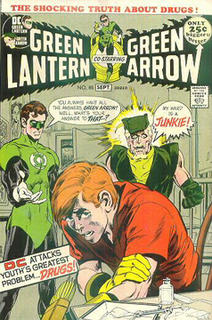


When my mom first told me of her addiction to heroin she expected me to be angry. A lot of my family was, I think the thought of my mother using heroin was too alien to them to even imagine. I think they viewed her use as somehow a failure on their part. I didn't, I only wanted to know if she was okay. By which I meant was she okay at the time she told me. My mom thought that heroin could make life more pleasant, for her it wasn't a selfish desire for more fun than anyone else was having, because she felt empty and sad on a regular basis. Heroin made her feel happy, like she could live life. But in making her think she could live life, heroin took life from her.

I don't "forgive" my mom for dying, I have never thought there was anything to forgive. I miss my mom and wish she were here. I love her and knowing that makes the missing part not so bad, because (as Lewis might say) the pain we feel now is a part of the love we have.

Saturday, October 06, 2007

Biplanes Battle Brilliantly!

I just watched the Red Baron trailer below, and boy am I excited.


See what I mean?

I have been waiting for a WWI pilot film that combines exciting aerial combat with a decent narrative. I enjoyed The Blue Max when I was younger, but I have always wanted more. I watched Flyboys last year and had my desire for dog fights satisfied (the flight scenes were awesome!), but the story was so cliché as to be staid. But did I say that the flight scenes were awesome? 'Cause they were.

It had a Zeppelin for goodness sake!