When I put up my post regarding my mom's death, it is a very personal action in more ways than one. It is personal in that I am revealing a little bit of my life to the world, but it is also personal in that I am only writing about how I feel (or felt) about the event. In a way, this is very unfair to a number of people that I care deeply about who were also affected by my mom's death.
I am not writing about how they felt, or even about how we dealt with the situation together. I am writing just from my perspective. But I am do this because it is the only point of view I really have. I have no real way of knowing what these other people are experiencing, nor what they experienced, because I have had different experiences. My dad knew my mom years before I did, and I knew her for years before my sister did. Each of us, in a very real way, came to know a very different woman. That said, I would like to try to share what I think some of those differences are.
I am 9 years 8 month and 8 days older than my sister Krista. I was born on "Elvis' Birthday" and she was born on the anniversary of his death, January 8th and August 16th for those of you wondering. Which means that I have 9-plus years of memories about my mom that Krista will never have. It also means, because like many 20-somethings I was very independent of my family for a time, that Krista has some memories that I will never have. And a lot of the memories that my sister has are of my mom's struggle with, and loss to, addiction.
I have no personal experience of what it is like to live in the same apartment as a heroin addict, for which I am grateful. Moreover, I have no experience of what it is like to be a teenager living in the same apartment as a heroin addict. In the grand scheme of life, it is probably one of the last things I would ever want to experience. But my sister did just that, the combination of love and frustration must have been near unbearable. I don't know how I would have dealt with the situation, I hope I would do alright. My sister did much better than I imagine the average person in her circumstances would have.
It is one of the many things I admire about my sister, that she was able to survive that situation. I actually don't think my sister understands how much I admire her period, let alone for her strength in this situation. I think she sometimes thinks that I look down on her for not making some of the same choice that I have made, but that isn't true at all. Being almost 10 years older than my sister meant that I spent a lot of time babysitting her, taking her to the park, or even to concerts I wouldn't have otherwise attended. I changed her diapers on many occasions and must seem, in some way, to be a bit of a parental figure to her and, given my stodginess and geekdom, not even the "cool" parent. So I can see why my opinion is important to her, and how my own life experiences might make her think that I believe the choices I made are the only way to happiness. But I don't believe that at all.
In fact, if people knew a formula to happiness, there wouldn't be philosophy and a lot of life would be a lot easier.

Monday, October 08, 2007


Sunday, October 07, 2007
Nine Years Ago Today.
Those of you who have been long time readers will have to forgive me for a "repeat" post, but today is a day that on an annual basis I don't feel like posting about popular culture. Today is the ninth anniversary of my mother's death, and I always feel a need to share on this day. I thought about writing something entirely original, but then I reread what I wrote in 2004 and it captures most of what I want to say. So instead of trying to reinvent the wheel, I will post last year's entry.
 This is a picture of my mom in 1971, that blob on her lap is me.
A Day to Listen to the Velvet Underground
I am only 34 years old, but today marks the end of my first seven years without a mom. That is an awkward sentence, but it best captures my sentiments. I am not an orphan, I still have a father. In fact, he should be receiving his Halloween card shortly. Yet a part of me is still very much missing, a large part. October 7th, 1998...10,7,98...those numbers loom large and ominous in my heart and this is the first year I am not completely overwhelmed by them.
My wife and I have intimate conversations often, it is one of the joys of marriage, and she and I were discussing death the other day. Her grandmother had just died at the age of 92. My wife explained it this way, "When someone dies, the world feels a little less complete. Bird songs aren't as joyful, and sunrises are slightly less beautiful." Displaying, as she often does, the magnificence of unedited, awkward, and spontaneous verbal poetry. She was also correct. C.S. Lewis opens his book A Grief Observed with another observation about death:
No one ever told me that grief felt so like fear. I am not afraid, but the sensation is like being afraid. The same fluttering in the stomach, the same restlessness, the yawning. I keep on swallowing.
I still feel this way, not everyday...today.
There are two things that are still difficult for me to do seven years after my mom died when I was 27 (she was 46).
I have a hard time remembering truly happy moments with her...on command. Happy moments enter my consciousness at random moments and seldom on the anniversary of her death. Glimpses of her nymph-like smile...brief auditory illusions of her laughter enter my mind. But the majority of my memories are neither happy nor sad, they are the memories of everyday activities, evening dinners and the question which ever looms over the head of a teenager, "Have you finished your homework?" I remember watching videotapes with her on many occassions, though none as awkward as the time we watched The Hunger, just the two of us and an erotic vampire film. I remember feeling both uncomfortable being aroused by the film, in my mom's presence, while at the same time finding the situation hilarious. This moment just came to mind. There are many more like it, I just can't remember them on demand. In all honesty, I remember my mom as a happy person, a person who added joy to the world. Which is why I have my other difficulty.
I can't understand my mom's addiction, and eventual death due to how it ravaged her body, to heroin. I try, by reading/watching/listening to and about other addicts. I know the narrative of my mom's addictive cycle, I can see each step of her hopeless journey. That's not what I can't understand. I know the things that led to her addiction. What I can't understand is the overwhelming power of it, how addiction stole my mom from me...day by day. Oddly, some really shallow things help. They are a poor substitute for true knowledge, and seem trite when I think hard on them, but they help. These things include the music of the Velvet Underground (in particular, you guessed it, Heroin) and Iggy Pop, the films Permanent Midnight (which I saw just after her death) and Trainspotting, the book and film versions of Razor's Edge, and the writings of C.S. Lewis among other things.
I am the only member of my immediate family I know of who attends church. I was raised secularly. Strange as it sounds my mom found comfort, though she was baffled by it, in my belief. She once asked if I believed, expecting me (the first college student in my family) to laugh at the absurdity of the question. I told her I did and her response lingers with me to this day, "Really?" Her eyes looked at me...proud, confused, unbelieving, yet hopeful. I never was able to tell her that hope was what faith was all about ("Faith is the realization of what is hoped for and evidence of things not seen" Hebrews 11:1). It isn't about "knowledge," little of life is about actual knowledge. This is why Socrates asked us to know ourselves, that is a difficult enough task. Let alone the ability to acquire actual knowledge of something else.
I was notified of my mom's death by answering machine. I was in classes all day and didn't have a cell phone. A series of messages of an ever-worsening condition. Siezures...followed by emergency medical action, my wife and I later read the medical records to piece together a timeline, to see if there was an heroic effort to save my mom. There was. It is not the best way to be notified of death, answering machine, I think it is the worst. I also wish that my mom had been buried not cremated, I would have liked to have had the chance to speak, to say my own words. Instead, I will share the two poems I think best capture the way I feel. One is gender confused (for my situation not its own) and the other is written from an older generation to a younger one, but they will have to do. In addition I would like to add a part of Philip K. Dick's author's note from A Scanner Darkly.
The first poem is by W.H. Auden (and yes it's the poem from Four Weddings and a Funeral but that is such a lovely scene.
Stop all the clocks, cut off the telephone,
Prevent the dog from barking with a juicy bone,
Silence the pianos and with muffled drum
Bring out the coffin, let the mourners come.
Let aeroplanes circle moaning overhead
Scribbling on the sky the message He Is Dead,
Put crepe bows round the white necks of the public doves,
Let the traffic policemen wear black cotton gloves.
He was my North, my South, my East and West,
My working week and my Sunday rest,
My noon, my midnight, my talk, my song;
I thought that love would last for ever: I was wrong.
The stars are not wanted now: put out every one;
Pack up the moon and dismantle the sun;
Pour away the ocean and sweep up the wood.
For nothing now can ever come to any good.
The second poem is by Wordsworth:
SURPRISED by joy--impatient as the Wind
I turned to share the transport--Oh! with whom
But Thee, deep buried in the silent tomb,
That spot which no vicissitude can find?
Love, faithful love, recalled thee to my mind--
But how could I forget thee? Through what power,
Even for the least division of an hour,
Have I been so beguiled as to be blind
To my most grievous loss?--That thought's return
Was the worst pang that sorrow ever bore,
Save one, one only, when I stood forlorn,
Knowing my heart's best treasure was no more;
That neither present time, nor years unborn
Could to my sight that heavenly face restore.
Wordsworth wrote Suprised by Joy (C.S. Lewis titled one of his autobiographies after this poem), for his daughter Catherine who had died at the age of four. This poem masterfully captures the grief I feel over the loss of my mom. Everytime I have wonderful event in my life, I want to call her and share the news. That can never happen and it brings the event of her death immediately to mind and my sorrow and feeling of loss are renewed. Every time...without fail. My mom missed my graduation, my wife's master's, my acceptance to graduate school, my wife completing her MFA in film at USC. She will not be there to see her first grandchild, or any of the joy that her grandchildren will bring into the world.
As I stated before, I have continually looked to fiction and biographical narrative to understand my mom's addiction and that is why I am including the following by Philip K. Dick.
This has been a novel about some people who were punished entirely too much for what they did. They wanted to have a good time, but they were like children playing in the street; they could see one another of them being killed --run over, maimed, destroyed -- but they continued to play anyhow...
Drug misuse is not a disease, it is a decision, like the decision to step out in front of a moving care. You would call that not a disease but an error in judgement. When a bunch of people begin to do it, it is a social error, a life-style. In this particular life-style the motto is "Be happy now because tomorrow you are dying," but the dying begins almost at once, and the happiness is a memory..."Take the cash and let the credit go," as Villon said in 1460. But that is a mistake ifthe cash is a penny and the credit is a whole lifetime...
If there was any "sin" t was that these people wanted to keep on having a good time forever, and were punished for that, but, as I say, I feel that, if so, the punishment was far to great...
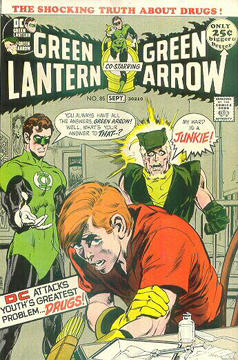
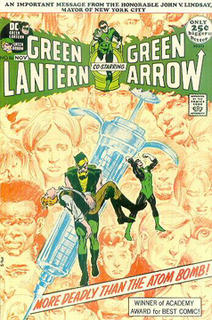
When my mom first told me of her addiction to heroin she expected me to be angry. A lot of my family was, I think the thought of my mother using heroin was too alien to them to even imagine. I think they viewed her use as somehow a failure on their part. I didn't, I only wanted to know if she was okay. By which I meant was she okay at the time she told me. My mom thought that heroin could make life more pleasant, for her it wasn't a selfish desire for more fun than anyone else was having, because she felt empty and sad on a regular basis. Heroin made her feel happy, like she could live life. But in making her think she could live life, heroin took life from her.
I don't "forgive" my mom for dying, I have never thought there was anything to forgive. I miss my mom and wish she were here. I love her and knowing that makes the missing part not so bad, because (as Lewis might say) the pain we feel now is a part of the love we have.
Saturday, October 06, 2007
Biplanes Battle Brilliantly!
I just watched the Red Baron trailer below, and boy am I excited.
See what I mean?
I have been waiting for a WWI pilot film that combines exciting aerial combat with a decent narrative. I enjoyed The Blue Max when I was younger, but I have always wanted more. I watched Flyboys last year and had my desire for dog fights satisfied (the flight scenes were awesome!), but the story was so cliché as to be staid. But did I say that the flight scenes were awesome? 'Cause they were.
It had a Zeppelin for goodness sake!
See what I mean?
I have been waiting for a WWI pilot film that combines exciting aerial combat with a decent narrative. I enjoyed The Blue Max when I was younger, but I have always wanted more. I watched Flyboys last year and had my desire for dog fights satisfied (the flight scenes were awesome!), but the story was so cliché as to be staid. But did I say that the flight scenes were awesome? 'Cause they were.
It had a Zeppelin for goodness sake!
Wednesday, October 03, 2007
Casanegra and "The Jungle"
Last night I began reading Casanegra by Blair Underwood (with Tananarive Due and Steven Barnes), in preparation for an event at the Glendora Library this weekend. I have been a fan of Blair Underwood as an actor, and Steven Barnes as a writer, for some time, which is why I have picked up a book that is outside my routine.
If my reading patterns were hiking trails, the genre hiking trail containing Casanegrafor would be fairly overgrown from lack of passage. I don't read a lot of "straight" mystery stories. When I do read a mystery it tends to fall into one of three categories. They are either extraordinarily noir like a James Ellroy novel, science fiction/fantasy related like Steven Brust's Jhereg books, or "literary" like The Moonstone. Thankfully this book falls into the first category (noir) and takes place in one of my favorite noir cities, Los Angeles.
Those of you who listen to my online radio show probably know that when I read or watch something that takes place in Los Angeles, I really want it feel like it takes place in the city where I live. I don't like things that make Los Angeles look too glitzy, or that overlook the dark sides of the city. I also don't like things that make the darker elements of the city look like a post-apocalyptic wasteland. Neither is true. Los Angeles is a wonderfully complex urban environment that has a lot to offer a storyteller and a reader/viewer. I have come to love this city and its neighbors, even though (or likely because) my first five years in Los Angeles were spent in the Baldwin Village section of the Crenshaw district. I often describe Los Angeles as a geode. It looks rough on the outside, but when you crack it open you find some pretty wonderful stuff.
I am only a third of the way through Casanegra, but I can already tell that it does in fact take place in the "city I live in." But I did encounter one little bump along the way, and it happened very early. The book describes one of the characters in the following way, [she] "had more brokers on her speed-dial than a girl from the Baldwin Hills "Jungle" had any right to fantasize about." I had to do a quick double take. From my understanding, "Baldwin Hills" is the more affluent area just West of La Brea, whereas Baldwin Village, "The Jungle," is the area East of La Brea is the thoroughly gang dominated neighborhood where I used to live.
If you click on the map below you will be directed to a larger image where you can see three arrows. The green arrow is the intersection of Hillcrest and Martin Luther King Jr. which, according to Wikipedia, marks the center of "the Jungle." You can also see La Brea, as a dividing line, on the far west of the map.
Baldwin Village was not very far from Culver City, where my wife and I went to mass, but the environments were night and day. I still believe that the inner city grocery stores are given lower quality produce and dairy products.
The purple arrow along Rodeo Road is the location of my old apartment, the track across the street is Dorsey High School.
The red arrow marks the location where the body of the Black Dahlia was discovered, it is about two blocks away from the Krispy Kreme on Crenshaw across the street from the Baldwin Hills Crenshaw Plaza Mall.

It was after checking the map and reading up on what "exactly" is considered The Jungle that I overcame my little speed bump. I think it would be fair to say that since the "Baldwin Hills" mall is in the Jungle that one might imagine someone referring to the area as Baldwin Hills instead of Baldwin Village. So I was able to jump back into the book and continue my walk along the path. I do have some stories regarding my experience living in the area, but most of those will have to wait for another time. Needless to say, watching Remember the Titans early on a Wednesday afternoon at the Magic Johnson theaters is not on the list of wise choices I have made, but it was a choice I was glad to have made.
If my reading patterns were hiking trails, the genre hiking trail containing Casanegrafor would be fairly overgrown from lack of passage. I don't read a lot of "straight" mystery stories. When I do read a mystery it tends to fall into one of three categories. They are either extraordinarily noir like a James Ellroy novel, science fiction/fantasy related like Steven Brust's Jhereg books, or "literary" like The Moonstone. Thankfully this book falls into the first category (noir) and takes place in one of my favorite noir cities, Los Angeles.
Those of you who listen to my online radio show probably know that when I read or watch something that takes place in Los Angeles, I really want it feel like it takes place in the city where I live. I don't like things that make Los Angeles look too glitzy, or that overlook the dark sides of the city. I also don't like things that make the darker elements of the city look like a post-apocalyptic wasteland. Neither is true. Los Angeles is a wonderfully complex urban environment that has a lot to offer a storyteller and a reader/viewer. I have come to love this city and its neighbors, even though (or likely because) my first five years in Los Angeles were spent in the Baldwin Village section of the Crenshaw district. I often describe Los Angeles as a geode. It looks rough on the outside, but when you crack it open you find some pretty wonderful stuff.
I am only a third of the way through Casanegra, but I can already tell that it does in fact take place in the "city I live in." But I did encounter one little bump along the way, and it happened very early. The book describes one of the characters in the following way, [she] "had more brokers on her speed-dial than a girl from the Baldwin Hills "Jungle" had any right to fantasize about." I had to do a quick double take. From my understanding, "Baldwin Hills" is the more affluent area just West of La Brea, whereas Baldwin Village, "The Jungle," is the area East of La Brea is the thoroughly gang dominated neighborhood where I used to live.
If you click on the map below you will be directed to a larger image where you can see three arrows. The green arrow is the intersection of Hillcrest and Martin Luther King Jr. which, according to Wikipedia, marks the center of "the Jungle." You can also see La Brea, as a dividing line, on the far west of the map.
Baldwin Village was not very far from Culver City, where my wife and I went to mass, but the environments were night and day. I still believe that the inner city grocery stores are given lower quality produce and dairy products.
The purple arrow along Rodeo Road is the location of my old apartment, the track across the street is Dorsey High School.
The red arrow marks the location where the body of the Black Dahlia was discovered, it is about two blocks away from the Krispy Kreme on Crenshaw across the street from the Baldwin Hills Crenshaw Plaza Mall.

It was after checking the map and reading up on what "exactly" is considered The Jungle that I overcame my little speed bump. I think it would be fair to say that since the "Baldwin Hills" mall is in the Jungle that one might imagine someone referring to the area as Baldwin Hills instead of Baldwin Village. So I was able to jump back into the book and continue my walk along the path. I do have some stories regarding my experience living in the area, but most of those will have to wait for another time. Needless to say, watching Remember the Titans early on a Wednesday afternoon at the Magic Johnson theaters is not on the list of wise choices I have made, but it was a choice I was glad to have made.
Monday, September 24, 2007
Impoverished Ninjas Resort to Robbing Convenience Store
And here I thought with Kane Kosugi (son of legendary ninja Sho Kosugi, and star of the Ninja Warrior reality show) starring in War that ninjas were doing better than this financially.
Difference Between Science Fiction and Fantasy
Janice Harayda, over at One-Minute Book Reviews posted (and linked) some comments Michael Crichton made three decades ago with regard to the state of science-fiction and fantasy literature. To quote:
It's interesting to me that Crichton, thirty-five years ago, is making a complaint that still is voiced in the speculative fiction community to this day. Before commenting about whether his assertion that there exists a distinction between fantasy and science fiction is prima facie true, I think it is important to examine the definition of each he offers.
According to Michael Crichton useful definitions for fantasy and science fiction are:
It seems to me that these definitions are simultaneously too narrow and too broad. His definition of science fiction, as presented in the quote above and my (possibly ill-conceived) restructuring of it, might lead itself to include a great deal of literary fiction I might not consider to be science fiction. This is even true if I add the word "speculative" prior to the word fiction, which may make for a more robust definition. I can imagine a whole array of speculative fiction about the known that might not be science fiction, though I think to do so I have to ignore an underlying a priori "common sense" understanding of science fiction. Examples of such stories might include Ludlum spy novels or Kathy Reich's forensic anthropology murder mysteries.
Similarly, the definition is too narrow because it leaves no room for the truly speculative story, the story which gets us to question our current understanding of science and inspires younger readers to question and refine that understanding later in life. An Example of this would include the Foundation Series. Think about it. Have we developed faster than light travel, psionics, "Psychohistory," or "PSYCHOLOGY?" Those of you who are familiar with the stories will know that "PSYCHOLOGY" is very different from modern Psychology. All of those things are not only not possible, but most are likely to be improbable.
One could make similar complaints regarding the Crichton definition of fantasy, which includes an underlying assumption that you and he agree regarding what is impossible. Having read Travels, I wonder at how narrow "the possible" is in Crichton's mind.
All of this leads me to what I think is the problem with rigid distinctions, as opposed to "marketing" distinctions, when it comes to defining boundaries for literary genres which deal with the imagined or "speculated." I won't be so bold as to offer definitions that I think distinguish the two, but I will say that I believe that science fiction is a sub-genre of fantasy. This largely stems from my belief that both deal, at some level, with the imagined. Thus the "weird tale" and "horror" story, among others, also fall into sub-genre of fantasy. Needless to say, my understanding of fantasy is extraordinarily broad, possibly too broad. But I don't think so. I think that the fantastic is where the human mind creates some of the most interesting stories. I also think that the science in some science fiction is so far beyond our current ken that it is analogous to magic. Hmm...isn't that Clarke's third law?
My opinion in this regard is heavily shaped by what I read and enjoy. Looking at the origins of science fiction, one finds it's publishing history inexorably merged with the publishing history of fantasy. I have a great love of the pulps and this leaves me wondering where various characters/stories I enjoy would be placed. Is John Carter of Mars a science fiction or fantasy character? What about Carson Napier who has similar adventures, but with a more scientific origin? What about the world of the "Moon Maid" which was in origin an allegory discussing the world under Bolshevik rule? Where does Starship Troopers fall? (Giant Bugs? Wouldn't the exoskeleton's collape?) John Scalzi's Old Man's War? (Sadly not on the shelf of my local B&N, likely one reason why I shop at the Mystery and Imagination bookstore.) HP Lovecraft's stories of "alien terror?"
Stories that blur the distinction between fantasy and science fiction are as old as the genre themselves, smartly Crichton notes this, so is it useful to have a distinction?
I think there is, but I don't know exactly where to place that distinction except to say that science fiction stories attempt a scientific (even if it is an imaginarily scientific) description of the fantastic things they describe. But where does that leave the Harold Shea stories? D'oh.
What are your thoughts on the subject?
“As a category, the borders of science fiction have always been poorly defined, and they are getting worse. The old distinction between science fiction and fantasy – that science fiction went from the known to the probable, and fantasy dealt with the impossible – is now wholly ignored. The new writing is heavily and unabashedly fantastical.
“The breakdown is also seen in the authors themselves, who now cross the border, back and forth, with impunity. At one time this was dangerous and heretical; the only person who could consistently get away with it was Ray Bradbury. Science fiction addicts politely looked the other way when he did books such as Dandelion Wine and the screenplay for John Huston’s Moby Dick. It was assumed he needed the money.”
Michael Crichton “Slaughterhouse Five” in The Critic As Artist: Essays on Books 1920–1970 With Some Preliminary Ruminations by H.L. Mencken (Liveright, 1972), edited by Gilbert A. Harrison
It's interesting to me that Crichton, thirty-five years ago, is making a complaint that still is voiced in the speculative fiction community to this day. Before commenting about whether his assertion that there exists a distinction between fantasy and science fiction is prima facie true, I think it is important to examine the definition of each he offers.
According to Michael Crichton useful definitions for fantasy and science fiction are:
SCIENCE FICTION -- fictional narratives about what is known or probable according to our current understanding of physics, history, etc.
FANTASY -- fictional narratives dealing with the impossible.
It seems to me that these definitions are simultaneously too narrow and too broad. His definition of science fiction, as presented in the quote above and my (possibly ill-conceived) restructuring of it, might lead itself to include a great deal of literary fiction I might not consider to be science fiction. This is even true if I add the word "speculative" prior to the word fiction, which may make for a more robust definition. I can imagine a whole array of speculative fiction about the known that might not be science fiction, though I think to do so I have to ignore an underlying a priori "common sense" understanding of science fiction. Examples of such stories might include Ludlum spy novels or Kathy Reich's forensic anthropology murder mysteries.
Similarly, the definition is too narrow because it leaves no room for the truly speculative story, the story which gets us to question our current understanding of science and inspires younger readers to question and refine that understanding later in life. An Example of this would include the Foundation Series. Think about it. Have we developed faster than light travel, psionics, "Psychohistory," or "PSYCHOLOGY?" Those of you who are familiar with the stories will know that "PSYCHOLOGY" is very different from modern Psychology. All of those things are not only not possible, but most are likely to be improbable.
One could make similar complaints regarding the Crichton definition of fantasy, which includes an underlying assumption that you and he agree regarding what is impossible. Having read Travels, I wonder at how narrow "the possible" is in Crichton's mind.
All of this leads me to what I think is the problem with rigid distinctions, as opposed to "marketing" distinctions, when it comes to defining boundaries for literary genres which deal with the imagined or "speculated." I won't be so bold as to offer definitions that I think distinguish the two, but I will say that I believe that science fiction is a sub-genre of fantasy. This largely stems from my belief that both deal, at some level, with the imagined. Thus the "weird tale" and "horror" story, among others, also fall into sub-genre of fantasy. Needless to say, my understanding of fantasy is extraordinarily broad, possibly too broad. But I don't think so. I think that the fantastic is where the human mind creates some of the most interesting stories. I also think that the science in some science fiction is so far beyond our current ken that it is analogous to magic. Hmm...isn't that Clarke's third law?
My opinion in this regard is heavily shaped by what I read and enjoy. Looking at the origins of science fiction, one finds it's publishing history inexorably merged with the publishing history of fantasy. I have a great love of the pulps and this leaves me wondering where various characters/stories I enjoy would be placed. Is John Carter of Mars a science fiction or fantasy character? What about Carson Napier who has similar adventures, but with a more scientific origin? What about the world of the "Moon Maid" which was in origin an allegory discussing the world under Bolshevik rule? Where does Starship Troopers fall? (Giant Bugs? Wouldn't the exoskeleton's collape?) John Scalzi's Old Man's War? (Sadly not on the shelf of my local B&N, likely one reason why I shop at the Mystery and Imagination bookstore.) HP Lovecraft's stories of "alien terror?"
Stories that blur the distinction between fantasy and science fiction are as old as the genre themselves, smartly Crichton notes this, so is it useful to have a distinction?
I think there is, but I don't know exactly where to place that distinction except to say that science fiction stories attempt a scientific (even if it is an imaginarily scientific) description of the fantastic things they describe. But where does that leave the Harold Shea stories? D'oh.
What are your thoughts on the subject?
Wednesday, September 19, 2007
Subscribe to:
Posts (Atom)