Friday, April 14, 2006

A Rarity in the World...An Original Meme

The interweb-o-net-o-sphere being what it is, it is filled with multiple "memes." Most of them are bland, what are your favorite book/favorite movie type affairs and not so much a viral idea that spreads across the world from one mind to another. I should know, I have attempted to ask such things of our LARGE body of readers (yes, that was sarcasm) in an attempt to measure my ability to infect the minds of the world. This is, naturally, step one of my plan to rule the world.

But questionaire type memes aside, I can think of a couple of events on the interweb-o-net-o-sphere that live up to Professor Dawkin's idea:

1) The Dancing Baby that appeared on Ally McBeal.

2) South Park. Come On! You remember the X-mas special on the internet.

3) The spread of Dungeons and Dragons when it was an obscure box set.

Actually, I can think of a lot more, but most of them aren't of the "chain letter" sort. Though chain letters are in and of themselves a kind of meme.


Needless to say, while reading the blog of an employee of Green Ronin Publications (a wonderful gaming company) I came across the following "blog post meme." By blog post meme, I mean an idea that should be included as a post on each and every blog out there. What is this blog post meme? The Birthday Meme. Thanks to Nikchick for the introduction to the idea.

Go to Wikipedia and look up your birth day (excluding the year). List three events, three births, three deaths, and up to three observances or holidays on your birthday in your journal.


I know it's not my birthday today, but you can figure out what my birthday is by the following:

Events
1877 - Crazy Horse and his warriors fight their last battle with the United States Cavalry (Montana).
1815 - War of 1812: In the Battle of New Orleans Andrew Jackson leads American forces in victory over the British.
2006 - A magnitude 6.9 earthquake epicentered just off the Greek island of Kythira hits much of the country and is felt throughout the entire eastern Mediterranean Sea.

Births
1824 - Wilkie Collins, British novelist (d. 1889)
1935 - Elvis Presley, American singer and guitarist (d. 1977)
1944 - Terry Brooks American writer

Deaths
1324 - Marco Polo, Italian explorer (b. 1254)
1825 - Eli Whitney, American inventor (b. 1765)
1642 - Galileo Galilei, Italian astronomer and physicist (b. 1564)
(Since I included Galileo's death, I ought mention it is 1942 - Stephen Hawking, English physicist and author's birthday as well).

Observances
Commonwealth Day is celebrated in Northern Mariana Islands.

Where are the UMDs?

That's right everyone- it's your favorite Uncle J.C. Loophole guesting again here at the phenom known as Cinerati. No - not the "dirty old man" Uncle, but the "fun" Uncle who loves to bring Tootsie Pops when he comes for a visit. As you know Wolf Flywheel and I usually sit at the helm of the USS Shelf 1, and recently we have been reviewing and talking about Easter themed films and animated specials. In going through my DVD for the review, I came across my UMD copy of Spider-Man 2. I took it out for a brief spin and remembered how unique and enjoyable it was to watch the movie on the go.

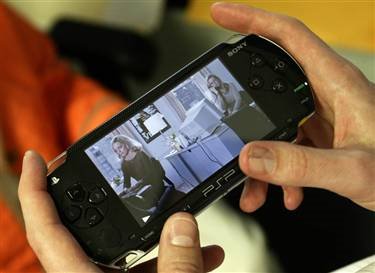
UMD- what is a UMD? I'm sure the regulars know- but for the benefit of anyone who is unawares- UMD stands for Universal Media Discs. If you own a PSP, you know all about those UMDs. In fact, you may have received Spider-Man 2 in your PSP package if you purchased it when it debuted in March of 2005. The UMDs are use for game content, as well as for movies and music. I have actually purchased several in the past when they were affordable. I actually like the portability and the PSP actually packs a good movie experience with the headphones on.
So what's all the fuss about the UMD? Well, it seems as if several studios, such as Warner Brothers and Paramount, are either scaling back their UMD releases or ending them altogether. PC Magazine reports:

"Disappointing sales have slowed the flow of movies on the proprietary Universal Media Disc to a mere trickle. At least two major studios have completely stopped releasing movies on UMD, while others are either toying with the idea or drastically cutting back.
And retailers also are cutting the amount of shelf space they've been devoting to UMD movies, amid talk that Wal-Mart is about to dump the category entirely."


Disappointing sales? Yeah, I'd say so. Just asking several local retailers gives the picture that not only do the things sit and rot on the shelf, but they can't push the PSP as the all-in-one media device that Sony intended it to be. Most people view it as a just a portable gaming device. Even among gamers and local gaming stores, where PSPs are purchased with more frequency, the disc that gets slapped on the counter with it is a game. I myself have several games- and the PSP is a great portable gaming console. I also think it is sold short as the all-in-one media device; the movies and music - and the fact that it also features memory stick that can store said media- and the fact that it can store digit pictures and browse the web make it an attractive gadget. So what has happened?

Further in the report, one of the studio's Home Entertain president states flatly that no one is watching movies on the PSP- "It's a game player, period." That's the attitude of most retailers and industry watchers -but I don't believe that is the real reason. The real reason perhaps lies within the device itself. Remember when I mentioned the memory stick? Well, a lot of people are using software to copy movies from their PC to the memory stick and then watching the movie on the go on their PSP. Think about it- UMDs are generally more expensive than a DVD. In fact it was cheaper to buy the fully loaded Hellboy special edition than it was to buy the UMD version. Couple that with the fact that it would be possible to copy the film to a Memory stick & that the UMD has smaller disc space (which means little or no extra features) -makes choosing the DVD over the UMD a no-brainer. The problem for the studios and retailers is that no one is purchasing the product, but that doesn't translate to "No one is watching movies on the PSP." The real problem revolves around 4 things- 1. Price 2. Accessibility and 3. Variety 4. Image

1.Price: I think I pretty well illustrated the problem of price in the Hellboy example. To further complicate things, it is a new format- and new formats are always more expensive before they hit market saturation and expansion.

2. Accessibility: The UMD movie can only be watched on a PSP. It is a narrow market product. DVD's spent a couple of years building up market base before DVD players became as cheap or cheaper than VCRs- but DVDs also are playable on home PCs and portable DVD players. Who knows? In time and given market base UMD slots might have appeared on DVD players or on your media card section of your PC. It seems rather unlikely, but it appears that Sony is exploring their options in an effort to revive the format. Next-gen application seems to be on the way to allow for UMD playback on televisions. Is it a little too late? If studios are scaling back or eliminating their new release UMDs- will they bring them back if the TV playback feature becomes reality? It will be depend on market saturation and the consumer's willingness to adapt to the format independently of the PSP. Time will tell. With the studios getting set for the HD-DVD and Blu-Ray format war coming soon- it will be an interesting turn of events.

3. Variety: If you looked at the movies available for UMD- the list looks like its geared toward the 18-35 yr old male demographic. It is intentional skewed that way, because that was key demographic that the PSP was advertised to and the main demographic that owns them . Therefore lots of action, horror, comedy and some anime. Few (OK as far as I can tell, none) classics, romantic movies, older animation, etc, etc, etc. The major studios jumped on the bandwagon like ants at a picnic- because this was the demographic that raked it in for them, or so they thought. But realistically, when you've plunked down around $200 for the PSP and another $40-50 for at least one game, what 18-35 year old male or female has the cash flow to shell out $20 to $30 for a bare bones movie disc, that some already have purchased on DVD. The lack of variety plus the fact that the studios did too much, too soon is a devastating blow to the format.

4. Here is another problem. Sony intended the device to be a media onestop- but when it released it in the US, it was pushed as a portable gaming console that could also play movies. It was a way for Sony to enter into the handheld gaming market, of which they seek to own a sizable chunk, with the flexibility to option into other areas later. It's a great handheld gaming device and the games that have been released have pushed the envelope for handheld gaming. Sony has failed to transition and expand the image of the PSP as a "portable media entertainment" device. Even in Japan, Sony's HQ and the most likely place for the transition to be more accepted by consumers, the PSP is falling behind the more popular Nintendo DS and DS Lite. Besides- here in the United States the iPod is the dominant force in portable music and video content, and it seems unlikely that the PSP will be able to overtake them anytime soon.

So, is this the end of the UMD? Who knows? We all can recall tech relics of the past, the 5" Floppy disc, the Beta tape, and even more recently the 3.5" Floppy; but the fact is that some formats that find a niche die hard, until support for it dies or something equitable comes along. Laser Disc anyone? I hate to see any innovation fail, but I suppose that if we can build upon failures it will not be in vain. Either way, I'm not quite ready to sound the death knell for the UMD, and it seems that Sony is trying everything it can to save the format in some way. I have enjoyed watch movies on the device and I suspect that PSP owners in general have found other ways to enjoy movies on their own. And you can bet that if the retailers start marking down the UMD movies, that I'll be there to snatch some up. And I have enjoyed the PSP as a music player and web browser. I like it and will continue to use it.

However I think that the future of media and entertain lies no longer in the confines of formats. While we may see the format war between Blu-Ray and HD-DVD play out soon, I believe I am with George Lucas is thinking that the true future in media entertainment lies in the server and media storage. We are really too tied into our physical objects. It's not necessarily a bad thing. Believe me, I'd much rather sit and read a book in it's physical form than try and read on online or on my Pocket PC. But at the same time, it makes it difficult for us to accept all-in-one devices or anything else that seems to do so many things. Heck, I still don't like a TV with a built in DVD player because my mind thinks, "If one or the other break, what will I do with the one that works?" Well, use it I guess or get it fixed- or buy another. My brain has been conditioned and hardwired in such a way that the idea of streamlining etc. is a quagmire rife with difficulty.

It shouldn't be that way. Signs already indicate that we are heading to a home that will have centralized servers that will download everything from movies to specials at the grocery store to the latest sports results, and all in one box. Can anyone guess what this is called? Why yes, Timmy- you are right. The internet. The future is here, folks. And things like TiVO, iPods, Blackberrys, etc demonstrate that the road lies more in how much we can push and get out of our devices and not necessarily how much we can get out of our chips, discs, cards, and cartridges. While there is still uncertainty - will the system crash, will I loose everything I've downloaded, I still want to backup stuff in case I buy a new device- future technology can provide answers and solutions if the marketplace is allowed the freedom to push the envelope. Besides, haven't we all wished we could be like the Jetsons when we were kids?

Thanks to Christian and crew here at Cinerati for allowing me to be a guest blogger. I have vacuumed the floor, put away my trash, and have not eaten all the chips and Easter candy. The Dr. Pepper is another story, but put it on my tab. As always come visit us over at The Shelf. Until next time, have a great weekend!

The views expressed by J.C. Loophole in this post are not necessarily those of the management. In fact, he probably didn't even run them by the management ahead of time, therefore resulting in a 90% probability that he will receive a tongue lashing later. After which he leave work early, stating he has a "cold", and will go by the store, pick up more Dr. Pepper and Peeps and drown his sorrows while watching a season set of "South Park" until he feels better. He will then work the sugar rush off during the weekend and end up getting into work late on Monday morning, thereby starting the whole process over again. We apologize in advance for any distress that this may cause, but let us be honest: we've all been there. So, go get your own Easter candy.

Thursday, April 13, 2006

Terrence Malick Has Become William Castle

I never would have predicted it, but apparently Terrence Malick has morphed into a modern day William Castle. Yes, Virginia, there still is showmanship in filmmaking. It appears that Terrence Malick's most recent film, The New World will be shown in Smellovision at a Japanese theater displaying the epic.

Had someone told me that the director of Badlands, Days of Heaven, and A Thin Red Line, who happens to be a former philosophy professor at MIT by the way, would have a film "enhanced" by a scent producing process, I would have told them that it sounds like a John Waters movie. Oh, and before you start yelling, "But Mike Todd invented Smell-o-vision," I can read, I just think that William Castle embodies the showman/filmmaker character. Check out the list of gimmicks he used in movies at his Wikipedia entry, or ask my friend Jay if you have any questions about Castle.

BTW, the effect in his version of Thirteen Ghosts is nothing short of genius. If you watch the film with the ghost revealing glasses, and then once without them, you are watching two very different films. In the first version, the ghosts are real and in the second they aren't, yet the film still works. Good Stuff.

Apparently, according to the blurb that is the article, the idea of using Smell-o-vision is that of the theater and not Malick...too bad, it was nice to dream that some director still valued showmanship surrounding their creations.

On a side note, before you think that the idea of people with advanced degrees in philosophy making cheesy genre films is unlikely, don't forget Wes Craven.

Tuesday, April 11, 2006

Movie Games for Cinefiles

People like to play games and have interesting conversations. Combine this with the number of people who love to watch movies, it is natural that people would make conversation games about the film industry. When it comes to "movie conversation games" the giant on the mountain is 7 Degrees of Kevin Bacon, but my wife (Bacon number 3) and I (Bacon number 3) aren't very good at the game. Actually it's surprising given how many movies we've seen, but we aren't very good at the Degrees of Kevin Bacon game.

In case you were wondering...my wife was an extra (and director's assistant) on Chumscrubber which has a large number of Bacon Number 2 stars, and she was also an extra in Sister Act with more Bacon Number 2's. I was an intern on Joy Ride with Steve Zahn (Bacon Number 2).


My wife and I prefer to play a game called "The Life of ____." In this game we treat an actor's career as if it were a single lifetime. For example, after learning how to travel through time and learning history Keanu Reeves becomes depressed after his "princess babe" dies he dates a terminally ill Cherlize Theron. Due to her rejection he studies the occult, attempts suicide, goes to hell, comes back and fights evil as John Constantine. The point of the game is to fill in the gaps of how the "avatar" went from one role to another, but as if they were the same person. This can become difficult when an actor, say John Wayne, plays characters who lived in different time periods.

So my wife and I borrowed a note from the Wold Newton Universe idea, a creaton of Philip Jose Farmer, and pretend that the later characters are decendants of the original. The Wold Newton Universe is a fictional universe where Farmer postulates that famous characters from fiction are related to one another as decendants. On of the best uses of this concept was in his book Tarzan Alive which included a fictional geneology for Tarzan, the book was a "fictional biography" that was written as if Tarzan had really lived.

So in our modified game the John Wayne of She Wore a Yellow Ribbon is the ancestor of him in Green Berets. It's even more interesting when you discover wonderful things like that Merlin is the ancestor of Sherlock Holmes and Little John, or that Henry VII is the decendant of Quint the ship captain and Custer.

I'm still trying to figure out if Neo is the decendant of Ted Theodore Logan or him later in life. The whole time travel question adds new dimensions to the game.

Monday, April 10, 2006

80stalgia

Often when I am sick, in bed, at home I flip the channels and pass an 80s classic film. The moment my fingers have found Pretty in Pink or The Breakfast Club, I become overwhelmed with 80stalgia. I become sad wondering where all the people I knew in High School are today.

It is surprising to me how few I kept in touch with as the years passed. And what is even more odd, is that my lack of contact has nothing to do with a lack of desire. I am just too lazy to correspond as much as I ought.

Oh, and before you think that I am like Robert E. Howard, or his creation, and filled with "gigantic melancholies and gigantic mirth" due to some crisis or state of adulthood, I have always been this way. I was nostagic for lost friends when I was in high school, and when I was in college. I moved a lot and communicated insufficiently. Most of the time, I am free of any kind of nostalgia, but those darn 80s movies get me every time.

Wednesday, April 05, 2006

Is Dungeons and Dragons Online Really Dungeons and Dragons?

Last month Dungeons and Dragons Online (DDO) went live for the game playing public. It seems odd that a Dungeons and Dragons based massive multiplayer online roleplaying game would take so long to come into existence. D&D was the first roleplaying game and I was one of many who hoped that it would also be one of the first game IPs (intellectual properties) to navigate the unexplored waters of the interwebonetosphere.

The Massively Multiplayer Online Roleplaying Game is one step closer to a fantasy every roleplayer has had from time to time, total immersion, and D&D's founders and players have speculated about such games for a long time. Total immersion speculation, and fiction, are as old as roleplaying itself. Shortly after the original D&D came out Andre Norton wrote the novel Quag Keep where D&D players find themselves inserted into the World of Greyhawk (a D&D game world). Joel Rosenberg wrote a series of fantasy novels where players are transported into a fantasy roleplaying environment with his Guardians of the Flame Series. Science fiction authors Larry Niven and Steven Barnes combined the joy of roleplaying games with Michael Crichton's Westworld in Dream Park, a kind of rpg Disneyland.

Combining roleplaying and player immersion has had a lively life in fiction, but it has also been becoming a reality with the creation of Massively Multiplayer Online Roleplaying Games. In these games, the players are able to actually see the world they are interacting with (rather than merely imagining as with table-top rpgs) and are able to design the appearance of their own avatar. Even the world's worst artist can have a great looking character thanks to skilled graphics programmers. MMORPGs make the mechanics of play largely transparent to the player which has the effect of minimizing, but not eliminating, metagaming. Metagaming is when players think of game effects in terms of mechanics rather than narrative. In a table-top session, metagaming can (but doesn't always) detract from the illusion many players attempt to create when playing rpgs. In other words, baring the invention of the holodeck (or interdimensional accidents like that in the D&D cartoon) MMORPGs are the closest thing to total immersion in existence today.

MMORPGs, in one form or another, have been in existance since around 1978, but those were text based affairs that didn't in anyway capture the modern gaming experience. Actually, saying they existed in 1978 is like comparing Hack to Baldur's Gate, but the early text based MUD's were multiplayer gaming experiments. The first modern total immersion style MMORPG was Meridian 59 in 1996. My own personal first experience was Ultima Online (1997), followed by Everquest (1999), Asheron's Call (1999), City of Heroes (2004), and World of Warcraft (late 2004, though I started in 2005). I just recently started playing Dungeons and Dragons Online.

Given that the first modern MMORPG was created in 1996, and that most MMORPGs are based on D&D style "generic" (as opposed to genera)fantasy worlds, what took the owners of the Dungeons and Dragons IP so long in entering the marketplace?

I can think of quite a few reasons actually.

First, in 1996 TSR --the company who created Dungeons and Dragons-- had ceased to make games of any sort and were on the verge of extinction. The company had tried to emulate the success of trading card games with its own collectible dice game. They over invested in that game while simultaneously branching into new areas in its tried and true RPG line. They overpublished Dragon Dice, and they overpublished new game worlds in 1995. The company was in the process of being purchased by another entity, Wizards of the Coast, and had little to no room to think about expanding into new markets.

Second, the "standard" computer RPGs for the D&D game were highly successful and set a very high standard of playability. If a D&D MMORPG were to come out, it would be instantly compared to the existing games based on the Baldur's Gate engine.

Third, as soon as Wizards purchased TSR they began planning for a new edition of the D&D game with new rules and character design innovations based on the past 20+ years of roleplaying "playtesting." If the D&D MMORPG wanted to emulate the experience, it would have to reflect these changes. Most players of a D&D MMORPG would want it to "feel" D&D and not like some random other MMORPG.

Fourth, the separation of player and Dungeon Master in the traditional rpg gaming format. Bioware's re-designed Neverwinter Nights was a genuine attempt to create computer based roleplaying where a dungeon master could design the adventures and the players could play them. It was, and is, an extraordinary game and for many makes the idea of an MMORPG unnecessary.

Fifth, game world. Which of D&D's many game worlds would be used in the creation of an MMORPG? Greyhawk? The Forgotten Realms? Mystara? Dark Sun? D&D has a lot of worlds and each has its own very devoted fans. Choose one world and you might lose potential clients who are fans of the others.

Sixth, the expectations for a game based on the original roleplaying game were huge. Whoever was to create the game would have to be willing to be under electron-microscope-like scrutiny. No matter what was made there would be detractors.


So...how did Turbine Entertainment do with their version of Dungeons and Dragons Online? For me, they did an almost perfect job. They captured the feel of D&D's newest game world, Eberron, combined it with a Player vs. Environment world which requires "adventuring parties" (groups of players) and doesn't require a large commitment of time to play.

Dungeons and Dragons Online, is just right for the casual MMORPG gamer like me. If you want to play your MMORPG and still have time to play pen and paper D&D on the weekends, it is certainly the game for you. The game, with minor exceptions, utilizes the mechanics of the Dungeons and Dragons game and integrates them into the MMORPG format with remarkable ease.

Which leads to my criticisms, or rather to the criticisms because none of these issues affect me as a player (well except one).

As the game currently stands a devoted player can finish all the dungeons and max out their character level in a relatively short time. Not me, I'm still Level 3 (rank 2), but the typical 1337 player who often plays MMORPGs won't be very satisfied and will quickly return to World of Warcraft. I see this as a good thing. I had "leet" power "doods" and prefer those who are there to have a good time.

The game is Player vs. Environment and lacks a Player vs. Player element. Many people enjoy PvP interaction in their massive multiplayer rpgs. They want to beat up on other people, defeating computer "bots" isn't sufficient for them. These gamers need MMORPGs to simulate the most dangerous game, killing real people. I tend not to like PvP players, finding that they are mean spirited and what they really want to do is be bullies to less experienced players. Traditionally, at least as Gygax and others present the game, the D&D game is players vs. environment with the DM as judge/narrator. Sometimes people viewed it as DM vs. Player, but that is short sighted and leads to unsatisfying gaming. Some players want "inter-party strife" and backstab for treasures etc. That tends to create short lived campaigns. Heroes battling evil, or villains conquering worlds, makes for good long term narrative and thus promotes campaign play. PvP elements tend to detract, in my opinion, from the overall enjoyment of an rpg. The day DDO goes PvP will be the day I unsubcribe.

The game doesn't perfectly reflect the rules of D&D. In DDO, there are spell points, 30 hit point first level characters, multiple ranks per level, and "free real-time" movement. If you want 5-foot steps and low hit points, this is not the game for you. The addition of multiple ranks per level comes with two key changes from the table top game. First, players essentially get one additional feat (ability) per rank (rather than once every 4 levels). Second, the current "10" level limit is in actuality closer to a 40 level limit in some respects. I understand that the emulation of D&D within the structure of a MMORPG requires some modification and these changes seem natural to me.

There is a great deal to praise about the Dungeons and Dragons Online MMORPG.

Graphically, it is beautiful. I love exploring new areas just to see what they look like. Turbine's game is more demanding in its hardware requirements than World of Warcraft, for good and for ill. By requiring more power, they were able to make the world look richer, but they also narrowed their audience to people with newer (meaning in the 21st century) computers.

The music and sound effects are great. My favorite adaptation/innovation is the incorporation of an omnicient DM voice when you enter some areas of dungeons. I was pleasantly surprised when I was informed that my ability to "Listen" revealed the sound of air passing beneath a wall. The DM voice narrates and describes dungeon environments and provides clues to players based on the skills they have selected. What this means is that the gaming experience is altered by your skill choices, cool innovation.

But when it comes to why I will continue playing DDO rather than other MMORPGs it's really very simple. When I sit down and play for a mere two-hours, I can accomplish an adventure and meet new people. In fact, I am required to interact with others. Recluses can have a heyday on World of Warcraft, but they would have a rough time on DDO. My only hope is that I start to find more people who want to play DDO in character.
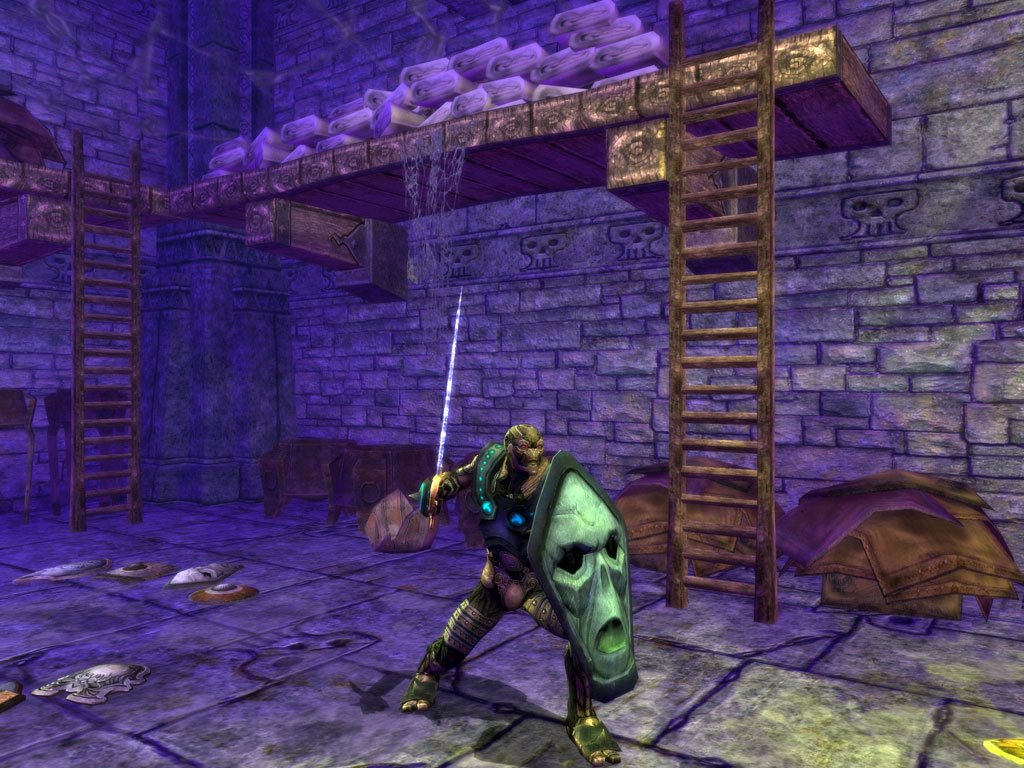
If you are one of them Soulfinder Symbol is waiting to help you in your quest to fight the forces of the Dragon Below.

Tuesday, April 04, 2006

DVDs, The Future, and Kong

Bill Cunningham of DISContent works in the Direct to DVD industry and sees the future of the entertainment industry in the models being developed due to DVD sales. That is to say that he understands that there has been a sea change in the sources of filmmaking profits. The majority of profit, and revenue, comes from DVD sales. Bill, as he mentioned in his piece on Netflix, understands that DVD sales (like any other medium for entertainment delivery) are not the "future" of the film industry, they are the "now." The future will lie in an even more demand driven model. Whether that model will be On Demand, or another, remains to be seen. One thing is certain, the industry had better remain flexible. For the most part it has, but there are some dinosaurs who see projected celluloid (or digital images) as the only medium there is to watch movies.

Let's face it, I love going to the theater to catch movies on the big screen. I even believe that many movies are best seen in that environment. But I also believe that the best way to see La Boheme is in a theatre. That doesn't mean that it should, or rather will, be the primary means of distribution. Come on, are you really missing any of the subtleties of Herbie: Fully Loaded on your good sized television? And even if you have a film with subtle sound design like Kill Bill vol. 1 (vol. 2's sound isn't as "intentional" but that is another discussion), the film is still damn fine on the television. So long as you are watching movies in the proper aspect ratio, which varies from film to film, you aren't missing any of the director's vision and if you have a sophisticated sound system you are probably getting better sound at home than you would at the googleplex. Those Baby-Boomers don't want to shut up, if you know what I mean. For John Rogers over at Kung Fu Monkey it's the teens (BTW, it would cost almost $7.00/hr in CA not the $4.65 he proposes), but for me it has always been the Boomers.

"Honey? Why are their frogs raining from the sky? And what does that have to do with Exodus 8:2?"

For the record: "8:2 And if thou refuse to let [them] go, behold, I will smite all thy borders with frogs: "


Late last year, drudge and crew wanted to create a narrative wherein Kong was demonstrably a "flop." I responded fairly sternly. Well..it appears that not only was Kong not a flop in the theaters (its gross so far is $218 billion in the US and $544 billion total), it has apparently set a DVD sales record. Yet another sign that the now of visual entertainment is the DVD, and that market is largely about ownership not rental.