Wednesday, March 08, 2006

Fantasy Films For the Compleat Gamer Part 1

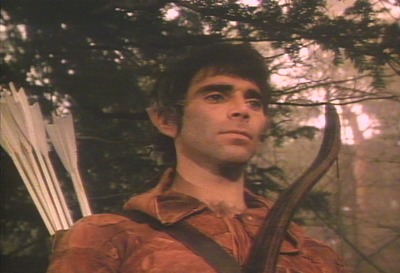
Hawk the Slayer-- Game Grene has a review of this quintessential cheeseball fantasy film. No one who played roleplaying games in the 1980s hasn't seen this movie. Flying swords, machine gun crossbows, rapid fire arrows, "giants", elves named Crow, and Jack Palance. Need I say more? Two, very generous, stars. A must see for roleplayers.


Best Quote: "I am no messenger, but I will give you a message. The message of death!" --Crow


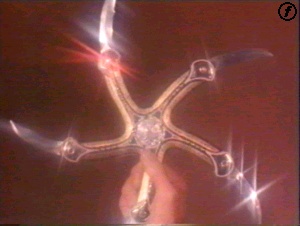
Krull-- A world lightyears beyond your imagination. Like Hawk the Slayer this film is another of the roleplayer must see fantasy films. Also like Hawk this film comes from the vast fantasy wasteland that is the 1980s. I don't know what it was about the 80s and cheeseball, low-budget, fantasy films, but it seems a mainstay of the decade. Earlier decades got classics like The 7th Voyage of Sinbad and the 80s gets Krull. Liam Neeson, kidnapped princesses, teleporting fortresses, magic vs. technology, and the Glaive! After watching this film, I wanted all my D&D characters to have Glaives, but then I read what a real glaive was and changed my mind.


Memorable Quote" "I am Ergo the Magnificent! Short in stature, tall in power, narrow of purpose, and wide of vision and I do not travel with peasants and beggars, good bye!"--Ergo the Magnificent.

Tuesday, March 07, 2006

When Was the Golden Age of Baseball Again?

Young baseball fans growing up in today's America know one thing for certain, in the past there was a golden age of baseball. During this golden age the players were all gentlemen, there was no cheating, and the game was pure and beautiful. After all, the newsstands are filled with books and newspaper articles about how Barry Bonds is a veritable pharmaceutical factory. We are in an era without heroes and love a sport better forgotten until it becomes more like it once was.

It is with this backdrop that baseball historian Harvey Frommer wrote his newest book Old Time Baseball. His introduction hints at the sports need of a return to a "better" time:

In 1975, my appreciation of the game of baseball deepened and
expanded...that year made me acutely aware of the hold of the game on America, of its roots, its idiosyncrasies, its magic...
Baseball in 2005...[T]he blaring rock music, the private boxes filled with people who too often have scant knowledge of and even less feeling for the game...crass commercialism fueled by print and electronic media...


Frommer's introduction is filled with the lament of the scholarly lover of baseball. It seems as if Frommer began his book looking for a lost, better, more innocent era than the one today. But if that was his goal, he failed. He succeeded instead to show how baseball has always been a sport with its scandals, lies, and artificial pageantry.

Old-Time Baseball is a brief, but detailed, look at baseball's growth from an amateur game to a professional sport during 19th century America. The book is the story of a game that went from idle recreation to national pastime. The story is one of false mythology, collusion with gamblers, and ruthless businessmen. It is a great story and one that puts the modern controversies of the game into context. This doesn't mean that the current controversies aren't legitimate, they are, but it does mean that controversy, conspiracy, and eventual correction are mainstays of the wonderful game that is baseball.

Frommer's book is useful both as entertainment and as a future reference which collects an abundance of baseball information into its mere 188 pages. You can read the book in a few hours, but to truly soak in the information takes repeated visits.

The first chapter is a simple timeline of baseball's history. It provides a list of important dates in the development of America's pastime and is thus a chapter readers will find themselves returning to again and again. Do you want to find out when the first recorded triple was hit? According to Frommer, that would be April 24, 1876 by Levi Meyerle. Though more interesting is the fact that on July 18, 1882, Tony Mullane pitched both right- and left-handed during a game. The second through fourth chapters are a narrative description of the development of the game throughout the century and the fifth chapter is a collection of biographical sketches of many of the great players of the gilded age. All of the information in the book is useful, even if it is dryly written.

While the book begins with what appears to be despair at the modern game, it ends on a high note. It is as if the author has regained faith in the modern game by looking honestly at the game's past. I can remember how reading The Southpaw and The Natural put into perspective some of my own worries that the game was less than it once was. An honest look at the past is tonic to this wonderful game, a game which has rules friendlier than most who play it.

Frommer closes:

Despite the naysayers that have surfaced through the decades, baseball is still our national pastime...Baseball is still comforting regularity, a sport played and viewed from childhood on.


Frommer's book was a pleasant addition to my readings during the Void between the World Series and the World Baseball Classic.

Monday, March 06, 2006

Genera vs. Generic and the Paladin

WARNING GEEKDOM POST BELOW...DO NOT READ UNLESS YOU WANT TO BE OVERWHELMED WITH GEEKITUDE


Matt Forbeck posted a link to an excellent article by Greg Stafford discussing game design decisions in roleplaying game design. In the article, Stafford discusses two underlying philosophies regarding what to include or leave out in a specific game's mechanics. To quote:

A genera game player wishes to imaginatively experience a limited and specific setting, within its own context and rules. Basic Pendragon is this kind of setting. It is about knights in a pseudo-medieval setting that includes the fantasy and legend that is (more or less) appropriate to that setting.

A generic game may use a specific genera as a basis, but the players want to expand it with the modern experience of open, freewheeling experimentation. Not just knights, but druids and wizards and thieves and ninjas in a King Arthur-like setting. Not just traditional knights, but women knights, Beowulf-era warriors, and Sigurd and Theoderic and El Cid too. Not just native British folklore, but kobolds and nagas and deep ones too.


His article is the beginning to a wonderful discussion, and one at the core of game design. When Matt Forbeck designed the Brave New World game system (based on Greg Gorden and Shane Lacy Hensley's system for Deadlands ) he had to decide whether to make his game a generic superhero game with the ability to capture all superhero types or whether he wanted to limit the types of heroes and the scope of powers to fit the genera his fictional narrative provided. He chose the latter. Because Forbeck's fictional history of the United States was one in which Alphas, or almost limitlessly powered superheroes, no longer existed. The only "supers" who remained in Brave New World were the lesser powered Deltas who primarily fit into easily defined archtypes.

Given the high level of competition in superhero RPGs, Forbeck's decision was a brave one and a necessary one. In the end, Forbeck produced an internally consistant game that was largely free of the "power creep" often associated with more generic settings.

But what does this have to do with Fantasy games, and the Paladin in particular? One of the big reasons people play Fantasy roleplaying games (big F because I am referring to the genre and not the game type) is to, for a brief moment, imagine and act as if they are one of their favorite characters from fantasy literature.

Games like Dungeons and Dragons allow players from a broad array of fantasy traditions to play the same game with only slight limitations. If you want to be Aragorn you can. If you want to be Belgarath you can. If you want to be Fafhrd and the Grey Mauser you can. The Dungeons and Dragons system is fairly generic and has become more so under the design influences of Monte Cook and Sean K. Reynolds. Certainly more so than Pendragon. But Dungeons and Dragons isn't a completely generic fantasy RPG.

In fact, Dungeons and Dragons has some very specific limitations resulting from the interpretation of fantasy that its initial game designers had. Gary Gygax's vision of fantasy was one inspired by H.P. Lovecraft, Clark Ashton Smith, Jack Vance, Tolkien, Michael Moorcock, Fritz Lieber, and Robert E. Howard (among a few others). As a result, the game does a wonderful job in simulating the source material. The magic system is rooted in a "Vancian" system heavily influenced by the Dying Earth stories of Jack Vance. The thieve's abilities, including the ability to read/use magic scrolls, is heavily influenced by Lieber's Fafhrd and Grey Mauser. Rangers come from Tolkien. The strict alignment system comes from Moorcock (among others). And the dreaded Temple of the Frog comes from Lovecraft, Smith, and Howard (Tsathoqqua arguably makes an appearance in Howard's Scarlet Citadel). The combination of influences lead to an interesting kaleidoscope rules set where Vancian magicians battled Hyperborian warriors.

This made for an inspirational and cutting edge game, one that spawned an entirely new game type. But fans soon found that they might need other rules sets if they wanted to play their vision of fantasy. Monte Cook and Sean K. Reynolds are among those for whom the kaleidoscope of earlier versions of Dungeons and Dragons were insufficient and some of their opinions can be seen in the current rules of the game. I say some because there are a couple of choices that Cook and Reynolds were pressured into by playtesters that Cook and Reynolds are less than satisfied with. One of these choices is the limiting of the Paladin class to Lawful Good alignment. The Paladin, you see, is a chosen defender/crusader for a god and couldn't an evil or not lawful and good god have defender/crusader's?

The answer is a simple one...yes and no. In a completely generic fantasy simulation, ti would certainly be reasonable, but in one where each character class comes from a different inspiration it isn't. The Paladin, like the Thief, in Dungeons and Dragons have very particular archtypes it is modelling. Why do all Thieve's have to worry about "thieve's guilds" in D&D? Because they did in Lieber. Why are all Paladins lawful good? Because Lancelot and Galahad are. The Paladin may exist in a roleplaying game with polytheistic pantheons in abundance, but it was inspired by mythology from a monotheistic society. Genre convention is the reason for the choice. It may not be a reason that satisfies Cook and Reynolds, because in many ways it is an arbitrary choice, but it is a creation of the understanding behind the creation of the class.

J. Eric Holmes, author of Dungeons and Dragons first basic set, gives another reason that Gygax may have which is behind the requirement. To quote his book on Fantasy Role Playing Games:

I don't mean to imply that the designers of games set out to teach us little moral lessons about everyday life -- except Gygax. In the D&D world fighters can do no magic, but magicians are so weak that they need to be protected by fighters. Clerics can heal wounds and do a lot of fighting but are no good at long distance offensives because they can not shoot arrows or throw offensive spells. The constraints of the rules practically dictate cooperation and mutual respect for the talents and weaknesses of each class, and I find it hard to believe that Gygax was not fully conscious of the principle when he wrote them.

Gygax calls this "play balance" and insists that it is not good for one character to grow too powerful with respect to the others. It is just this principle that some designers of other games have objected to and tried to write out of their own rules.


From a "moral education" standpoint, it makes sense to give additional powers and abilities to players willing to make sacrifices. If you create a game where some mechanics and goals feed "greedy" behavior, a class that accepts limits but gets benefits in return is an educational tool.

This is not to say that more generic games are less moral, that depends on the players involved. But what is certain is that in my experience those who want to play the Paladin with all the abilities and none of the restrictions have yet to give me a compelling argument not based on self-interest. At least within the context of D&D, in the campaigns I run. It is easier to defend the Paladin if you limit the Pantheon(s) available to the players. Easier still if your "universe" is monotheistic. Mine isn't, I play in Eberron, but I limit Paladins to the Silver Flame.

Sorry for the Long Delay Between Posts

I would have posted much more in the past two weeks save for a couple of big events that have occurred.

First, I have moved from South Los Angeles, the Crenshaw area...to be specific right across the street from Dorsey High School (alma mater of Chili Davis). Information about the school can be read here.


I now live in the suburban conclave of Glendale, where the cops ride in their cars without partners beside them. I no longer hear the thrumming of helicopter blades as I go to sleep. Gone are the sounds that I wonder whether they are gunshots or fireworks. They were usually fireworks. Now I live a block from Porto's.

Life is good, but my computers (laptop and desktop) are packed away.

Second, I was attending the California Council for the Social Studies Annual Conference in San Diego. I apologize to Professor Shugart for not harrassing him for a lunch meeting, but I was dog tired and sans communication devices. I was there for my day job promoting youth civic engagment (read VOTING) talking to teachers about using a 4 lesson curriculum the Non-Profit I work for designed. The curriculum is an attempt to get young people interested in voting.

So I have been busy unpacking and working and that is why I have been absent. I will attempt to address the problem with a book review or two in the next day or so.

Wednesday, March 01, 2006

Friends, the Internet, and MMORPGs

Before I moved to Los Angeles, six years ago this August, I lived in Reno, Nevada, a college town that thinks it is a casino resort destination. Not that Reno doesn't have some very nice casinos, it does, it's just that as nice as they are...Reno is no Vegas. Then again, when it comes to quality of education...Vegas is no Reno.

While I was a college student in Reno, I made some very good friends. Two of whom are members of this blog community, Rob (Robert Barker) and Logan 5 (Patrick Ditton), and one who stops by for a visit every now and then (John Ford). These are the friends who I have managed best to keep in touch with, and I largely have the internet to thank for that.

But Fritz's last post regarding the Dungeons and Dragons Online game, I am indeed preparing an article about it but want to get some post-move play time in first, reminded me of one of the ways I had planned on using the internet to keep in contact with friends.

As you may have guessed, I am a gamer, but unlike the l33t masters of a single game I am a gaming renaissance man. If it is a game, chances are I have played it at least once or at least am familiar with it because a friend of mine has played it. I enjoy playing games for the new experiences they offer, but I also like them as cultural artifacts. The mechanics/tone/setting/subject of a particular game can tell us a lot about the game designer's (and our own) thoughts about the subject of a particular game.

Take Chess as an example. Chess is one of the most popular abstract simulation of war played in the world. The construction of its rules tell us that the "inventors" of the game felt that their are two central variables to winning a military conflict. First, you must control territory. Chess is, after all, a territory control game. Second, the elimination of the "highest ranking" piece of your opponent's army grants victory. The capture/trapping of your opponent's king is the only necessary condition for victory. That is a very simple beginning to a conversation of what Chess tells us about warfare, there is much more that can be discussed, but you can see the point. Any time a game deals with real world subject matter, it is by nature of its being a simulation of that subject matter a commentary or description of that subject.

Even when the games deal with entirely fictional subjects and situations games can tell us a great deal about the society that created them. That is why I love games, all kinds of games.

When I moved out of Reno, I had hoped to use a game to keep in contact with some of my friends. It seemed like a natural communication medium. My friends Josh and Rob both were signed up, as was I, to a MMORPG titled Asheron's Call. Like many MMORPGs, Asheron's Call is an open ended game with the ability to type text, alsolike many there were supplemental programs that allowed users to talk via microphones with other players. It was my hope that my friends and I could meet up online and catch up on what was going on in each others lives.

I had failed to take into account two things, among others I am sure. I failed to understand how much my friends', and my own, schedules would change after I moved. With Rob in Philadelphia going to Law School, me attending Graduate School in Claremont and working at a non-profit during the day, and Josh returning to school (as well as preferring odd times to play online), it was all but impossible to keep in touch using Asheron's Call. I guess we could have scheduled a regular weekly meetup, but the game design of AC didn't reward that kind of behavior. The second thing I failed to predict was how much better some of the newer MMORPGs would be. I haven't even looked at the Asheron's Call box in five years, let alone played a game. The monthly subscription cost that each MMORPG has limits the number of MMORPGs that a reasonable player will subscribe to at a given time.

I currently limit my self to two MMORPG subscriptions. Largely because my online game time is about 5 hours a week (max.) and I don't want to spend money on something I am not using. At 10 hours a month per game at $15.00, I am getting more than my movie equivelent value (MEV) of entertainment. MEV's are based on one movie costing approximatly $10 and providing 2 hours of entertainment. All of my entertainment purchases are done in MEVs. (I will do a more complete post on MEVs later). Needless to say $30.00 had better provide a minimum of 6 hours of entertainment value to meet the MEV formula, and the nature of MMORPGs mean that approximately 40% of game time is spent either "crafting," training, or getting to where you want to go.

The internet is a great communication tool, but like any other it requires effort to make it useful. I am still in contact with some friends thanks to the internet, but there are others whom I have lost contact with and that saddens me. I still think of those I have lost contact with as friends, just ones I have to hunt down and reconnect with.

So Sean, Robert June, Josh, and everyone else I am currently out of contact with, if you happen to be browsing through blogger and find this leave a comment in the comments section.

Christian Johnson would love to hear from you.

Thursday, February 23, 2006

Is the World Ready for Major League Gaming?

According to the Wall Street Journal, Major League Gaming Inc. (MLG) has received $10 million in funding to use in its efforts to elevate videogame playing into a professional sport.

Let us leave aside the question of whether playing a video game is a sport at all, let alone a potentially professional one. Rather let us ask whether the world is ready for the professionalization of what is primarily a hobby.

There is an inherent competitiveness in the mindset of most gamers. If a gamer is skilled at a particular game, then he or she wants to show off their skills. One need only spend a few minutes on Xbox Live listening to the taunts of players to see how seriously some gamers take their entertainment. Those of us who grew up with the Atari 2600 remember the Fred Savage film The Wizard and fantasized about becoming famous for our leet Nintendo skills.

For certain, there is an interest on the part of the "sportsman" with regards to professional gaming. Who wouldn't like to write off the expense of their Xbox 360 when filing taxes, let alone get paid to play?

The types of games MLG will focus its competitions on, games like Halo 2 and CounterStrike, are certainly exciting games that require quick reflexes, good manual dexterity, and well-honed skills. These are features that guarantee that the "sport" will be able to develop and promote specific atheletes. If they are lucky, these gamers will have eccentric and interesting personalities.

The question then becomes one of audience. Will anyone pay to watch other people play video games? If G4's Arena is any indication, the evidence is mixed. The show doesn't offer large prizes, it doesn't command a large audience, and it perfectly displays the difficulty of creating play-by-play analysis of gameplay. Can MLG become a televised circuit competition like NASCAR? Only time will tell, but I doubt it.

More likely, the professionalization of video games will follow a path similar to that of professional Collectible Card Game events. The cash prizes will largely be paid by the video game manufacturers and be tied to new releases. I see the development as more a grassroots occurance than a national one. Even if MLG becomes successful, they would do well to remember that even the most successful professional sports began at the grassroots professional level.

I don't know if the audience is there for a league, but I am willing to watch and find out. I do know that gaming still has a lot of PR work to do in order to overcome the negative reporting done by much of the news media. A truly successful league will have to fight against negative PR to promote the sport and will face opposition from those who see gaming as a waste of time or as a contributor to youth violence.

One think is for sure, given my skill at most video games, I won't be among the first generation of video game "atheletes." I would be pwnt by all but the least skilled newb. To paraphrase Breaking Away, "to many people 'professional gamer' is just another joke, but to me it's another thing I can never be."