The recent ABC/Apple agreement regarding television episodes being made available on iTunes for download led to speculation that negotiations between Steve Jobs and Disney had been becoming friendly again. Many argued that it might even lead to a new Pixar/Disney partnership.
Well, it looks like the speculation is true. Pixar and Disney are indeed in negotiations for a new deal. With the initial financial success of Chicken Little Disney proved that they may not need Pixar to produce their digital movies. Pixar, on the other hand, has likely had difficulty finding a new distributor for their films. Remember that in the last negotiations between the two companies Pixar was demanding "100% of the box office take on future films, a modest distribution fee and the lion's share of ancilliary revenue." Not exactly the best beginning bargaining position for new distributors.
Now if Disney and Pixar team up again, does that mean that I can dream of Disney reopening their hand drawn animation division? I mean Pixar is a great digital company...Lilo and Stitch was awesome...Computer Animation isn't any less expensive than hand drawn...
Please Disney! Please!

Wednesday, November 09, 2005


Tuesday, November 08, 2005
Sean Bean is Dreamy, and He's Starring in Sharpe's Challenge
 Photo by Norman Jean Ray
Sean Bean, Boromir in Lord of the Rings and 006 in Goldeneye, will be reprising his role as Richard Sharpe in the upcoming BBC miniseries Sharpe's Challenge. My wife and I spent a good deal of this past summer captivated by Bean's portrayal of the adventures of Richard Sharpe during the Napoleonic era. Bean showed a wide range of acting ability and has become one of my favorite British imports to the United States. In fact, I have become sick of seeing him portrayed as a villain in American cinema and look forward to him donning the green garb of the Epic soldier once more.
The new Sharpe is being filmed for ITV and began filming on November 5th of this year.
Oi! I'ma Mario! I'ma Gonna Basha Your Head In, Ya Scouser!
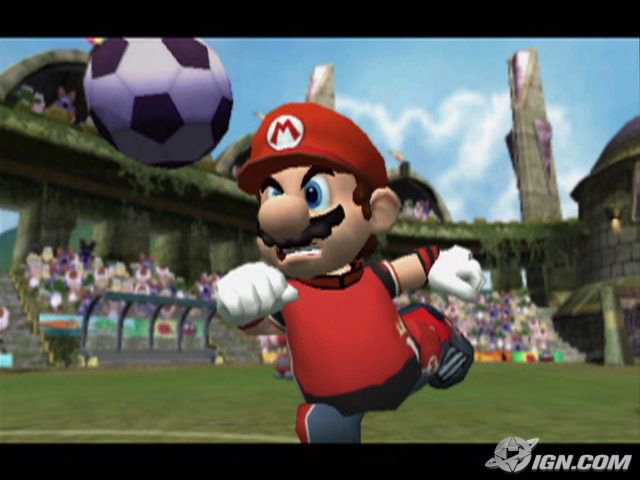
Nintendo does its part to tend to the next generation of Hooligan. If only they would combine Super Mario Strikers with Super Smash Brothers.



Los Angeles Times to Add Manga to Sunday Issue.
According to ICV2, the Los Angeles Times (among many papers) will be adding Manga features to their Sunday Cartoon section. As noted in the article, the average newspaper reader is "currently 53 and getting older all the time" and newspapers need to find ways to bring younger readers into their subscription base. For years papers have tried releasing youth oriented, or student versions, of newspapers to attract audiences, but these efforts have largely failed.
This time it looks as if newspapers are selecting entertainment content geared toward a younger audience in their flagship publications. The titles, which will be added this January, are Van Von Hunter and Peach Fuzz by Lindsay Cibos (you can also see a preview for Peach Fuzz here). Aiming for teenage boys and girls may be a gambit that pays off for the newspapers. Both Manga strips are Original English Language strips which means that the comics will either bring in young readers or fail on their own merit and won't bring creepy otaku into the picture.

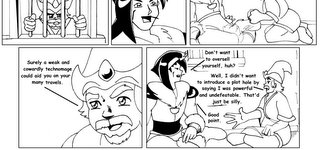

This time it looks as if newspapers are selecting entertainment content geared toward a younger audience in their flagship publications. The titles, which will be added this January, are Van Von Hunter and Peach Fuzz by Lindsay Cibos (you can also see a preview for Peach Fuzz here). Aiming for teenage boys and girls may be a gambit that pays off for the newspapers. Both Manga strips are Original English Language strips which means that the comics will either bring in young readers or fail on their own merit and won't bring creepy otaku into the picture.
Here is an example of Peach Fuzz character design.

Let's hope they redraw the first episode of Van Von Hunter.

Because it looks pretty good in its current state.

Big News If You Don't Have a DVR or VCR, But Do Have Cable (Preferably Digital)!
According to the Los Angeles Times, Comcast has entered into a deal with CBS and Disk Network has brokered a deal with NBC that will allow pay television customers to access "on demand" versions of highly rated broadcast television shows.
The Times does mention that such an "innovation" may not seem like much to "viewers who own personal video recorders such as TiVos or VCRs [who] can record their favorite shows now, the two deals are unique in that they make TV-on-demand available to a broader audience. They also let customers pay for shows on an a-la-carte basis." It is the second statement that bodes wierd for the television entertainment industry. By this I mean that traditionally television has been a "programming" oriented business where producers sell shows to networks who "schedule" shows they believe will attract audience. Even niche cable networks work on this same programming model. Television viewers have traditionally had some choice as to what hey can watch (there are 120+ channels) and when to watch it if they have a recording device, but the "on demand" market may add another variable to the equation.
While I admit that offering on demand for shows you can already record (though the on demand versions are commercial free) is not very revolutionary, or even enticing. What is enticing is the potential for networks to have greater ability to tailor to their audiences desires. The television market may move into a direction similar to the motion picture industry where all viewing is technically "on demand" and demand is prompted by advertising.
I can actually see, after the technology has become normalized, the major networks offering on demand show for free (with commercials) to all comers. In doing so the networks would also purchase more shows than they currently do. That's right, I said more. The reason for this is that the major networks could purchase shows currently offered primarily by niche cable channels or who have a limited fan base. The "per show" cost will be fairly low for shows that would draw a small market share, but such shows might have longer runs as well. Every television viewer has a show he or she wish continued on the air, the recent movie Serenity shows the power of small but loyal audience can have in the marketplace. Imagine if all Firefly fans could have spoken with their dollars in a direct fashion early in the process. It could have meant the show would still be on today. I can also see changes in the revenue model where the front end payments for shows are lower, but that residuals and revenue for screenings are higher. Naturally, the self programming model would rely heavily on advertising to "get out the word," but that could be a boon for both the growing internet ad market and the shrinking newspaper ad market. It is a good thing TV guide has changed to a larger format, they might need it for ad space and articles in the future.
In this potential future model of television one could imagine the networks gaining greater marketshare than they currently have, but it would be because they have become more like show "brokers" or superstores than "programmers" of entertainment.
NBC executive David Zaslav made an interesting comment in the article. He said, "If you don't play, you'll get left behind." He made the statement in response to how NBC/Universal was reacting to ABC's deal with Apple Computer Inc. which allows for the purchase of ABC programming for iPod. He meant that if you didn't offer similar products to your competitor you would get left behind. What is interesting is that he summed up what will become the market model if the individual programmer market takes over. If shows don't play, in other words if they aren't requested (and, for now, purchased) by viewers the shows will be dropped. This is very different from the current model where shows are played and are only dropped if no one watches them afterword.
On an ironic side note, the NBC deal with Dish Network does require that the customer already own a DVR. Begging the case that in the early stages of the new television model what benefits Dish really offers.
The Times does mention that such an "innovation" may not seem like much to "viewers who own personal video recorders such as TiVos or VCRs [who] can record their favorite shows now, the two deals are unique in that they make TV-on-demand available to a broader audience. They also let customers pay for shows on an a-la-carte basis." It is the second statement that bodes wierd for the television entertainment industry. By this I mean that traditionally television has been a "programming" oriented business where producers sell shows to networks who "schedule" shows they believe will attract audience. Even niche cable networks work on this same programming model. Television viewers have traditionally had some choice as to what hey can watch (there are 120+ channels) and when to watch it if they have a recording device, but the "on demand" market may add another variable to the equation.
While I admit that offering on demand for shows you can already record (though the on demand versions are commercial free) is not very revolutionary, or even enticing. What is enticing is the potential for networks to have greater ability to tailor to their audiences desires. The television market may move into a direction similar to the motion picture industry where all viewing is technically "on demand" and demand is prompted by advertising.
I can actually see, after the technology has become normalized, the major networks offering on demand show for free (with commercials) to all comers. In doing so the networks would also purchase more shows than they currently do. That's right, I said more. The reason for this is that the major networks could purchase shows currently offered primarily by niche cable channels or who have a limited fan base. The "per show" cost will be fairly low for shows that would draw a small market share, but such shows might have longer runs as well. Every television viewer has a show he or she wish continued on the air, the recent movie Serenity shows the power of small but loyal audience can have in the marketplace. Imagine if all Firefly fans could have spoken with their dollars in a direct fashion early in the process. It could have meant the show would still be on today. I can also see changes in the revenue model where the front end payments for shows are lower, but that residuals and revenue for screenings are higher. Naturally, the self programming model would rely heavily on advertising to "get out the word," but that could be a boon for both the growing internet ad market and the shrinking newspaper ad market. It is a good thing TV guide has changed to a larger format, they might need it for ad space and articles in the future.
In this potential future model of television one could imagine the networks gaining greater marketshare than they currently have, but it would be because they have become more like show "brokers" or superstores than "programmers" of entertainment.
NBC executive David Zaslav made an interesting comment in the article. He said, "If you don't play, you'll get left behind." He made the statement in response to how NBC/Universal was reacting to ABC's deal with Apple Computer Inc. which allows for the purchase of ABC programming for iPod. He meant that if you didn't offer similar products to your competitor you would get left behind. What is interesting is that he summed up what will become the market model if the individual programmer market takes over. If shows don't play, in other words if they aren't requested (and, for now, purchased) by viewers the shows will be dropped. This is very different from the current model where shows are played and are only dropped if no one watches them afterword.
On an ironic side note, the NBC deal with Dish Network does require that the customer already own a DVR. Begging the case that in the early stages of the new television model what benefits Dish really offers.
Subscribe to:
Posts (Atom)