Friday, July 12, 2013

Just Showing Off My Wife Jody Lindke

From time to time, I like to add some of my wife's artwork to the website. She's a pretty fantastic illustrator and I am blessed to have her in my life.


Jody designed the above logo for use with some children's books we are working on. She wants "Underfut" to be the brand name, and I like it. The dog "Underfut" was a regular character in her Schulz award winning cartoon strip "Nicnup," and the character was based on Jody's real dog Oreo. Both Jody and I miss her very much. Oreo lived to be 20 years old and died the day I was leaving to go to my first Gen Con. We both wish that History and Mystery could have had a chance to meet her.

This is Jody's Steampulp rendition of our marriage. After seeing this, I have been very tempted to walk around with a tophat.

Jody drew this one for a book at work. I work at a non-profit dedicated to youth civic engagement, and this is one of my favorite exaggerated effect of campaign ads images ever.


Thursday, June 13, 2013

An Open Letter to Danica Patrick, Jennifer Jo Cobb, Annabeth Barnes, and Many Others

Father's Day may be this weekend, but I received a great Father's Day gift a few days early. I was chatting with my five year old daughter History the other day about what she would like to be when she grows up.

"Daddy," she said.

"Yes."

"I think I'd like to be a race car driver when I grow up."

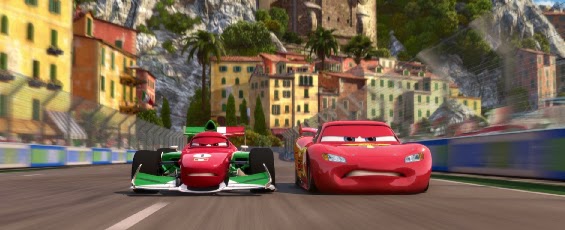
I smiled down at her with fantasies of her driving aggressively at 180+ mph flashing through my mind - alternating with random visuals of motor sport crashes - and said, "What kind of race car do you want to drive? Do you want to drive a car like Francesco Bernoulli or a car like Lightning McQueen?"


Her answer was swift and unsurprising, "Lightning McQueen!"

It wasn't unsurprising because Jody and I are regular viewers of NASCAR, we aren't. Ever since the twins - History and Mystery - were born, we've been devoted followers of Formula 1 racing. In the early days of the twins' lives when Jody and I were up at seemingly random times for late night feedings, we found something magical on the television. That something magical was Formula 1. Depending on where the race happened to be in a given week, the practice, qualifying, and race might be on at 2am or 3am. This was perfect for late night feeding. And I swear that the sound of the high RPM, high speed engines of those open wheel marvels was one of the reasons we were able to get the girls back to sleep at night. Nothing against NASCAR, but those drivers tend to race at reasonable hours US time.

It was unsurprising because History and Mystery love the Disney movie CARS. They love Lightning McQueen, Mater, and Sally - but they have a special place for Lightning.

Yes, they have Lightning McQueen stuffed pillows to sleep with.

After my imagination stopped flickering between excitement and panic, History asked me a question.

"Daddy? Can girls race cars?" she said.

"Yes!" I answered quickly - a slew of names came to mind, starting with Shirley Muldowney
and including many others.

My answer wasn't enough to steer her away from her own observations though.

"Daddy? Why don't I ever see any girl drivers then?" she asked.

At that moment, I became one of the world's biggest Danica Patrick, Jennifer Jo Cobb, and Annabeth Barnes fans - and I'll be a fan for life. I knew all of their names already. Danica and Jennifer are known to most motorsport fans, and Danica is one of the biggest names in sports period. And I knew Annabeth Barnes name from the motorsport documentary RACING DREAMS.

I became a life long fan because with one single action, I was able to dispel all of the powerful doubt and skepticism that a 5 year old imagination can muster. My daughter had never seen a woman race and she was starting to believe that they weren't allowed to, regardless of what her dad said. With a wave of my hand - we had been looking at a Disney Princess ebook on my iPad - I brought up Danica Patrick's homepage. Clio's eyes widened with awe, I could hear her gasp with excitement.

"Is that her race car?" she asked. She was pointing at the car Danica was standing next to.

"Yes," I answered and as I did so, the slideshow scrolled to show Danica behind the wheel. I proceeded to talk with History about Danica, Jennifer, and Annabeth and visited each of their websites, and a couple more as well (like Katherine Legge).

It was a wonderful moment, and a great early Father's Day gift.

I don't know if History will continue to want to be a race car driver when she grows up. People's dream jobs do change as they grow up. But I do know that after History went to her room for her nap, I began looking up local Kart circuits, availability, and costs. If she has an interest, I will work to provide her the opportunity. I would have done so whether there were currently any women in motorsport, or whether there ever had been, but I am so thankful that there were so many examples I could show my daughter. I have no idea how hard it would have been to fight against the preconceptions my daughter was building up from her own observations, if there weren't footsteps to follow. 

I am glad there were.

So, I'd just like to take the time to thank every woman currently racing in motor sport for doing what they love. My daughter may never join you in the ranks, but you made her dream a believable one and I first hand saw how important that was to her. I have always rooted for drivers like Danica and Annabeth, but it had always been in an abstract "American's love the underdog" kind of way. I am now a devoted fan of any woman brave enough to sit behind the wheel, because you are physical proof of a child's dream.

Sunday, June 09, 2013

RIP: Iain M. Banks

I first encountered the brilliant writing of Iain M. Banks when I was an undergraduate at the University of Nevada, Reno. I was working in a computer lab and, having read Heinlein/Asimov/Farmer,  claimed to be a science fiction fan while in conversation with one of the technicians. The technician started asking me, and not in a gotcha way, my opinions on a wide range of authors - authors who had names I was completely unfamiliar with. One of these names was Iain M. Banks. From the conversations I had with the tech, Banks' writing seemed something both new and old. It combined the Space Opera grand tapestry background of Herbert or Asimov (I hadn't heard of Niven yet, but would soon) with stylistic prose that captured the imagination.


The first Banks book I read was Consider Phlebas, the first in the splendid series of "Culture" novels. The book describes a "small action" that takes place within a grand interstellar war between the Culture and a race of aliens called the Idirans. The story was - in some ways - an argument against "Death Star" moments and against "super kid" style SF. At the same time, it was deeply human and evocative of emotion. It was a book that made me think and ask for more, and Banks delivered a great deal more. I consider the Culture novels to be the best collective works in all of science fiction. There may be better individual stories, but as a body of work they are canonical and magnificent.

I read earlier today that Banks, who had been revealed his cancer earlier this year, has died. I am filled with the selfish sorrow of the fan. For now I know that the amount of new experiences that this talented writer will bring into my life has hit its termination. I can only read his final work and reread all that he wrote that has brought me joy - time and again. I cannot imagine the sorrow of his family and newlywed wife - who he asked if she would do him the honor of being his widow earlier this year - I can only know the self-centered sorrow that I feel. I never met the man, neither at a con or a signing, but his work has affected me deeply. It will be shared with my children. I would like to thank him for the gift he gave me.

In memoriam of Banks, I'd like to do two things. First, I'd like to share an excerpt from the poem The Wasteland from which the novel Consider Phlebas acquired its title. Then I'd like to present a quote from the book itself.

IV. DEATH BY WATER

Phlebas the Phoenician, a fortnight dead,
Forgot the cry of gulls, and the deep seas swell
And the profit and loss.
                          A current under sea 315
Picked his bones in whispers. As he rose and fell
He passed the stages of his age and youth
Entering the whirlpool.
                          Gentile or Jew
O you who turn the wheel and look to windward, 320
Consider Phlebas, who was once handsome and tall as you.

One of the reasons Banks impressed me as a writer was his ability to capture human struggle in a post-scarcity society. He had a much better grasp on such things than most writers. His economics were not as confused as Star Trek's, which as much as I love the show meander from post-scarcity to smuggling/black market. He understood one of the drives that makes us human. He sums up nicely the human spirit in post-scarcity societies with the following:

The only desire the Culture could not satisfy from within itself was one common to both the descendants of its original human stock and the machines they had (at however great remove) brought into being: the urge not to feel useless. The Culture's sole justification for the relatively unworried, hedonistic life its population enjoyed was its good works; the secular evangelism of the Contact Section, not simply finding, cataloguing, investigating and analyzing other, less advanced civilizations but - where circumstances appeared to Contact to justify so doing - actually interfering (overtly or covertly) in the historical processes of those other cultures.
The human spirit is inherently anti-Prime Directive, as Kirk and crew so often demonstrate, because we wish to matter. We want to make things better. This is a wonderful impulse, it can lead us to beautiful acts or base ones, but it is a quintessentially human impulse.

Banks mattered.

Thursday, June 06, 2013

Cancelling AD&D? RPG Rumors Circa 1986 -- Different Worlds #44

I'm a big fan of Tadashi Ehara's now defunct gaming magazine DIFFERENT WORLDS. Over its tenure, the magazine was published by a couple of companies including Chaosium and Sleuth Publications. According to a pre-publication solicitation letter (available here), the magazine was originally slated to be entitled DM. The change was likely due to concerns over TSR's trademark of DM/Dungeon Master. Regardless of the reason for the change in title, I think that DIFFERENT WORLDS better suited the content of the magazine than DM ever would have. The magazine was a gem. Like Steve Jackson Games' magazine SPACE GAMER, Ehara's magazine covered the entire roleplaying game hobby. As I've written before, issue #23 of the magazine is maybe one of the most important magazines ever written about the origins of Superhero Roleplaying games. For those who want to understand the history of RPGs, DIFFERENT WORLDS, SPACE GAMER, and ALARUMS & EXCURSIONS are three of the most valuable resources that the aspiring historian can find. They really help to cut through a lot of the community gossip about a transitional era in the hobby.

Speaking of Gossip, DIFFERENT WORLDS featured an excellent gossip column written by the pseudonymous Gigi D'arn (clearly a Gary Gygax/David Arneson reference). I've written speculation about the identity of this columnist before, and I'm still pretty sure that she was a real person and that the Chaosium staff added to her actual letters. There are just too many little tidbits of SoCal culture, which was booming at the time as an RPG hub, for me to believe otherwise. The column was filled with a great deal of speculation, some true, some pure fiction, and all fun to read.


There are a couple of pieces of gossip/rumors in issue 44 that stand out and need attention. In fact, they are rumors that I'd like to hear more from the gaming community at large about, and I'll be asking around to see if there is any merit to them.

First and foremost - actually quite shocking - really is a claim about ADVANCED DUNGEONS & DRAGONS. According to Gigi, "Rumour thinks TSR is unhappy with the ADVANCED DUNGEONS & DRAGONS game line and is considering dropping it. GARY GYGAX meanwhile is starting his own company, Infinity Games, in New Jersey. Will he take the license with him?"

I wonder if this is true. 1985 saw the publication of UNEARTHED ARCANA and ORIENTAL ADVENTURES for the AD&D game, but the mid-80s was also the era of the publication of the Basic, Expert, Companion, Master, Immortals rules for D&D. It was a time when the D&D brand was divided among two sub-brands and a time when there was great potential that one brand was cannibalizing the other. From my experience, the D&D brand was putting out a lot of great material at this time. According to GROGNARDIA 1986 saw the release of a number of BECMI products and 1987 saw the production of the first Gazetteer products for the D&D brand - some of the best products ever released for D&D.

If I were to guess, I'd say the rumor was true and that core rule book sales for AD&D had dropped. I would argue that this is why we saw a 2nd edition of AD&D released in 1989. An edition that may not have happened at all if not for the success of the Forgotten Realms Setting. My thought is that the Forgotten Realms setting, written for AD&D, was so successful that management decided to do a new edition of the game for increased sales. I'd like to know if this is correct or not though.

The second interesting piece of gossip/rumors is that J.D. Webster, the creator of the Finieous Fingers cartoon strip, was a carrier fighter pilot. This is apparently true.

Wednesday, May 29, 2013

What's That You Say? You Saw My Name on a Voice Media Group Article?


A couple of weeks ago, the editor of the Topless Robot website asked if I wanted to begin pitching ideas for table top gaming related Daily Lists posts. Before even considering how challenging the task would be, I shouted with a resounding "Heck yeah!" This morning at 6:00 my first article was published on the website. The article discusses Ray Harryhausen's influence on Advanced Dungeons & Dragons and features 9 AD&D monsters that I think exemplify that influence.

I cannot say how excited I am to see my name in print - or more pixels in this case - again. I haven't seen my name in a "professional" byline since my friend John Ford and I wrote our last Celluloid Say-So article for the Daily Sparks Tribune. The time I had writing that column with J was a joy, and my desire to recapture that feeling was one of the reasons I started this blog. What makes my current article even more exciting is that Topless Robot is a part of Voice Media Group, the same company that publishes the LA Weekly and The Village Voice. As a film fan, one of my favorite critics is/was Andrew Sarris and many of the critical arguments he had with fellow critic Pauline Kael were published by the Village Voice.

Topless Robot may not quite be the Village Voice, but I'm no Andrew Sarris either. 

Boy am I excited! Please...go to the site to read my article - and hopefully many more in the future.


Friday, May 17, 2013

Television Viewing Behavior Study

I am currently in the process of collecting data for my MBA thesis.  To that end, I have designed a survey.  I don't normally post solicitations like this and this will not be a regular occurrence. 


You are being invited to participate in an opinion survey regarding a Television Viewing Behavior. The survey will run for one week only, therefore your timely participation is greatly appreciated. If you are interested in participating, please follow the link below.

https://calpolycba.qualtrics.com/SE/?SID=SV_ehx2jqbk2hOYODX

You can right click and choose “Open Link” or paste it into your web browser to get to the survey.

You will be asked to read an Informed Consent, which will explain the study I am conducting as an MBA student at California State Polytechnic University, Pomona. The survey contains 17 questions and should take approximately 20 minutes of your time.

Your participation is strictly voluntary and all your responses are completely anonymous.

Sincerely,
Christian Lindke
MBA candidate, Principal Investigator
California State Polytechnic University, Pomona
Email: christianj@csupomona.edu
You are allowed to share the link with others.

Tuesday, May 07, 2013

RIP: Ray Harryhausen (1920 - 2013)


To say that the work of Ray Harryhausen had a significant impact on my life would be an understatement.  Not only are JASON AND THE ARGONAUTS and THE SEVENTH VOYAGE OF SINBAD two of my favorite films, films I cannot wait to share with my twin daughters, they are also parts of some of the happiest memories of my childhood.  I remember watching these films with my mom and dad when they ran as matinee films.  I remember my parents "secretly" smuggling me in to see SINBAD AND THE EYE OF THE TIGER at the Drive-In.  I hid under a sheet in the back of the Gremlin and they pretended I wasn't there. It turns out that they paid the family rate and that the subterfuge was just for my entertainment.  

The movies were undeniably magical and one of my two favorite Comic Con moments is sitting in the audience at a "Ray & Ray" panel (that's Ray Bradbury and Ray Harryhausen) where they both talked about their life's work.  Our local science fiction/fantasy bookstore in Glendale would frequently hold Ray & Ray signings. It was one of the things that makes Glendale the perfect place to live.

Finding out that Harryhausen has passed is sad.  That sadness is lessened by the truth that Harryhausen added so much joy to the world -- joy that will long outlive me.

Thank you Mr. Harryhausen for my childhood joys, and thank you for the future joy I will be able to experience thanks to your imagination.


The Harryhausen Family formally announced the death on Facebook with the following message:

Raymond Frederick Harryhausen
Born: Los Angeles 29th June 1920
Died: London 7th May 2013.

The Harryhausen family regret to announce the death of Ray Harryhausen, Visual Effects pioneer and stop-motion model animator. He was a multi-award winner which includes a special Oscar and BAFTA. Ray’s influence on today’s film makers was enormous, with luminaries; Steven Spielberg, James Cameron, Peter Jackson, George Lucas, John Landis and the UK’s own Nick Park have cited Harryhausen as being the man whose work inspired their own creations.

Harryhausen’s fascination with animated models began when he first saw Willis O’Brien’s creations in KING KONG with his boyhood friend, the author Ray Bradbury in 1933, and he made his first foray into filmmaking in 1935 with home-movies that featured his youthful attempts at model animation. Over the period of the next 46 years, he made some of the genres best known movies – MIGHTY JOE YOUNG (1949), IT CAME FROM BENEATH THE SEA (1955), 20 MILLION MILES TO EARTH (1957), MYSTERIUOUS ISLAND (1961), ONE MILLION YEARS B.C. (1966), THE VALLEY OF GWANGI (1969), three films based on the adventures of SINBAD and CLASH OF THE TITANS (1981). He is perhaps best remembered for his extraordinary animation of seven skeletons in JASON AND THE ARGONAUTS (1963) which took him three months to film.

Harryhausen’s genius was in being able to bring his models alive. Whether they were prehistoric dinosaurs or mythological creatures, in Ray’s hands they were no longer puppets but became instead characters in their own right, just as important as the actors they played against and in most cases even more so.

Today The Ray & Diana Harryhausen Foundation, a charitable Trust set up by Ray on the 10th April 1986, is devoted to the protection of Ray’s name and body of work as well as archiving, preserving and restoring Ray’s extensive Collection.

Tributes have been heaped upon Harryhausen for his work by his peers in recent years.

“Ray has been a great inspiration to us all in special visual industry. The art of his earlier films, which most of us grew up on, inspired us so much.” “Without Ray Harryhausen, there would likely have been no STAR WARS”
George Lucas.

“THE LORD OF THE RINGS is my ‘Ray Harryhausen movie’. Without his life-long love of his wondrous images and storytelling it would never have been made – not by me at least”
Peter Jackson

“In my mind he will always be the king of stop-motion animation”
Nick Park

"His legacy of course is in good hands
Because it’s carried in the DNA of so many film fans."
Randy Cook

"You know I’m always saying to the guys that I work with now on computer graphics “do it like Ray Harryhausen”
Phil Tippett

“What we do now digitally with computers, Ray did digitally long before but without computers. Only with his digits.”
Terry Gilliam.

"His patience, his endurance have inspired so many of us."
Peter Jackson

"Ray, your inspiration goes with us forever."
Steven Spielberg

"I think all of us who are practioners in the arts of science fiction and fantasy movies now all feel that we’re standing on the shoulders of a giant.
If not for Ray’s contribution to the collective dreamscape, we wouldn’t be who we are."
James Cameron

Friday, April 26, 2013

LEGO Tower of Orthanc: Time to Write a D&D Adventure for this Sweet Lego Set

The title sequence for this LEGO promotion video makes LEGO look like one of the most fun places to work on the planet. Then again...employees get paid to make and play with LEGOs and that almost by definition makes it one of the most fun places to work.

This video promotes the upcoming Tower of Orthanc set for their LORD OF THE RINGS line.  Most of the line has been expensive but amazing and this set looks to continue the tradition.

Not only do you get the tower, which would make an awesome set piece for a game day, but an Ent! 


History and Mystery aren't quite old enough for these huge LEGO kits, but I cannot wait until they are.

The Greatest Event In Television History

Jeff Probst, Paul Rudd, Jon Hamm, and Adam Scott team up to do a send up of the "greatest event" specials of the 1980s.  The key to getting this kind of parody correct is to have the parody be a good version of what is being made fun of and this is damn near perfect.

RIP Jon Hamm.


Thursday, April 25, 2013

Jim Beaver (Supernatural) Discusses Buster Keaton's OUR HOSPITALITY

It's hard to describe in words the brilliance of the comedic stunt work of early Hollywood action-comedians like Buster Keaton or Harold Lloyd.  Their willingness to risk life and limb to entertain audiences -- even with the safety procedures they did use -- is mind boggling. The best way to use words to describe their endeavors are usually names, names of artists who have attempted similarly insane comedic stunts. You can tell a modern audience that many of Jackie Chan's stunts were inspired by the work of Keaton, and that does a pretty effective job.  But for my generation, who encountered Jackie Chan as he entered the American Market with THE BIG BRAWL, a better comparison is Disney's character Goofy.  Many of the animated stunt comedy shorts that feature Goofy are based on the comedic endeavors of Keaton and Lloyd.

Think about that for a minute. Animation, with its infinite ability to show the unreal, was used to tell stories inspired by the real world stunt work of real world comedians.

Actor Jim Beaver has a column over at IndieWire entitled "Beaver's Lodge," and in his most recent (and second) installment he discusses Buster Keaton's film OUR HOSPITALITY.  Watch his discussion and tell me you don't want to watch this film.


Wednesday, April 24, 2013

[From the Archives] SUPERCREW -- Quick and Easy Superhero Role Playing

Back in 2010, I wrote a review for a Swedish super hero roleplaying game called THE SUPERCREW. Some time has passed since that review, so given the obscurity of the game I thought that I would share the review again.

I have made some slight edits to update the review and provided information from an update I did a couple of months after the initial review.  This is a rare game, but you should check it out.


Every now and then, there comes along a product that manages to simultaneously appeal to several of my obsessions. The Supercrew roleplaying game by Tobias Radesaeter is one of those products. The game combines my interest with the indie game movement with my obsessive need to own every superhero roleplaying game ever published. As numerous re-reads of Superhero 2044 prove to me time and time again, the targets of my obsession do not always lead to enjoyable (or even understandable in the case of 2044) experiences.

The superhero genre features characters of near unlimited potential, and who possess a vast array of capabilities. Any game designed to emulate the feel of the source material faces a daunting challenge. How does one design a game that can simulate an almost infinite collection of powers and abilities, yet is also as fast and exciting as the source material being emulated? It's not easy to do, and it is one of the reasons that some successful superhero systems are also successful "universal" systems. For a while, it seemed as if all decent superhero systems were also universal systems. The indie game movement, with games like Capes, proved that being universal wasn't a necessary condition of a superhero game and that games could be designed based on emulating the feel of comics without granularly emulating the physics of them.

Games like Capes are a part of the narrative focused game design that influences a lot of what is going on the indie gaming community. Design choices in these games focuses more on how a particular mechanic can help to create a collaborative "playing story" rather than a quantified gaming representation of "reality." To be reductive for a moment, these games have a narrative rather than a gamist focus.

Supercrew takes a fairly strong narrativist approach to the superhero genre in it design choices, and even makes one small quip regarding gamist style games, and even presents its rules in a narrative format.

Supercrew's thirty-page booklet presents the games rules in a comic-book panel format. The first game to attempt this approach was the unplayable He-Man and the Masters of the Universe RPG by FASA. It's a novel approach to introducing roleplaying concepts and mechanics, and in the case of Supercrew is done in an effective manner. The rules are presented in a logical and engaging manner. They are also very easy to understand, making this game a potentially great introductory roleplaying game -- in addition to its potential use as a narrative rpg for experienced gamers.

GAME CONCEPT

Supercrew begins with an interesting premise as a game within a game. The central conceit of Supercrew is that all of the superheroes designed by the players are their own alter-egos. As the game explains it, "The players play super-powered versions of themselves. Each adventure starts with them playing a role-playing game when they hear about some kind of emergency they have to stop." You read that right. The players are playing characters who are playing a roleplaying game that gets interrupted and needs their superheroic intervention. When I first read that the players play versions of themselves, I was reminded of the character design system for the revised edition of Villains and Vigilantes so I didn't think Supercrew's approach was too novel. Then I read the sentence where the rules describe it as a game where the "characters" have shown up to play an rpg, only to have it interrupted, and a number of wonderful uses for this game popped to mind -- this is before I read a single rule.

Every group has players who show up late, or cannot make it to a particular session. If your group is playing in a long term campaign, you often don't want to continue the adventure without the player as it could make the player feel left out as their characters don't earn as many experience points or miss out on key plot points. You also have to consider the feelings of those players who did show up. They are there to have a good time and to play a game. If your group agrees to use Supercrew as the backup campaign, it's central conceit is perfect for these occasions. Let's say Jim doesn't show up to your regular D&D campaign. You begin the session as normal, "when we last left our heroes," but somewhere in the middle of the first encounter you do your best radio static impression and blurt out "News Alert! Baron Ravenblood and Persecutus are holding the city hostage threatening to destroy the Gas Company building unless the mayor wires $1 billion into their bank account by 3pm." The players grab their Supercrew character sheets, and their "characters" excuse themselves from the D&D game to fight for great justice!

Sounds like fun, but does the system work?

GAME SYSTEM

Characters in Supercrew are constructed using three main abilities and three tricks which are particular uses of these abilities. The powers are ranked from 3 - 1 in order of power. Three is the most powerful ability, two is the most frequently used ability, and 1 is the least powerful ability. It doesn't sound like a lot of powers to give a character, but it actuality this is a pretty robust system.

For example:

Christian wants to make a character based on everyone's favorite Flight, Invulnerability, and Super-Strength character. To avoid copyright attorneys suing his game group, he decides to name the character Superior! He give the character the following powers Heat Vision, Inert_Gas-ian Physique, and Flight. He states that Heat Vision is Superior!'s most potent ability (as is often described regarding our favoring FISS character, though rarely believed) at rating 3. Inert_Gas-ian Physique, Superior!'s most frequently used power, is given a rating of 2. Finally, Christian gives Flight a rating of 1.

Inert_Gas-ian Physique is a broad descriptor that encompasses super-strength, super-speed, x-ray vision, super-breath, and invulnerability. There is no reason to quantify each individual power, as would be done in more granular systems, since the broad descriptor's effectiveness is determined by the associated rating.


The effects of powers are determined by the roll of ordinary six-sided dice. The player rolls a number of dice equal to the abilities rating. Those dice that have a result of 4 or greater are considered successes, lower results are considered failures. This is a system similar in basic structure to Burning Wheel or White Wolf's World of Darkness systems where pools of dice are rolled and successes counted based on the results of individual dice.

The game enforces the use of ineffective powers, and limits the usage of the most potent powers, by requiring that heroes spend "hero points" in order to activate the rank 3 power. The only way to acquire hero points is to either use your rank 1 power or to be knocked unconscious in a battle. Each of these gives the character a hero point that may be spent later to activate rank 3 powers. This is an elegant design choice that undermines overt power-gaming where players would minimize/maximize abilities to tweak a game system in their favor and hold more "power" than other gamers. In this system, that is relatively impossible. Even if the player chooses a broad ability descriptor, like Superior!, since how an ability is used is determined when the player's describe what they are doing the broad descriptor is no more useful than the narrow one. After all, the Shade Knight can apply his "Keen Intellect" descriptor just as broadly as Superior!'s Inert-Gas-ian Physique.

For any given task, the Game Master sets a success threshold. The individual character can only contribute toward passing that threshold, once per round -- or once per task for certain tasks. Teams must work together to succeed at fighting earthquakes and burning buildings.

In combat, and in other situations, the player first states what ability they wish to use. They do not describe how the power is used, or its effects, until the number of successes achieved is known. In a recent post discussing the Dragon Age RPG by Green Ronin, I discussed how I liked how Dragon Age's stunt system allowed for more narrative combats. Supercrew's system is attempting a similar effect here, the benefits of "roll before you describe" are discussed at length at GamePlayWright. Once the player knows how many successes the character has achieved, and how many total successes are needed for an action, that player -- whether he completed the task or not -- describes what happens. This game is very much about the player, knowing the results, creating the narrative regarding how his/her character succeeded or failed. Typical of many modern narrative games, this player empowering approach can be disorienting or empowering depending on your group's preferred method of play.

The combat rules are an extension of the basic task resolution system, and the game provides some excellent examples of how they would represent villains, groups of thugs, or hazardous events like building fires.

The system looks like it works and it looks fun. Simple but able to simulate a broad array of activities, what designers often call "robust."

CRITICISMS OF THE GAME

I have two major, and one minor, criticisms of Supercrew.

While the game provides some examples of how they would represent villains, thugs, and hazards, the game provides not guidelines or benchmarks to help the game master. Experienced game masters may not technically need these in order to run a game, but they would be exceedingly helpful. This is an even larger flaw when considering the fledgling game master. The games rules and concepts are perfect for the new gamer, in addition to the experienced gamer, but the new gamer needs more assistance when creating opponents for their players. Some comments regarding balancing encounters, more than just the examples, would have been greatly appreciated.

The game also lacks any real online support, which is tragic as the game deserves more. The rule book says to visit the Kaleidoskop site for character sheets etc., but the majority of game aids are in Swedish.  For example, their Hjältegalleri which features a number of characters created using the system is entirely in Swedish.  It would be helpful to have English versions of the characters. While it isn't difficult to figure out what Gravitationskontroll or Noll Friktion are in English, Osynlighetskappa is another matter entirely. Thankfully, Christopher B at A Rust Monster Ate My Sword has designed an excellent character sheet for use in the game.

Lastly, and this is a minor quibble, the game's prose isn't quite funny enough. I would have liked more jokes. Given the entertaining cartoony art in the rulebook, some more jokes would have been appreciated. Maybe it's just the translation that lacks the humor, but I'd have liked more.

In conclusion, I think that this is an excellent game at a reasonable price. It isn't likely to replace Savage Worlds' Necessary Evil campaign in my game rotation any time soon, but I think I'll be trying to fit it in when some players don't show up for our regular sessions.

I wish some of the early professional efforts where as clearly explained and thought out as this gem.


Monday, April 22, 2013

Heroes of Normandie: Bridging the Gap Between Euro, Rpg-er, and Grognard?


The vast majority of the gaming I participate in on a regular basis is role playing, Euro, or Ameri-treasure. I own a large number of role playing games, and I get to play many of them with my gaming group. I have a sizable Euro and Ameri-treasure collection and am often able to convince my regular gaming group to pause our campaigns to play a quick game of MUNCHKIN, GLOOM, or CATAN. This means I get to play a lot of wonderful games...and yet all this gaming doesn't sate my gaming appetite. You see, I am cursed with a voracious and insatiable ludographic desire to play games from all genre/classifications. In addition to the game genres above, I love miniatures gaming and microscopic chit based monster wargames. It's not hard to find people to play miniature games with, though they do have to be willing to tolerate my "primer gray" armies.

It is nigh impossible to find people who have the time and interest to play microscopic chit based wargames -- even of the less than monster variety.

This is why so many of the chit based wargames include a "solitaire" rating on the side of the box. A lot of us GMT, MMP, DECISION, and old AH and SPI gamers have to be willing to play many of these games ourselves. This is because the chit based wargame can be an intimidating beast. The games often focus heavily on simulation -- accurately portraying a historical event -- instead of playability and that can lead to some extremely complex rules. Check out the rule book for A WORLD AT WAR, which comes in at 192 pages, and you get a small glimpse of what I mean.  Avalon Hill's ADVANCED SQUAD LEADER is similarly intimidating, but the old SQUAD LEADER -- with it's programmed learning system -- is less so.

The other disadvantage that some of these games have is that they are often not very graphically appealing. This has changed over the past decade, but a look at some of the classics of the simulation genre with their abstract unit notations can be off-putting as well.

These limitations led to the near death of the wargaming hobby in the early 90s, but innovations in graphic design and rules have led to growth in the field so that the hobby is now fairly stable. Stable, but for those of us who love it still to small.  This is why "crossover" games are so important.  These are games that fall within the wargame milieu, while also appealing to other gamers. Games like MEMOIR '44 and BATTLELORE (both using the Command & Colors system) are great examples of this kind of game. These two games have simpler rules that appeal to the Eurogamer, while still having customizeability, expandability, and rich enough mechanics to satisfy the wargamer itch. There are other games that cross the Eurogamer/Wargamer line, and there are those that cross the RPG/Wargamer line.  Games like DUST TACTICS have some appeal to RPG gamers and incorporate wargame elements -- though they push players over more toward miniatures gaming than wargaming. If one views DESCENT by FFG as a skirmish game -- which I do -- it too has some crossover appeal.

There aren't many games that try to have Euro/RPG/Wargamer appeal, and it looks like the French Designers at Devil Pig Games are trying to do exactly that with their current Kickstarter campaign "Heroes of Normandie." The game looks like a simple to play Euro/Wargame crossover, and the addition of the ACHTUNG CTHULHU! inspired Cthulhu expansion "Shadows Over Normandy" it looks like they are trying to get the whole trifecta involved.

I'm not surprised that it is a French company that would be among the first to try to come up with a game that crosses all three genre.  The French wargame seen is huge and the wargame magazine BATTLES is one of the best in the business. There is a strong French RPG industry that has seen some of its games, like IN NOMINE, imported to the United States -- though I'm still waiting for C.O.P.S. to find its way to our shores. And Eurogames are exploding in France as they are in the rest of the world.


The Devil Pigs Games crew seem to be leveraging all of the attributes that contribute to the robust wargaming industry in France and bringing them over to an internationally distributed game.  One look at one of the insert wargames in BATTLES magazine, or at the games advertised in the magazine, and you can see that the French gaming industry is doing some amazing things graphically and thematically with their games. HEROES OF NORMANDIE looks to be no exception.  Have a look at these game play videos to see what I mean.  The graphics on the pieces are wonderful, and the statistics on the pieces appear to be easy to understand.  This looks to be a wonderful game.


If only I had an unlimited supply of money.

Friday, April 19, 2013

Ron Howard's RUSH: Will It Be One of the Rare Breed?

For as popular as motorsport is domestically and internationally, one would expect there to be a long list of quality motion pictures depicting the excitement that brings fans to watch race after race. Sadly, this is not the case.  The vast majority of films about motorsport are poor at best, and sometimes downright awful. It seems that too often directors get caught up in trying to have exciting crashes and forget that the most important thing that a film can do is tell a compelling story.  The Sylvester Stallone vehicle DRIVEN is the perfect example of this flawed approach to the subject.  To much time and money was spent depicting cars launching from the race track in spectacular ways, and too little was spent on telling a plausible tale.

When I heard that Oscar Award winning director Ron Howard would be directing a film about Formula 1 entitled RUSH, I was filled with excitement and dread. Howard is a truly talented film maker who has directed films in many genre with a human touch. The interviews with Howard about the process hinted that he was taking his subject seriously, but in the back of my mind -- as an F1 fan -- there was the underlying fear that this would be yet another spectacle film and not one that focused on story.  F1 is filled with compelling stories, and I thought it would be a shame if a modern F1 film failed to capture some of the sport's magnificent history.

Then I saw the first trailer for RUSH...and all my fears melted away.


RUSH focuses on the 1976 rivalry between drivers James Hunt and Niki Lauda.  Lauda had been World Champion in 1975, and would win the title two more times before his retirement, but 1976 was a year of struggle and a near fatal accident. Niki's story alone would make for a compelling film, but add to the seriousness of Lauda's season the playfulness of James Hunt and you have a combination of elements that could make for a wonderful film. Hunt's party boy attitude is legendary and when one of my favorite drivers -- Kimi Raikkonen -- wants to race incognito in non-F1 events he has been known to use James Hunt as his nom-d'fun.

You can see the real footage of Lauda's accident in this short piece:


And you can catch a glimpse of Hunt's wild personality here:


If you are wondering what racing films are worth watching, here is my list of 6 or so racing films that are worth your time (in no particular order).


Thursday, April 18, 2013

Dark Minions: Amazon Steps into the On Demand Marketplace

I'd like to thank The Big Bang Theory's David Goetsch for pointing this show out to me. DARK MINIONS looks entertaining and the space ship design (straight out of THE BLACK HOLE) really appeals to me.

Watch it at IMDB here.


Pat Robertson: Still Getting D&D Wrong After All These Years

One aspect of some people's Christian faith has always baffled me. It's what I term the "magical world view," where one believes that the world is filled with witchcraft and sorcery -- and Satan stands in every shadow trying to tempt the faithful away from the righteous path. My use of the term "magical world view" may lead many to think that I am an agnostic or an atheist.  While there are many gamers who are atheists -- possibly due to the negative association with religion that the "AntiD&D" wars of the 80s presented -- I am not. My wife and I attend mass at a local Roman Catholic church and take our duty to raise our children in our faith very seriously.  I consider myself a little more Positivist Materialist than most of those I attend mass with, but I have a pretty strong faith.

The purpose of this post isn't to discuss my faith, or lack thereof, rather it is to examine how living in fear the way that those with a "magical world view" often do can lead to some pretty ridiculous assumptions with regard to what can be highly beneficial past-times. The reading of Fantasy and Science Fiction, and the playing of role-playing games, feeds young minds.  It helps the imagination to grow, fosters creativity, teaches critical thinking, and is a great educational tool. Needless fear that these things contain witchcraft, and should thus be avoided, undermines those very benefits.

Over the years, one of the chief opponents and demonizers (pun intended) of the role playing hobby has been the 700 Club's host Pat Robertson. He is probably second to only Jack Chick in his hatred and misunderstanding of roleplaying games.


Since I was a child, Robertson has been cursing D&D for its evil influence and for its anti-Christian worldview. With the 80s far behind us, one might think that Robertson might have reconsidered his earlier views given the numerous examples of well adjusted citizens who grew up playing role playing games.  Alas, this is not the case.  Recently, Robertson stated -- in a video much shared on Facebook -- that D&D has "literally destroyed lives."


For all that Robertson and his ilk claim that D&D is a sinister game leading children to the demonic darkness of Satanism...a game created by evil secular humanists...it should be noted that one of the creators of the game -- Gary Gygax -- was a practicing Christian himself. Gary briefly discusses the controversy in this video from Icosahedraphilia: (check out 4:21 for a quote regarding why Gary hadn't discussed this more)


As early as 1969, Gygax was sharing with his friends why as good Christians his family didn't celebrate the Christmas holiday.

Image from Playing at the World
According to the Christian Gamers Guild, David Arneson was also a practicing Christian.

The particular argument about Christmas above is one often seen in practicing Jehovah's Witnesses, so it is possible that Gygax was one in 1969.  Given the fundamentalism of that faith, it is unlikely that Gygax would willfully attempt to bring young people to Satan through the creation of a game.  I think it would take someone with a paranoid magical world view would believe that the devil secretly whispered game design ideas into the ears of the faithful to create a game that propagates witchcraft.

From personal experience, I can tell you that reading about Paladins -- the looking up their mythical roots -- did more for my faith than the time when I was 10 years old and asked the 700 Club to pray for me when I was scared.  The research on Paladins led me to the discovery of the writings of St. Augustine and the reading of many Arthurian tales.  The call to the 700 Club led to me being asked how much I was willing to donate.  Let's just say that the bold faced money grubbing to a 10 year-old is far more damaging to faith than telling stories about noble warriors fighting against demons.

So...Pat...how much did you ask the questioner you told D&D was demonic to donate before taking the time to answer the question?


Wednesday, April 17, 2013

Batman Doesn't Kill...Or Does He? Patton Oswalt's Penguin Addresses the Issue

I don't think they had to make Batman so dense to make their point, but this is a pretty amusing video regardless. I also think they should have added a moment where Batman feels betrayed by Alfred when he figures out what's going on.

Tuesday, April 16, 2013

Man of Steel: Still Looking Good

While there are still to many shots "taken" from Richard Donner's two excellent Superman movies in this trailer, there is enough here for me to think that MAN OF STEEL looks promising. Any Superman film has the difficult task of choosing which version of Superman to use -- Gold/Silver/Bronze/Tin/Byrne -- and Snyder seems to have leaned a little in the Byrne direction.  This can be a good thing, but it can also backfire. Too many directors -- I'm looking at you Andrew Stanton -- think that "modern audiences" can't handle white knight characters unless they have a shade of grey. Thing is, authors have been making that mistake for generations. It isn't having "troubled" or "grey" heroes that audiences find compelling. It's having heroes who experience conflict and for whom there are stakes. Donner got that with his Superman, and Burroughs understood that with his John Carter. I hope that Snyder gets it.


Thursday, April 04, 2013

Iain Banks Has Cancer -- Ugh!

Iain Banks is, quite simply, my favorite science fiction author. His Culture novels combine compelling SF-nal content with extraordinary writing talent. It is too soon to mourn his loss or write obituaries, but I would like to share this brief BBC report.


Latest Wil Wheaton TABLETOP: FORMULA D

I don't normally post episodes of Wil Wheaton's GEEK & SUNDRY series TABLETOP. Basically, I figure if you already watch the show -- like me -- you already know about the episode, and if you don't then it's likely not something that would fall within your normal wheelhouse.

I decided to share this one because it features on of my favorite games FORMULA D, and given that TABLETOP games quickly become available at Target I thought this would be a good time to promote one of my favorite games.


I have only two minor quibbles with the episode.

First, the players are playing a bit too much to the camera and trying too hard to be funny. This is a more minor complaint than it sounds as a video watching a group playing a boardgame that wasn't playing to the camera would be terrible. Oh...and comedy is hard.

Second, Wheaton calls the game FORMULA Dé (DAY), and this is the new version FORMULA D (Dee). Yes, the game is produced by a French Company, but they have decided to market it distinctly from the earlier edition.

Formula Dé

Formula D


The original version features racing solely based on Formula 1 and the De stands for "dice," while the new version features both Formula 1 style racing and Formula Drift racing as well. The newer version has classic F1 tracks and adds some street races better suited to drifting as well. The original is a collector's item, the new one is something you should just go out and buy.

As usual, though I am somehow compelled to watch and read many things Wheaton, this video does nothing to mitigate my Sheldon-esque rage.