Monday, November 09, 2009

[Blogging Hammer's Slammers] -- "Under the Hammer"


I can remember the first time I saw David Drake's name in print, it was in the Tales from the Vulgar Unicorn collection of stories in the Thieves' World shared universe fiction series. I enjoyed his story, Goddess, but didn't read anything else by Drake for quite some time. In fact, it was about a decade later when I read his foreword -- and story -- in Baen's Cormac Mac Art volume in the excellent Robert E. Howard series they put together in the 1990s. It would be a few more years before I started reading Drake's excellent Lord of the Isles series, a rich fantasy series that wanders away from the typical medieval European mythological base and toward Sumerian myths for inspiration.

I have always found Drake's writing engaging, and was pleasantly surprised to find out that he had been friends with two figures who loom large in Fantasy fiction -- Manly Wade Wellman and Karl Edward Wagner. Even though I was a fan of Drake's Fantasy writing, I hadn't read any of his Science Fiction. Most of Drake's SF falls into a sub-genre that I don't often find myself wandering into, namely Military SF. I have no moral objections to Military SF stories. I have read Dorsai, Forever War, Starship Troopers, and Old Man's War, but I haven't wandered far from those literary entries into the genre.

Based on a conversation I had with a friend last week -- a portion of which was dedicated to the aesthetic failings of the covers decorating the majority of Baen's book line -- combined with my recent foray into the Science Fiction of the 1930s and the October Baen release of The Complete Hammer's Slammers vol. 1, I have decided to begin an exploration of Military SF starting with David Drake's classic "Hammer's Slammers" series of stories.

Like Haldeman's Forever War, Drake's "Hammer's Slammers" series of stories are (at least partially) informed by the author's own military experience. Both Haldeman and Drake spent time in Vietnam. The "Slammers" stories share many qualities with the Military SF that has preceding and succeeded them, but they also have some distinct and unique qualities that set them apart.

Case in point, for this post, is "Under the Hammer." This story was the second "Slammers" story that Drake wrote after returning from Vietnam, and it was the second story rejected by Fredrick Pohl for publication. Pohl did not see a need for a third author writing "essentially the same kind of fiction" he was receiving from Pournelle and Haldeman -- a statement that seems bizarre to this particular modern reader. The story was eventually published in the October 1974 issue of Galaxy under the editorship of Jim Baen. According to Drake, Baen didn't really like the story either, but it was better written grammatically than the majority of Galaxy submissions. Pretty humble beginnings for what has become a major entry in a genre sub-category.

"Under the Hammer," gives us a glimpse into new recruit Rob Jenne's first day on the job with the "Hammer's Slammers" mercenary outfit. The story is a stark presentation of on the job training in the middle of a conflict with guerrilla forces on an agricultural planet, a planet so far from civilization that most "modern" means of transportation and communication are completely lacking. It is an environment where the soldiers of "Hammer's Slammers" far outgun the guerrilla's they are fighting, but still find themselves mired in a struggle where victory is less than guaranteed. It's pretty clear that the setting is Vietnam as SF outer rim world, tunnel rats and all.

The story is quite short, but within its pages Drake manages to do a couple of groundbreaking things within the genre. First, he immediately separates himself from Heinlein and Haldeman by not providing a representation of Basic Training. We are reading the story of a recruit showing up "on world" who is on his way to be trained, any training Jenne receives in the story will be provided only as much as it will help him survive the next 20 or so pages. The next difference between Drake's story and others is the almost complete lack of discussion for the "why" of the conflict on the planet. The readers are placed into the circumstances in media res without much context discussing why the "Slammers" have been hired to fight the guerrillas. There is some brief discussion why the "Slammers" might be hired in general, but few specifics about the current engagement. The stress in the story is on the characters and their immediate circumstances, and not on any global (galaxy-wide?) political/ideological struggles. The men presented are real men, who behave realistically, and who aren't doing anything particularly noble or ignoble.

This last point is made particularly poignantly early in the story. One of the first characters Jenne encounters is a priest of The Way who questions Jenne about his enlistment and how the military life may/may not conflict with a peaceful religion. For a story that on the surface lacks any philosophic commentary, the priest's initial comments and his two layered involvement with the "Slammers" made this story stand out. The priest's two layered involvement with the "Slammers" might seem a little heavy handed on the "melodrama tear-jerk inducement index," but it plays a very necessary role for the proper framing of the story.

This is a tightly written story that's only weakness is the thinness of the sfnal veneer. My hope is that as the stories play out, they will be able to keep the strong writing style while adding more SF elements.

Friday, November 06, 2009

Hulu Recommendation Friday -- Enter the Ninja


The classic Bond film You Only Live Twice, may be the first example of ninjas being featured in mainstream Western cinema, but it was the Sho Kosugi vehicle Enter the Ninja that captured the imagination of a generation. I can still remember sitting in my 7th grade Drama class, having just finished performing a monologue from The Glass Menagerie, as a group of my classmates enacted a sequence from Enter the Dragon.

The instructor wasn't very impressed, but I was and I immediately hunted down the Sho Kosugi film and experienced pure viewing pleasure.

Enter the Dragon follows one of the standard Golan and Globus action storylines. In this case it is the "old army buddy comes to visit an old friend who he served with during some military exchange or another, only to find out that the friend is in trouble with the local (criminal underworld, greedy land grabbing corporation, or both)." It's up to our protagonist to kick ass, take names, kick the asses of the people whose names he took, and save the day. Enter the Ninja adds ninja techniques to our protagonists usual repertoire of skills, which naturally makes him invincible as only a ninja can kill a ninja.

Franco Nero (Django and Camelot), our protagonist, has less than stellar martial arts skills, most of the acting is horrible, and the film suffers from Samurite syndrome. The film often borders on the ridiculous. For example, there is a point when Christopher George is calling out stating, "I want my ninja now!" in a manner that can only be described as extremely homoerotic -- an extremely incongruous moment in the film. Any one of these flaws could have ruined the film for all time, yet none do.

Why?

Sho Kosugi. The moment Sho Kosugi hits the screen, the viewer is in for a treat. Even while covered head to toe in his ninja costume, Sho Kosugi brings charisma and power to the screen. Yes, ninja costumes are inherently cool, but Sho is cool beyond the outfit. He is a joy to watch, which is likely one of the reasons Revenge of the Ninja drops the Samurite aspects of narrative and let's Sho carry the film. Sho Kosugi was the quintessential ninja throughout the 80s, and I cannot wait to see him in the forthcoming Ninja Assassin -- even in a small role.


Wednesday, November 04, 2009

Coming Up on Cinerati

As you may have noticed, I have been running a series of posts discussing the Northwest Smith stories by Catherine Lucille Moore. In the coming weeks, the next 8 weeks to be exact, I'll be finishing the series. I am very much enjoying writing my thoughts down as I read through each of Moore's tales, and have decided that I want to make [Blogging X] a regular weekly entry here at Cinerati. After finishing the Northwest Smith stories, I'll move on to Moore's Jirel of Joiry tales, Kuttner's Gallagher tales, and the Healy/McComas compilation Adventures in Time and Space.

I'll be doing at least one [Blogging X] a week and will move on to other stories (like the stories of Robert E. Howard) eventually.

I'll also be including more movie reviews, television reviews, and game reviews, as time permits, as well as posting random thoughts about events and products throughout popular culture. I will also be keeping Hulu Recommendation Friday's for as long as Hulu keeps offering wonderful entertainment.

I'm really enjoying the direction this blog has taken of late and look forward to your comments.

[Blogging Northwest Smith] "Julhi"


The March 1935 issue of Weird Tales featured "Julhi," the fifth of Catherine Lucille Moore's Northwest Smith tales. That same issue also featured Robert E. Howard's "Jewels of Gwahlur," a classic Conan tale.

After a year of writing Northwest Smith tales, Moore's "Julhi" manages to integrate what are now the "old stand-by's" of the Smith series with an energy that keeps the repeating narrative devices feeling fresh -- and to be fair, some of what is going on in this tale is quite fresh. Like in the first Northwest Smith tale, Moore gives us a brief introductory paragraph reminiscent of a campfire story. It's a device that Moore had abandoned in the prior three stories, but it helps to set the tone here and notify the audience that we are going to be reading an event that transpired in Smith's past.

The tale of Smith's scars would make a saga. From head to foot his brown and sunburnt hide was scored with the marks of battle...But one or two scars he carried would have baffled the most discerning eye. That curious, convoluted red circlet, for instance, like some bloody rose on the left side of his chest just where the beating of is heart stirred the sun-darkened flesh..."


The "campfire" paragraph provides Moore with a couple of advantages, and one major challenge, as the story unfolds. First and foremost, this preamble let's us know a little bit about the story we are about to read, we will be learning just how Smith acquired that "bloody rose" scar. Fans of Smith will be getting a glimpse into his, as yet, largely unrevealed past. Second, our curiosity as readers is piqued as we wonder just what kind of beast or device would leave such a wound. As mentioned earlier though, these advantages don't come without a price. By revealing to the audience that the story takes place at some point in Smith's past, any fear that Smith will fail to overcome the challenges within the tale can be easily cast aside. We know he survives because we know he bears the scar.

It's harder to create an aura of mystery and weird terror when the audience knows the outcome, but Moore knows what she is doing. She immediately disorients the reader, by inserting them in media res -- along with Smith -- into an unknown environment. As the story begins we find Smith literally in the dark without "the faintest idea of where he was or how he had come there." Adding to his mysterious surroundings, Smith is immediately attacked by some unknown and unseen foe and falls unconscious. The reader may know that Smith will find a way out of the situation, but the reader also feels the urgency of the situation in which Smith has found himself.

As a side note, as in other Moore tales, much could be made in this story about the use of light and dark and how she uses them to create discomfort for the reader. Much of this story takes place in the dark and the majority of the references to light are referring to one character's ability to open a portal between worlds.

When Smith awakens from his unconscious state, he finds once more that he is not alone. Moore's descriptions of movement are identical to the ones she used to describe the unseen assailant, maintaining the uncomfortable anxieties she created earlier as long as possible. This time, Smith takes action and finds -- much to his pleasure -- that this time it is a fellow prisoner and not an unknown horror who has joined him in this mysterious place. Smith's new companion, the fair Apri, knows where Smith is and why he is here and quickly shares what information she has with Smith and the audience.

Here Moore exhibits one of the least appreciated skills in writing. She deftly provides the audience with much needed exposition in the form of natural dialog. When Apri is discussing the "haunters of Vonng," who are the slaves of "Julhi," it is conversational rather than expository, yet it fills in all of the necessary information to inform the audience how dire the circumstances are and how mysterious the place Smith has found himself in is. One of the ways Moore accomplishes this is to have Smith's thoughts interact with Apri's dialog to fill in the blanks.

For example, when Apri mentions that Smith is in Vonng the reader is immediately granted access to Smith's thoughts, rather than having to read Apri explain what and where Vonng is. And it is a place reminiscent of sunken R'lyeh, "The stone had been quarried with unnamable [sic] rites, and the buildings were queerly shaped, for mysterious purposes. Some of its lines ran counter-wise to the understanding even of the men who laid them out, and at intervals in the streets, following patterns certainly not of their own world, medallions had bedn set, for reasons known to none..." Like many of the locations in H.P. Lovecraft's fiction, Vonng is a city that exists at a nexus of worlds, where the geometry of the universes allow one universe to affect others...if they have the proper means of communication. We quickly find out that Apri is a vessel through which Julhi, a horrifying being from another world, can bring people into her own "Vonng" to serve as food.

As I wrote earlier, Moore is using many of the narrative elements from prior Smith stories in this piece. In "Scarlet Dream," Smith found himself transported to another universe. In "Black Thirst," Smith found himself in a vast and unending castle/city whose ruler could manipulate the geography to make it a prison. In all the prior tales, save "Dust of the Gods," the villain was some form of vampiric inspiration for a creature of classical myth. Shambleau was the vampiric origin of the Gorgon, the Alendar was the elemental horror version of Dracula, and the very planet in "Scarlet Dream" was a blood feeding terror. In "Julhi," the eponymous villain seems to be the vampiric inspiration for the Siren or Lorelei.

Like most of Moore's vampires, Julhi feeds on something other than blood -- in this case in addition to blood. The Alendar fed on beauty, Shambleau fed on sexual pleasure and desire, and Julhi feeds on emotion, "but to experience the emotions we crave we must have physical contact, a temporary physical union through the drinking of blood." Julhi is a traditional vampire, in that she drinks blood, but a non-traditional one in that she feeds on the experiences, sensations, and emotions of the victim -- all kinds of emotion, save possibly one.

Of all of Moore's creatures, the Julhi is the most interesting to date and quite unique. I was taken aback by Moore's description of the creature and how she managed to bring horrifying imagery to my mind while describing the creature as one of beauty.

He caught his breath at the sleek and shining loveliness of her, lying on her black couch and facing him with a level, unwinking stare. Then he realized her unhumanity, and a tiny prickling ran down his back -- for she was one of that very ancient race of one-eyed beings about which whispers persist so unescapably in folklore and legend, though history has forgotten them for ages. One-eyed. A clear eye, uncolored, centered in the midst of a fair, broad forehead. Her features arranged in a diamond-shaped pattern instead of humanity's triangle, for the slanting nostrils of her low-bridged nose were set so far apart that they might have been separate features, tilting and exquisitely modeled. Her mouth was perhaps the queerest feature of her strange yet lovely face. It was perfectly heartshaped, in an exaggerated cupid's-bow, but it was not a human mouth. It did not close, ever. It was a beautifully arched orifice, the red lip that rimmed it compellingly crimson, but fixed and moveless in an unhinged jaw. Behind the bowed opening he could see the red, fluted tissue of flesh within.


Sexual imagery aside, this description is highly disconcerting. When added to the slightly serpentine arms, indescribable lower half, and feather crest above the head, we have a truly haunting creature. In fact, the imagery in my mind was a kind of combination of the monster from The Man Trap, a serpent (diamond shaped head and all), a lamprey, and a peacock. Not something I would want to meet while trapped in an alternate dimension. It's also a creature I would love to see illustrated.

Though Julhi cannot speak she can, like the Lorelei, sing, and her song creates a hypnotic state that manipulates the emotions of the listener. Smith is run through the gamut of emotions and the ride only stops on two occasions. Once, it is stopped because Julhi has experienced more powerful experiences than she has ever experienced before. The other time Julhi withdraws, without comment I might add, is when Smith remembers his first (and likely only) true love -- a love that hints at horrible loss in this tale. This love is a place where it seems Julhi will not go, and is evidence of another recurring theme in Moore's tales. She often places love in a favored, though typically tragic, position over sexuality. Sexuality and sexual desires are more base than the love she often presents, as was evidenced in the earlier discussion of beauty in "Black Thirst."

While Julhi herself may be the inspiration for the Siren or Lorelei, she is not representative of her eerily beautiful race. As the story unfolds, we learn that she is an aberration among her people...a corruption if you will. This makes her markedly different from Shambleau and the Alendar who were representative of their respective species. Here Moore might be commenting on humanity itself and how those who live vicariously through others, and to the destruction of those others, are a kind of leech to be shunned by society.


Previous Blogging Northwest Smith Entries:

4)[Blogging Northwest Smith] "Dust of the Gods"
3)Blogging Northwest Smith: "Scarlet Dream"
2) Blogging Northwest Smith: "Black Thirst"
1) Blogging Northwest Smith: "Shambleau"

Tuesday, November 03, 2009

Out of the Box Games to Release Pirate vs. Pirate Boardgame

Earlier this year, Out of the Box games released the excellent simple strategy game Ninja vs. Ninja. The game featured excellent graphic design and a solid rules set which balances strategy and chance to create a game that is quick to play and entertaining as well.

Historically, a couple of the advantages that video games often have over board games have been their lack of long set up time and the ability to "save" progress in a game without having to either keep detailed journals or leave out hundreds of cardboard chits. The Eurogame movement countered this advantage in that the majority of Eurogames are quick to set up and quick to play. If you only have an hour to spare for playing a few games, the modern Eurogame influenced market has many games available and Ninja vs. Ninja is one of those games.


Later this year, Out of the Box Games will be releasing the natural thematic -- if not mechanical -- sequel to Ninja vs. Ninja with their forthcoming Pirate vs. Pirate. The game, which is a three-player game as opposed to Ninja vs. Ninja which is a two-player game, should be available before the end of the year and I am very much looking forward to the design. Out of the Box has been fairly quiet with regard to what the game itself will look and play like, but if it plays well I'll certainly be hoping they manufacture a Pirate versus Ninja game in the near future.

Friday, October 30, 2009

Hulu Recommendation Friday: V -- The Series

With ABC running a remake of the classic V miniseries, I had no other choice than to have this week's Hulu recommendation be a V related one.

While there has been much talk lately regarding how SF and Fantasy have come to so dominate popular culture and the collective social conscience that we may now be entering into a "post-SF" era, it should be noted that film and television have been saturated with SF and Fantasy narratives since their beginnings. Even prior to the television and films that affected me as a young Gen X viewer, these media had entertained generations with fantastic SF/F. This earlier influence is what made growing up an SF/F fan in Generation X such a joy. There was an amazing abundance of quality sfnal material to watch when I was growing up, and it wouldn't have been there if not for how much earlier entertainment influenced those who created entertainment in the 70s and 80s.

Let's take a quick look at some of the entertainment offerings that Generation X was able to enjoy. On television, we had THE SIX MILLION DOLLAR MAN and the BIONIC WOMAN, SUPERFRIENDS, JOHNNY QUEST, STAR BLAZERS, BUCK ROGERS IN THE 25th CENTURY, BATTLESTAR GALACTICA, SPACE 1999, SALVAGE, and V. In film, we had ALIEN, OUTLAND, STAR WARS, KRULL, THE LAST STARFIGHTER, EXCALIBUR, SUPERMAN, FLASH GORDON, and BLADE RUNNER. The lists above don't even scratch the surface of how much wonderful sfnal material was being produced as Generation X was growing up. Science Fiction and Fantasy films may have bigger budgets today, but they are no more ubiquitous today than they were in the 70s and 80s.

It is often jokingly remarked that the Golden Age of Science Fiction is 13 (or insert some other young age), as that is the time one can best enjoy the fantastic tale merely for the sake of its being fantastic. I'm not one who usually agrees with this statement, as I have yet to be disillusioned about the SF/F I read as a child. Most of what I enjoyed, I still enjoy. Most of what I missed that others tell me I should have read, but may not enjoy as much now that I am "a more mature reader," I have enjoyed. Sometimes, as was the case with the ending of SLAN, I find small quibbles with particular narrative devices or decisions, but for the most part I find that a good story remains a good story.

I remember V being a very good story. It was a wonderful reversal of the alien story told in films like THE DAY THE EARTH STOOD STILL. We had aliens who were visiting our planet claiming to be peaceful, like in DAY. Unlike the humans in DAY, we believed them much to our eventual dismay. That one small difference made V more plausible to me than the high minded and hopeful narratives offered by movies like DAY.

The argument in DAY is, essentially, that if all the scientists can work together (because they understand the futility of war) then Earth can become a wonderful and peaceful place. Of course, if they cannot then the Earth will be destroyed, since apparently the Galactic Community believes in using violence preemptively to stop nuclear capable planets from attacking them. I very much enjoy DAY, but still have trouble with the "we have evolved beyond violence and if you don't..we'll destroy you" narrative. The short story is better with regard to this issue.

The argument in V is "beware of aliens bearing gifts." The aliens come to help us achieve peace and can end all the problems facing human society. One small thing, they really want to turn us into dinner. Given the messages that tyrants have used throughout history to attain power have been ones of "peace," "equality," and "progress." I found the story plausible. (I also found the narrative in ALIEN NATION extremely plausible, and more compelling than V as a "human" story.) The costumes the aliens wore, and the way they manipulated specific humans in order to get their "help," are fairly obvious references to Nazism.

I cannot wait to see what ABC is doing with the new V series on November 3. To get ready, I recommend watching the miniseries link above from google video and watching the spin-off series on Hulu. I've embedded the first episode of the followup series below. It isn't as solid as the miniseries, and I don't know how it will hold up as I'll be finding out over the weekend, but I have fond memories.


Tuesday, October 27, 2009

[Blogging Northwest Smith] "Dust of the Gods"


"I have graven it within the hills, and my vengeance upon the dust within the rock." -- Edgar Allan Poe, Narrative of Arthur Gordon Pym

Catherine Moore's fourth Northwest Smith story is one which continues a noble tradition in Weird Horror fiction, that of the Antarctic/Arctic expedition. This tradition has included some of my favorite horror and sf tales and movies. A list that includes Poe's Narrative of Arthur Gordon Pym, H.P. Lovecraft's At the Mountains of Madness, John W. Campbell's Who Goes There?, and John Carpenter's The Thing, based on Campbell's tale. These stories combine mankind's natural curiosity, the desire to explore the unknown, with mankind's natural fear of that same unknown. Given the lifeless wastes of the Antarctic/Arctic environment, it is the perfect setting for a scary story.

It is a particularly perfect location for the "post-mythological" horror story, the kind of horror story that leaves superstition and mysticism to the dust bin of history and creates supernatural horror that might exist in a rational and material universe. This is the perfect horror for a scientific age. Kenneth Hite, in his [Tour de Lovecraft] entry for At the Mountains of Madness describes this kind of tale as "remythologization." As he describes it, horror that provides a "plausible entryway for 'adventurous expectancy' not through a world-view that saw everything as magic but through a new world-view, one that saw everything as rational." It is horror for a world where "God is Dead," and where traditional spooks don't provide the chills they once did.

One can also see the line of "remythologized," or "post-mythological," horror represented in film franchises like SAW, HOSTEL, LAST HOUSE ON THE LEFT, MANHUNTER, and TEXAS CHAINSAW MASSACRE. Films like these, themselves descendants of Grand Guignol, provide the shocks and chills that thrill the imagination without the need of "mystical" events.

Unlike these human-o-centric tales of mass murder the Antarctic/Arctic expedition tale does include elements of the "supernatural," but it is only "supernatural" in the sense that what is encountered goes beyond what we currently understand about nature. The supernatural element isn't something that violates the laws of nature, rather it is something that man has yet to encounter that evolved according to the laws of nature in a manner different than previously encountered. Poe is the possible exception here -- the one that proves the rule. Like the monster in ALIEN, and the Couerl of A.E. Van Vogt's Voyage of the Space Beagle (which are expedition tales that substitute space for Antarctica), the unstoppable horrors are material and not mystical.

This is a fun genre and it is nice to see Moore dip her toes in with "Dust of the Gods."

"Dust of the Gods" begins, like many Dungeons and Dragons campaigns and too many fantasy stories, at an "inn" where our protagonist and his loyal companion sit in search of something to do. Northwest Smith and his trusty Venusian sidekick Yarol are broke and down to their last drop of whiskey. They are in need of adventure and finances...not necessarily in that order.

While they are commiserating about their lack of liquidity, Yarol notices two men entering the establishment. He describes them as "hunters" to Smith, and hints that they might know where he and Smith can get some work. It doesn't take long for Yarol to notice that there is something different about these two men than Yarol remembers. They are more paranoid than usual. Smith sarcastically proposes that the reason the two men are so skittish is that they may have found what they were looking for and are now haunted by the experience. This is in fact, as it turns out, the case. The two men were hired to go into the arctic regions of Mars to find the "Dust of the Gods" and bring it back, but after finding it have returned to civilization psychologically scarred.

China Miéville argues convincingly in his introduction to Lovecraft's At the Mountains of Madness that it was a retelling of Poe's Narrative of Arthur Gordon Pym, and not in any way a sequel. I think he is right, but I think that Moore's "Dust of the Gods" is a sequel to both the Lovecraft and Poe tale. It is also, if Miéville's account of the politics of Lovecraft's tale is correct, a political response to the Lovecraftian version. The two "hunters" are the men who have returned from Lovecraft's Antarctica forever changed by the experience, Lovecraft's Antarctica has merely been moved to Mars so that Northwest Smith and Yarol can follow in the footsteps of those who have been broken, like Lovecraft's Danforth and Poe's Pym, and succeed where the others have failed. Smith seeing once brave men, now jumpy and frightened, has intrigued his own sense of adventure. He wants to know what could shatter the psyche's of once brave men.

Smith doesn't have to wait long, for he is quickly approached by an old man of indeterminable race. His features are described as follows, "under the deep burn of the man's skin might be concealed a fair Venusian pallor or an Earthman bronze, canal-Martian rosiness or even a leathery dryland hide." The old man's race, and the true color of his skin, is obfuscated by time and wear (an important contrast to the clear black/white dichotomy of both the Poe and Lovecraft version).

It turns out that the old man is the person who hired the other hunters and that they indeed found what they were seeking (or at least "where" they were seeking), but that they failed to return with that which the old man seeks. Smith and Yarol listen as the old man gives them his sales pitch. He wishes Smith and Yarol to travel to the arctic in search of the remains of the god Black Pharol, of whom all that remain are a pile of dust. Pharol was one of the three original gods, on whom all others are based, and the only one to leave behind any physical essence. As the old man describes them:

There were gods who were old when Mars was a green planet, and a verdant moon circled an Earth blue with steaming seas, and Venus, molten-hot, swun round a younger sun. Another world circled in space then, between Mars and Jupiter where its fragments, the planetoids, now are. You will have heard rumors of it -- they persist in the legends of every planet. It was a mighty world, rich and beautiful, peopled by the ancestors of mankind. And on that world dwelt a mighty Three in a temple of crystal, served by strange slaves and worshiped by a world. They were not wholly abstract, as most modern gods have become. Some say they were from beyond, and real, in their way, as flesh and blood.


In one paragraph, Moore has transformed a theological construct into an alien and material one -- following very much in the footsteps of Lovecraft by making her "gods" ancient trans-dimensional aliens. The first two alien gods, Saig and Lsa, disappeared so long ago that not even legends of them exist, but Pharol -- "a mighty Third set above these two and ruling the Lost Planet" -- continued to exist after the other two had faded away. Eventually Pharol too passed from this dimension leaving behind a pile of dust that still contains some of his essence, and which the old man seeks so that he can reach Pharol and control him. The old man knows tht for "the man who could lay hands on that dust, knowing the requisite rites and formulae, all knowledge, all power would lie open like a book. To enslave a god!"

For some reason, that old man's maniacal declaration doesn't dissuade Smith and Yarol from taking the job -- apparently they are desperately in need of money and the whiskey it can buy. Besides, if you're drunk enough are you really going to notice the primordial extra-dimensional god destroying the universe as you know it? Smith and Yarol accept the man's offer and travel off to the arctic to find the dust remains of an ancient god.

They eventually arrive at a range of mountains in Mars polar region and follow the directions the old man gave them, where they discover a passage leading under the surface of the planet and -- if the old man is right -- into the heart of the crystal temple that once was home to the Three gods.

As they pass through the tunnels, they encounter two phenomena that are references back to the earlier Poe and Lovecraft tales. First, they encounter a darkness that is impenetrable. Their space age flashlights cannot penetrate the darkness and it is an almost palpable thing. In a way, Moore's inclusion of a physically palpable darkness is reminiscent of Poe's inclusion of dark people in the Antarctic regions, only here Moore refrains from the racist undertones of Poe and Lovecraft by having the darkness itself alive and no more terrifying than the next "thing" to appear. That thing is a white apparition reminiscent of the figure at the end of Poe's Pym. Smith and Yarol are able to determine that this white figure is what the two original hunters fled from and it is this that they fear is chasing them.

It should be noted that while Poe's Narrative ends abruptly with the appearance of a white apparition, it is the narrator's recalling of this apparition that likely causes his untimely death and thus inability to finish the tale. Poe's readers never find out what happened next because the narrator dies, likely from fear, during the retelling. One might say that Smith, after he encounters and passes Moore's white apparition, is continuing where Pym left off. He is certainly continuing beyond where the hunters explored. The appearance of the white apparition pulls on Smith's psyche, but he manages to retain his connection to reality and leap past the apparition and "fall" deeper into the planet. Smith eventually speculates that the apparition may only be able to exist in the palpable darkness.

When Smith and Yarol do find the crystal temple and open its doors, they have yet more one wonder revealed to them. The crystal temple is illuminated by light that behaves like a liquid and their entry has provided a whole by which the light can drain from the room like a crack in an aquarium. This light is the true counterpart to the darkness described earlier and the description of it draining from the room is one of the most interesting descriptions I have read in fiction for sometime. I might venture to say that the concept of "liquid light" is one of the more original ideas I've read.

As the light drains from the room, Yarol walks up to the triple throne and finds the dust of Pharol and is about to pack it up for delivery when he picks up on Smith's thoughts that it may not be the best idea to give a madman this kind of power. They had initially written the "power" of the dust off as superstition, but their journey has made them think better of it. Smith and Yarol finally make their first "moral" decision to date in the NW stories, they decide to destroy the dust if they can. During their attempt, Smith's psyche is overwhelmed as he sees images of the world as it was when it was ruled by Pharol and the others of the Three. He even sees the death of the Lost Planet and realizes that this temple crashed into Mars eons ago where it became a temple for ancient Martians before their civilization decayed and the gods were forgotten. Smith and Yarol leave to return to their lives having encountered darkness, but still whole for the experience.

It is in this ending where Moore breaks most strongly from Poe and Lovecraft. In their tales, the protagonists are broken by an experience beyond their control. In Moore's tale, Smith and Yarol leave having decided to save a world -- possibly a universe -- from horror. China Miéville argues that the Shoggoths of Lovecraft's tale represent the "masses" and their decaying effect on civilization. Lovecraft's protagonist has a mental breakdown while in a subway station, reminded by the sounds of the masses around him of the amoeboid horrors in Antarctica. The masses are the horror in Lovecraft, in Moore it is the dictator who is the horror. All Smith and Yarol need do is to stop one man to save mankind, mankind isn't the villain of the tale. "Dust of the Gods" was written in 1934 and the "Enabling Act" that gave Hitler dictatorial control of Germany had been passed on March 23, 1933. One wonders if the rise of the dictator in general, and Hitler in particular, were on Moore's mind as she wrote this tale. Whatever the case it is certain that by focusing on the evil one man is capable of doing, rather than the terror of the mob, Moore was not merely writing a sequel to Lovecraft. She was also writing a political response to him.

It should also be noted that Moore's use of the dust of Pharol seems to be a reference to the final sentence of Poe's Narrative, which is the quote at the top of the piece, and demonstrates how centrally important story titles can be to the literary conversation that authors participate in with each other as history unfolds.

Previous Blogging Northwest Smith Entries:

3)Blogging Northwest Smith: "Scarlet Dream"
2) Blogging Northwest Smith: "Black Thirst"
1) Blogging Northwest Smith: "Shambleau"

Monday, October 26, 2009

Castle Feeds the Joss Whedon Fan

The writers of ABC's lighthearted procedural CASTLE (full episodes available at the link) have no illusions regarding who watches their show, and they are giving the early adopter fans some easter eggs tonight. In the brief episode preview below, I counted two Whedon easter eggs and one Underworld/White Wolf World of Darkness easter egg -- and I wasn't paying that close attention to the preview. It's nice to see the staff on CASTLE acknowledge that a lot of their fan base is there solely due to Nathan Fillion. We might be staying because the show is very enjoyable, and I certainly think it is, but we followed Nathan here.

It has been interesting watching the first few episodes this season. The title sequence is making it clear that the show is still in the "recruiting an audience" mode. Every episode begins with a brief description of the premise, something only new fans need. Certainly not something that the fan who has already purchased Heat Wave need to see. My guess is that they are trying to recruit some of the older demographic that is currently watching DANCING WITH THE STARS and wanders over to CSI: MIAMI when that show is over. Given the comedic and romantic tones of CASTLE, versus the almost 4-color melodrama of CSI:MIAMI (which I really like for all its over-the-top-itude), it's probably a good strategy.


Friday, October 23, 2009

Hulu Recommendation Friday: The Pit and the Pendulum (1961)


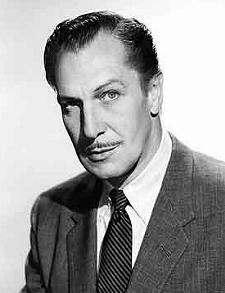
This Sunday will mark the sixteenth anniversary of the death of a horror film legend. October 25th, 1993, Vincent Price left this mortal coil. The horror films that Vincent Price starred in were not the violent shockfests people so often imagine when they thing of the words "horror film." His films were not about gore, or quick cathartic release of tension, rather they were about fear. H.P. Lovecraft, a pioneer in American "Wierd Fiction", wrote in his essay Supernatural Horror in Literature :

5-27-1911 to 10-25-1993


The oldest and strongest emotion of mankind is fear, and the oldest and strongest kind of fear is the fear of the unknown...their admitted truth must establish for all time the geniuneness and dignity of the wierdly horrible tale as a literary form. Against it are discharged all the shafts of a materialistic sophistication which clings to frequently felt emotions and external events, and of a naively insipid idealism which deprecates the aesthetic motive and calls for a didactic literature to "uplift" the reader toward a suitable degree of smirking optimism...men with minds sensitive to hereditary impulse will always tremble at the thought of the hidden and fathomless worlds of strange life which may pulsate in the gulfs beyond the stars...


This horror of the unknown is the kind of horror that permeated the films of Vincent Price. To be sure some like the Tingler had moments of visual shock, but most of the horror in Price's films was internal to the viewed characters. The audience felt the horror not as an immediate thing which passes when the musical sting chimes, but as a lingering afterthought which remained with the viewer long after the film had been viewed.


An image from The Tingler more akin to modern horror.


Vincent Price and Roger Corman's screen adaptations of Edgar Allen Poe tales are some of the best examples of this lingering kind of fear. With modern special effects making the imagery in The Pit and the Pendulum tame, possibly completely enervated of shock value, in comparison to the slaughter a Jason Voorhees is capable of committing. It is not the violence in Pit which horrifies, it is the thought of what man is capable of doing. This is the best kind of fear, the fear that reminds us as we look into the abyss that the abyss is looking back into us. True fear is horror at the possible meaninglessness of existence and the potential cruelty of man. How horrible is the realization in Fall of the House of Usher that Roderick Usher had accidently put his living sister prematurely into the tomb? The audience who watches this film can imagine both having to dig oneself free of an early grave and the terror of realization Roderick comes to when he realizes what he has done. There but for the grace of God go I.

Edgar Allan Poe is the founding voice for a great deal of American literature, including the modern horror tale. There have been some more recent Poe translations than the Corman/Price collaborations, but none seem to capture the tone as well. Price is magnificent in roles where we get to watch an otherwise noble man descend into madness. The Corman/Price films also manage to capture hints of the "unreliable narrator" literary device that Poe was famous for using/inventing. The lens through which the audience views the scene isn't the unreliable narrator, but the characters themselves often conceal their real motivations from each other. Have fun this Halloween with horror whose legacy can be seen in the SAW series, and the first HOSTEL, though the Poe versions spend a little more time on psychology of terror and less on the visceral sensations.


Thursday, October 22, 2009

Button Men for the iPhone: Thrust Interactive and Cheap Ass Games Release a Winner


I have long been a fan of the deceptively simple Cheap Ass game Button Men. In the game, each player possesses a button, the kind with a pin that fits nicely on those lanyards one tends to acquire at gaming conventions, which bears a nice looking illustration and a series of five numbers listed from lowest value to highest. Those numbers represent dice the player uses in an abstracted, and dice based, version of War. The goal is to "capture" your opponent's dice, which are each worth a point value equal to the number of sides that die possesses, by one of two methods (in the basic game at least). You can capture your opponent's dice through "power" attacks or "skill" attacks. The Button Men website does a wonderful job of describing the rules in detail.


It's great fun that seems mindless at first, until you finally encounter the player who plays the game "rationally." Then you come to understand that there is more to this little diversion than mere random chance. Strategy matters. Button Men is iconic of the inexpensive, but challenging/fun/and deep, games that James Ernest has made a career designing. The table top version of the game is a true classic that I cannot recommend highly enough.

So when the Button Men iPhone app became available yesterday, I found out thanks to John Kovalic, I leapt at the chance to purchase it. I didn't really know what the game would offer, but my hopes were high. I have come to trust Cheap Ass games over the years, their "Totally Renamed Spy Game" is one of the best card games ever made, but I have no experience with Thrust Interactive (

I had some minimum expectations. I hoped that the game would be graphically appealing, contain a decent variety of "buttons," and offer a decent randomization mechanism for two-player play. Essentially, I hoped -- at minimum -- that it was a game I could play with a friend by passing my iPhone between us.

What was offered was that and more. The game features buttons from two of the button men sets -- Soldiers and Vampires -- with new artwork that is appealing and with a color palette suited to the iPhone's digital display. Not all the artwork is better than the old images, the new picture of Shore is one of the weaker images, but the Starchylde and Dunkirk images are excellent re-inventions of already excellent images.


The game allows for 1 or 2 player games. In the 1 player game, I have been impressed with the AI so far -- though it has made a couple of baffling choices from time to time -- and have found it to be quite a time consuming distraction as I test different strategies. The 2 player version can be played in one of two ways. You can share your phone with your opponent, the 2 player play I expected, or interact with your opponent through bluetooth. I haven't had a chance to play a bluetooth opponent, but you can bet I'll be hunting down someone at the next gaming convention I attend.

The inclusion of two full sets of button men -- a $40 value if you buy the physical buttons -- for a $2.99 price makes this a bargain. The game play of the iPhone is quite addictive. Thrust's Button Men captures the simplicity and complexity of the tabletop version and adds some nice animations and sound effect to make a must buy application for any gamer's iPhone.

Now when are the Brom, Dork Tower, and Diceland expansions coming out?

Speaking of Diceland...when do I get that app?

Wednesday, October 21, 2009

Yet Another Glimpse of the Internet's Purpose

The internet was put upon this Earth to provide us all with entertaining, and mildly disturbing, DIY created content. Famous for this kind of fair are the folks at Rathergood.com, who provided us with that internet classic "We Like the Moon."

Below is their more recent video Agamemnon -- catchy and disturbing. One would also like to note that while having an overweight man dance while dressed like the 300, Agamemnon was never king of Sparta his brother Menelaus was. Both lived in Sparta for a time, but Agamemnon returned to his homeland and conquered those who had force him and his brother into exile.

Tuesday, October 20, 2009

Blogging Northwest Smith: "Scarlet Dream"


Published in the May 1934 issue of Weird Tales, "Scarlet Dream" is the third of C. L. Moore's tales of the interplanetary rogue trader Northwest Smith. It is also the third story in Paizo's Northwest of Earth collection. With this tale one can really see C. L. Moore developing her voice as an author of the weird supernatural horror story. Of the three Smith tales I have read for this series of blog posts, this is the best of the bunch so far.

Like in her previous Smith stories, there is little within the narrative itself that signifies that this is a science fiction story. Other than the fact that Smith eventually uses his magic wa... err ... "gun" against a foe, this story fits firmly within the narrative tropes of the "faerie" tale. Like Christina Rossetti's wonderfully frightening Goblin Market the tale demonstrates the consequences of tasting the "fruit" of Faerie. Like Dunsany's King of Elfland's Daughter, this tale has time in the land of magic move at a different pace than that of the real world. Unlike either of those tales, morality offers no salvation for our hero.

"Scarlet Dream" begins with Northwest Smith wandering the streets of a vibrant bazaar where he purchases a shawl made of an unbelievably light textile and bearing a mysterious glyph. The shawl, "clung to his hands like a live thing, softer and lighter than Martian 'lamb's-wool.' He felt sure it was woven from the hair of some beast rather than from vegetable fiber, for the electric clinging of it sparked with life. And the crazy pattern dazzled him with its utter strangeness."

In describing the physical properties of the shawl, Moore provides foreshadowing to the events that are about to unfold as the tale progresses. It is masterful foreshadowing as it occurs in a description where one does not assume the author is providing a map to the structure of the tale. Who would guess that the shawl clinging "to his hands like a live thing" hinted at darker things to come? Not darker things from the shawl itself, that would be obvious, but darker things that come as a result of the unnatural properties of another world. The use of strange patterns and objects of alien make would be used again by Moore in her section of Challenge from Beyond -- a shared universe tale she wrote in 1935 with H.P. Lovecraft, A. Merritt, Robert E. Howard, and Frank Belknap Long. Each of those authors adding their own characteristic touches to the story. In Moore's case, that touch is an artifact -- a shawl in "Scarlet Dream" and a crystal in "Challenge."

The market where Smith buys the shawl is in the city of Lakkmanda on Mars, but the description of the market is similar to one that might be given to the bazaar of Baghdad. It is not until Smith returns to his hotel room, a small cubicle of polished steel, that one gets any visual sense of the science fictional (sfnal). It doesn't detract from the story that it isn't a "hard science" tale, it adds to the mystery and sense of wonder as the tale unfolds.

Smith falls asleep covered in the shawl and is overtaken by a disturbing dream. He awakens, only to fall back asleep into another dream. It is in the second dream that Smith's consciousness is transported into a fantastic land. When he arrives he meets a young woman who is fleeing a horrible beast. She is covered in blood and frantic. Smith calms her and soon discovers that he is in an eerie bucolic paradise. The weather is pleasant and the lakeside landscape is beautiful. The temple building where he arrived in the world is the only large man made structure. There are no books, no worldly distractions, and as he soon learns...no food.

He is initially puzzled by the lack of food, but the beauty of the land -- and of the woman (whose name is never revealed) -- intrigue Smith and he follows the young woman to her house. The next day Smith finds himself overcome with hunger and asks the young woman to take him to the temple to acquire sustenance. When he arrives, he sees people kneeling before spigots docilely consuming the liquid being dispensed. He himself begins to partake when he realizes that the people, and now he himself, are feeding on blood! No mention is made of where the blood comes from, and Smith recoils in horror at the thought of feeding on blood. Yet...he has found it satisfying. As the days pass, he eventually partakes in a routine of idyllic days and nights with the young woman interrupted only by regular feedings at the temple. Smith has completely overcome any moral objections to the feeding, satisfied that it sustains him.

Throughout the story, there are references to a beast of some sort that was responsible for the murder of the young woman's sister -- beast that eventually comes for everyone when their time has come. Smith is unworried, and the girl is fatalistically accepting of her mortality. Life in this world is idyllic, yet the routine of it eventually over comes Smith. He needs adventure and discovery, not a dull routine in a beautiful setting. Unable to return home, he decides that he must journey within this realm to find adventure, but this is to be denied him. The planet has no food to sustain him, save for the temple's blood spigots, and Smith learns another terrifying fact. It seems that the entire planet, plants and all, are alive and feed on the blood of living things. If you stand too long in one place, the grass will drain you of your blood. You cannot sleep if you aren't on stone as the plants will eat you. This is a world where all the denizens are sustained by blood.

Smith is not shocked or terrified by the prospect, he is resigned to satisfy his sense of adventure. His spirit cannot be sentenced to a life of dull routine. It is his Fredrick Jackson Turnerian frontiersman spirit that saves him from a fate worse than death.

How? That's for you to find out when you read the story.

What is particularly interesting in this story is the way that Moore uses the traditional elements of the faerie story, that of entering a beautiful but dangerous world, while demonstrating how a non-moral actor would react to the environment. What use has the adventurer for bucolic paradise? Apparently, not much. It would be unfair to leave out that the girl, like the sister in Goblin Market, sacrifices herself in order to save a beloved, but in Goblin Market the spirit of curiosity is the culprit and not the savior. Also interesting was Smith's reaction to the feeding process in the world. He is initially revolted, as I imagine any one would be, but he quickly overcomes his moral rejection and feeds like everyone else. This is the moment where the audience, though not the character, get to feel a sense of cosmic horror. We look into the abyss with Smith, horrified, but he allows the abyss to look back into him and is largely unaffected. This is a disturbing thing to read. How does one react to a protagonist who so quickly, Smith does not resist eating for days nobly suffering before succumbing, to temptation?

Smith may never have discovered the name of the young woman, but the audience never discovers the origin of the blood the people feast upon. Is it the blood of those killed by the beast? Is it the blood of those killed by the planet? Is it the blood of the planet? If it is the blood of those killed by the beast, is some of it the young woman's sister's blood? Creepy...and wonderful.

Previous Blogging Northwest Smith Entries:

2) Blogging Northwest Smith: "Black Thirst"
1) Blogging Northwest Smith: "Shambleau"

Friday, October 16, 2009

Hulu Recommendation Friday: The Phantom


One of the oldest costumed superheroes, and arguably the first to wear the ever present skin tight costume, is Lee Falk's 1936 creation The Phantom. The Phantom, as a character and narrative construct, helped to establish the basis for the modern superhero tale. His origin, though it included some elements likely inspired by Burrough's Tarzan, can easily be seen as the model which has dominated the genre.

The 1996 film, starring Billy Zane as The Ghost Who Walks and directed by Simon Wincer, was produced during a time where Hollywood wasn't quite sure which direction to go with comic book characters. The films of the era -- Batman, The Shadow, and The Phantom (to name a few) -- were simultaneously serious and campy. Hollywood hadn't yet reached the point where it could trust that superhero narratives on the big screen could be presented "straight." One would think they would have learned the lesson from the Superman franchise, which had two excellent entries -- neither of which were particularly campy -- and two awful entries -- both of which were campy.

Of the three films mentioned above, Batman (directed by Tim Burton) was the least campy, but it did have its moments of campy awkwardness that seemed to clash with Burton's moody expressionist representation of Gotham. Burton's Batman is a great Bruce Wayne film, but it isn't a great Batman film.

The Shadow, though campier than Batman, is almost a perfect representation of the title character -- it's so close that fans can see what the film would have been if it had been serious. It would have been a great serious movie, but it is also an entertaining campy movie. The reflexive ironic jingoism of Alec Baldwin's character is wonderful, as is Margot Lane, leaving only the over the top Tim Curry (who I usually love) lessening the enjoyment of the film. Well...Tim Curry and the weird prosthetic makeup that Baldwin wore as the Shadow are what are wrong with the picture. Still it is an entertaining piece.

All three of the "transition" films were entertaining, and that includes The Phantom. One doesn't have to look past the one sheet to realize that the film falls more on the campy side of things than to the straight, which is a shame. Treat Williams and Cary-Hiroyuki Tagawa would have been excellent in a straight version of the film. They are entertaining here as well, but by deciding not to update the look of The Phantom's costume, the film doomed itself to campville. As camp, the movie is a fun ride with some genuinely entertaining action sequences. It's also fun to run around shouting "Slam Evil," as my friends and I did while displaying our collection of Phantom rings (the promotional item used to promote the film).

Enjoy the film, but enjoy imagining what might have been as well.


RHI Entertainment, who brought us the excellent Tin Man and the horrible Flash Gordon, are working on a new television version of The Phantom -- the preview is below -- which looks promising. The RHI series looks like a combination of The Phantom, TNT's Leverage, and Remo Williams, but that could be fun...and at least they updated the costume.


Wednesday, October 14, 2009

Conan Remembers the Alamo? -- Sanford Allen Discusses San Antonio's Influence on Robert E. Howard's Writing


For all that it is well-known that Robert E. Howard was a native of Texas, whose wild imaginings of far off lands took place without his leaving the Lone Star State, it is too rare that the influence its landscape and people had on Howard's tales. It is an important question to ponder as most writers instill into their stories a sense of place.

Sanford Allen, and his compadres (I was born in El Paso, so I'm allowed to use the word compadre) over at Mission Unknown, are writing a series of blog entries discussing San Antonio's place in the history of SF Universe. One may not necessarily think of San Antonio as particularly sfnal, so Mission Unknown is mapping out S.A.'s place on the SF map.

The most recent entry is a discussion of San Antonio's influence on Robert E. Howard's writing. A nice companion to this line of thought is Monkeybrain Books' Blood and Thunder: the Life and Art of Robert E. Howard.

Of particular interest in the Mission Unknown post is the influence that a valley an hour north of San Antonio -- a stone's throw in Texas -- had on Howard's poem Cimmeria.

Tuesday, October 13, 2009

Maurice Sendak to Worried Parents...


"...go to hell."

From all the previews I have seen, I have been of the mindset that Eggers and Jonze missed the point of the children's book. All the talk of "heartwarming" and all the imagery of innocence were essentially shouting at me that the movie missed the dark aspects of the book.

Let's face it, the book is about a kid who "is wearing his wolf suit" and gets sent to bed without supper because of his bad behavior. The kid then spends 90% of the book reveling in his anger, so much so that he becomes the "Wildest Thing of All." Whether the suit is something he is actually wearing or a visual metaphor for the child's incorrigibility isn't clear, and doesn't matter. The point is that the kid is so angry that monsters think of him as their king.

Additionally, these monsters -- who represent the child's anger -- affectionately call out that they will eat him up if he returns to them and doesn't go to where he is loved. He will literally/figuratively be "consumed" by anger if he doesn't seek out the love of his family. WOW! That kid is one hate filled child.

Very different from the one portrayed in the previews.


Seeing stuffed monsters that look like fat versions of the Velveteen Rabbit didn't instill in me any sense that the film captured that kind of anger, and it still doesn't.

I'll watch the movie in full to see if Eggers and Jonze really did miss the point, but it is clear that Maurice Sendak came to the interview with his Wolf Suit on and has no plans of going home.

Has Science Fiction Leaving the Ghetto Meant the Beginning of a Post Sci-Fi Age? Stupid Question #3182

I have always been a Sci-Fi fan, a scifi fan, and a skiffy fan. While there is much to admire in the philosophically or politically sophisticated science fiction story, or the well-written literary SF tale, I have always liked literature that knew what its purpose was and fulfilled that purpose. The purpose of a Sci-Fi story is to entertain an audience with visions of the possible, and impossible, in an exciting and enthusiastic manner.

The Sci-Fi story doesn't spend pages upon pages describing sophisticated political systems, though there is nothing wrong in doing so in other sub-genre of Science Fiction. Instead, the Sci-Fi story uses readily recognizable archetypes as shortcuts for the audience to follow. Sci-Fi is Flash Gordon, Buck Rogers, Luke Skywalker, Northwest Smith, and Vic Corsaire.

One could probably get into long arguments regarding what is or isn't Sci Fi versus what is or isn't SF (literary Science Fiction), and those are fun discussions to have, but that is not the intention of this post today. Today, I am here to once again lament those who insult and deprecate Sci Fi in favor of a literary sub-genre they believe to be a far more noble pursuit. For these individuals, the ideal Science Fiction tale ought to be literary and "important." The SF story should touch on topical issues and present intelligent arguments about these issues. Such works include, but are by no means limited to, works like Asimov's Foundation, the works of H.G. Wells, Heinlein's Stranger in a Strange Land, Huxley's Brave New World, and Iain Bank's "Culture" novels. All of which are works to be admired, and are great literature and great Science Fiction, but none of which are the be all and end all of Science Fiction. In fact, many might not stumble into these wonderful stories if they weren't first enticed by the "fluff" contained in "skiffy."

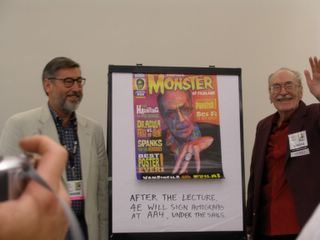
As you can tell, I am an unabashed fan of the "skiffy." My fandom was carved deeper into my soul after I attended a Forrest J. Ackerman panel at the 2005 San Diego Comic Con. There's something about sitting in a room where the audience is fewer than 20 people in the audience of like-minded fans that solidifies one's fandom. It doesn't hurt when one of them is John Landis (sitting right next to you) and he keeps elbowing you just before Forrest Ackerman's punchlines and is mouthing the words to each of Forry's stories. It was obvious that Landis had talked with Forry numerous times and that each time was magical. That kind of excitement is contagious.


All of which brings me to an article by Damien Walter at the Guardian book blog. I first got word of the book blog entry thanks to the excellent folks over at SF Signal, where they asked if the "Sci Fi" label still applied. Their answer is identical to mine, "Yes, the Sci Fi label is still important." But after reading their post, and the piece in the Guardian, I realized that a short rebuttal of Mr. Walter's blog post was insufficient as a response to Mr. Walter's post.

In the Guardian piece, Damien Walter begs the question of whether we as a popular culture are now "post sci-fi." His central thesis seems to be that "with sci-fi filling up every corner of cinema and TV and mainstream literature borrowing its ideas freely" there is no further place for the literary tradition to advance now that it has become a cultural phenomenon. His post is an articulation which might as well be renamed "The End of Sci-Fi and the Last Man."

One of Walter's key arguments is that "the walls of speculative fiction [that dread phrase -- C.L.] as a genre are quickly tumbling down. They are being demolished from within by writers such as China Miéville and Jon Courtney Grimwood, and scaled from the outside by the likes of Michael Chabon and Lev Grossman. And they are being ignored altogether by a growing number of writers with the ambition to create great fiction, and the vision to draw equally on genre and literary tradition to achieve that goal."

This is all well and good. It is even true as far as it goes, but it demonstrates (as Walter does elsewhere in the piece) a complete lack of understanding regarding the literary history of Fantastic Literature and Fantasy. What were the Iliad and the Odyssey, if not works of Fantasy or "Speculative Fiction?" What was A Midsummer-Night's Dream and The Tempest, if not Fantasy? The Faerie Queene? The Rime of the Ancient Mariner? Beowulf? The Oresteia? The Eddas? What is Mary Shelley's Frankenstein or Edward Bellamy's Looking Backward if not Science Fiction?

All of the above a great literary works, written to be great fiction, and yet all of them fit neatly within any imagined definition of Fantasy or Fantastic Fiction. True, few of them are Science Fiction qua Science Fiction, but SF is the sub-genre not the genre -- a simple fact that Walter gets horribly wrong in his piece. To quote, "yet the literary tradition that has its roots in HG Wells and Jules Verne, Edgar Allan Poe and George MacDonald, that grew through the writing of Tolkien, Lieber, Howard, Heinlein, Clarke, and Asimov, and branched into the modern genres of fantasy, horror and science fiction, may have reached its fruition."

HG Wells and Jules Verne are the "roots" of the tradition? One might think of them as the branches closest to the trunk of the tree, but the roots? Is Walter serious? All the writers Walter mentioned are influenced by those works of Fantasy that predate them. One might argue that the 20th century was one where the literary world felt compelled to carve unnecessary categories into the literary landscape, categories designed to serve market interests, but one oughtn't think of 19th century writers as the root of a tradition. Don't even get me going on how one would attempt to draw a direct literary line from Wells to Howard.

It is not baffling that Walter piled Modern Fantasy and Science Fiction together, as they are both sub-genres of the Fantastic Tradition. That is true, but so is the work of Michael Chabon. Anyone who thinks Gentlemen of the Road is an attempt to scale the walls of Fantasy genre fiction from the "outside" is woefully mistaken. Gentlemen of the Road is a wonderful story in the direct tradition of Fritz Lieber, with no pretenses to being something else. It should be noted that much of the fiction of Avram Davidson is as worthy of literary consideration as that of Michael Chabon, and was as genre breaking for its day.

Just because Michael Chabon can draw from literary traditions other than the Fantastic Tradition when writing a story isn't a sign that we are in a "post sci-fi" era. It is merely a sign that Fantastic Fiction is ending a period of incestuousness where it fed off of itself for as long as it could. The fact that people are talking about the science fiction, or fantastic, elements of "literary fiction" is a sign that speculative fiction [that dread term again] is overcoming a certain stigma given it by literary critics and by "fans" who deride the fiction within their sub-genre which seeks to appeal to a wider audience.


*3182 is the number of lines in the epic poem Beowulf and his used here because of the muddled way Damien Walter articulates the lineage of Science Fiction and Fantasy.

Monday, October 12, 2009

Blogging Northwest Smith: "Black Thirst"


In the last installment of "Blogging Northwest Smith," I discussed how C L Moore's tales of Northwest Smith included elements of Space Opera and Weird Horror and pushed the envelope of what constituted a Science Fiction tale. By Space Opera I am referring to the earlier "Space Opera equals Space Westerns" description often used during the early days of the genre.

I am far from the first to notice that Moore incorporated elements of Weird Horror into the tales of her space faring anti-hero, Lin Carter noticed her inclusion of these elements and thought it likely they were added to garner publication in Weird Tales. Whatever Moore's reasons for including Weird Horror elements, as she did with her adaptation of the Medusa into "pleasure vampire" in "Shambleau," she was deeply enough tied to the Lovecraftian circle that she was one of the co-authors (in fact she was the jump start author) of a Lovecraftian "shared world" tale entitled The Challenge from Beyond (more on this in a later post).

For the modern fan of Science Fiction, the incorporation of horror elements into a Science Fiction narrative seems perfectly natural. Everything from the Atomic Horror films of the 50s and 60s to Ridley Scott's masterpiece Alien (based on A.E. van Vogt's 1939 Astounding story "Black Destroyer" which was included as chapters 1-6 of The Voyage of the Space Beagle) to Joss Whedon's Firefly demonstrate how deeply saturated film and television are with the SF horror story. But for fans of "Space Westerns," Foundation, or modern Space Opera, the shift in suspension of disbelief from hard SF to Weird Horror SF isn't guaranteed.

When I read "Shambleau," I was struck by how much the narrative followed the format of a classic Western and by how the monster/alien of the tale was Lovecraftian in nature -- tentacles and all. "Black Thirst" takes the combination of Science Fiction and horror a different direction than "Shambleau." Where in "Shambleau" the tale was one of Weird Horror overlaying a Western, "Black Thirst" is a tale of Gothic Horror that contains no small elements of the Western and Weird Horror genre.

Our tale begins with our protagonist, Northwest Smith, leaning against a warehouse wall in some unfriendly waterfront street on Venus. He soon encounters a woman, immediately recognizable as a Minga maid, who begs Northwest to visit her in the Minga stronghold in order to provide her some sort of aid.

Moore spends some time describing the Minga palace as a building that pre-existed the majority of civilization on Venus, describing how the stronghold was already built by the time some great Venusian explorer had sailed the seas in search of new land. The Minga maids themselves are as mysterious as the palace from which they are sold, they are "those beauties that from the beginning of history have been bred in the Minga stronghold for loveliness and grace, as race-horses are bred on Earth, and reared from earliest infancy in the art of charming men. Scarcely a court on the three planets lacks at least one of these exquisite creatures..."

Establishing the mysterious origins of the stronghold and the maids, Moore quickly establishes the dangers associated with attempting to "lay a finger" on a Minga maid. It is a danger with no appeal as "The chastity of Minga girls was proverbial, a trade boast." The purpose of these beauty slaves seems not to be a sexual one, and this is reinforced later when the real purpose of the breeding of the maids is reveals, but a purely aesthetic one. The women are bred for their beauty, in form and manner, and the price paid is for these things alone.

The concept of a stronghold of courtesans, trained in the art of charming men, combined with the similarities between Malcolm Reynolds and Northwest Smith leave one wondering if Joss Whedon had read this tale before creating Firefly. Not to imply with any certainty that Whedon was directly influenced by Moore, but it is hard for me to visualize anyone other than Nathan Fillion playing Northwest Smith in a movie -- and if he did Whedon fans would cry foul that Northwest is a direct Mal ripoff.

As the Minga maid, named Vaudir, leaves Smith she does so with a warning. She warns Northwest about the evil that is the Alendar and hints at his origins when she discusses there are "elemental" things that don't sink back into the darkness from which they came if a civilization develops too swiftly. "Life rises out of dark and mystery and things too strange and terrible to be looked upon." Here she hints at the history of the Minga and the Alendar and Moore incorporates imagery from Weird Horror. The concept of elemental evil is one of Weird Horror and it is the type of horror that is used to describe the Alendar.

Smith agrees to help the maid and approaches the stronghold as she told him he should. What follows is a series of scenes reminiscent of Bram Stoker's Dracula in which our hero plays, a much braver version, of Jonathan Harker. Smith wanders the hallways of the palace sensing, but not seeing, the great evil that awaits him. He arrives at Vaudir's room, but it is not long before he encounters the Alendar him/itself. The Alendar is a manlike creature possessed of great psychic powers, powers which overwhelm our protagonist and could kill him in an instant. But a quick death is not to be for Smith as he possesses something of value that the Alendar desires.

The Alendar, it seems, is -- like the Shambleau -- a kind of vampire. Unlike the Shambleau the Alendar does not feed on sexual/physical pleasure, instead he/it feeds on beauty. For the Alendar beauty is a tangible thing, an objective thing that provides real nourishment. The only way in which beauty is subjective regarding the Alendar's hunger is in its "form." What is beauty for a human female isn't beauty in a human male, which is why the Alendar has spared Smith. Smith possesses the quality of male beauty which must be fully developed before the Alendar can feed on him. As the Alendar describes his method of nourishment, Smith is given glimpses of unimaginable beauty -- beauty that can cause madness.

How the tale unfolds from here I will leave for you to discover on you own, but I would like to spend some time discussing some of the interesting concepts Moore threw into this story.

She is quite obviously writing a tale about slavery and presents human trafficking as a horrible affair, but she is also presenting a discussion of beauty and what constitutes true beauty. The Alendar describes beauty as follows:

"Beauty is as tangible as blood, in a way. It is a separate distinct force that inhabits the bodies of men and women. You must have noticed the vacuity that accompanies perfect beauty in so many women... the force so strong that it drives out all other forces and lives vampirishly at the expense of intelligence and goodness and conscience and all else...

For beauty, as I have said, eats up all other qualities but beauty."

The beauty that Moore has the Alendar describe is in itself horrifying, yet it is also an interesting spark for discussion. Vaudir -- who has asked Smith for assistance and led to his current state of danger -- is beautiful, but she possesses something more. She possesses and intelligence and free will that make her more desirable to the Alendar than her beauty alone would demand. Smith too possesses this combination of independence and beauty, a combination that the Alendar seeks to use in order to overcome the boredom which results from the consumption of his current fare of pure beauty. Moore is simultaneously critiquing the "cult of beauty" and proffering an alternative -- a beauty that combines intelligence, independence, and appearance. There is a strong feminist spirit underlying the story and it is this spirit that separates this tale from a run of the mill narrative.

As before, Moore combines elements from a variety of literature in this piece in a manner that is fluid. The discussion of elemental evil has ties to Weird Horror. The Alendar, his stronghold, and the equation of beauty itself with the horrific echo Gothic Horror. The manner in which Smith is encountered and the stories resolution are straight from a Western, one could easily see "Black Thirst" as an episode of Wild, Wild, West. With all that Moore combines genre elements one might expect to become lost in some residual narrative clutter, yet that never occurs. Moore has a story she wants to tell, of a vampire who consumes beauty yet seeks something more, and it makes for quite an entertaining ride.

Previous Blogging Northwest Smith Entries:

1) Blogging Northwest Smith: "Shambleau"

Thursday, October 08, 2009

Where "Dollhouse" Went Wrong

In his Entertainment Weekly column on Monday, Marc Bernardin asks the question "Where did 'Dollhouse' go wrong?" His article, in short, is an expression of his concern that the show will soon be canceled because its ratings (that's the number of people who watch the show) are on the decline. He mentions a number of contributing factors to the show's decline: Whedon's tendency to have strong finales and week starts, the "Friday Night Death Slot," poor advertising, and bad lead in programming.

I have another explanation, one that Bernardin overlooked. I think it is odd that Bernardin overlooked it, as we generally have very similar tastes when it comes to the pop culture/mass media menu, but he overlooked it none the less.

In a nutshell, it's because "Dollhouse" never gave me a reason to CARE about what was going on. Certainly, there were entertaining episodes that were filled with Whedonesque action and humor. And it would be unfair to say that I didn't care about any of the characters on the show. I worried about Echo's (Eliza Dushku) safety. I also enjoyed the portrayal of the FBI agent Paul Ballard (Tahmoh Penikett) and Echo's handler Boyd Langton (Harry Lennix). In fact, Lennix's portrayal of his character's conflicts are one of the strongest elements on the show. As a fan of 'Angel,' I was pleased to see Amy Acker working again in the roles of Dr. Saunders/Whiskey.

In fact -- I'll just put it out there -- I liked all the characters and actors on the show. Their performances were strong, especially the aforementioned Lennix and the unmentioned Alan Tudyk (who is always awesome), and I always felt like I was watching "real" people in a "real" universe.

Yet I still didn't care.

Why?

Because Whedon and crew never made it clear to me whether I should support or hate the human trafficking organization at the root of the show. Is the "Dollhouse" supporting some amazing philanthropic work that is threatened by the outside world, or are they just an organization that wipes people's minds in a kind of "forgotten" indentured servitude? Are they just an immoral human trafficking company that happens to have employees that I find pleasant?

If that's the case, and it seems to be, then there is little stake for me as a viewer in the narratives that Whedon and crew offered as a story arc. If Echo is trying to bring down the techno-brothel (where the doll's have no say in what they can/will do and won't remember anyway), I have a stake. Given the presentation of the Dollhouse so far, the only character I could really root for is Alpha (Alan Tudyk), but he's dead now having failed in his mission to defeat the Dollhouse and attain apotheosis. Sure he was crazy for the desire to become a living deity, but he was perfectly right in seeking to bring down the Dollhouse -- as it has been presented to us.

I could write at length about Whedon's seeming obsession with brothels/prostitutes as manifest in this show and Firefly. But at least the "courtesans" of Firefly seemed genre appropriate, possibly even inspired by C.L. Moore's Minga maids from her Northwest Smith story Black Thirst. Given that Malcolm Reynolds is the closest approximation of Northwest Smith to appear on any screen, I wouldn't find it surprising if NW were the entire inspiration behind Firefly, but you can read more about Firefly and Northwest Smith in a future "Blogging Northwest Smith" post (you can read the first one here). The dolls of Whedon's "Dollhouse" universe don't seem to be deeply rooted in the needs of the universe Whedon has presented in the series. In Firefly the courtesans also doubled as spies and were an integral part of the social dynamics of the 'verse. Last I checked, there was no equal need in the modern world unless your last name is Mitterrand.

Why should I desire the continued existence of the Dollhouse in the "Dollhouse" universe? There are a couple of hints, like with the Mellie character, but never any concrete reasons given. Unless I'm just supposed to think that human trafficking to fulfill sexual (and other) fantasies is unquestionably a moral virtue. Which I don't.

The reason the show is failing is because while Whedon has given us an emotional stake in the dolls, he has failed to give us a positive emotional stake in the Dollhouse.