Wednesday, January 05, 2011

It's That Time Again -- Christian's Favorite RPGs from 2010

2010 was an excellent year for the role playing game player. Every niche of the market -- from indie to mainstream -- had significant offerings that are must have editions to the gamer's library. Some of the offerings premiered at Gen Con, the industry's equivalent of the CES, but others had their own release timelines and marketing schemes. These schemes alternated between viral pre-order campaigns to structured "in store" celebrations, but all of them were fun to watch. I have to say that while the past few years have had some great game offerings, 2010 was the first time in a couple years that so many games screamed out to me to actually play them and not just to read them and add them to my collection.

So...what products made my Top 10 Role Playing Game products for 2010?


10) The Burning Wheel: Adventure Burner

The Burning Wheel role playing game is a fine example of how the indie role playing game market is capable of making not only good products, but ones that shape the field as well. The game was first published in 2002 and some of its innovations found their way into the 4th edition of Dungeons and Dragons. The game is an rpg by game theorists and designers for game theorists and designers. That doesn't mean that the game isn't fun to play, it is, but it does mean that the way the game is presented changes the way you view other games and inspires tinkering. Once one has read The Burning Wheel books, one cannot read the Skill Challenges in 4e without seeing the game's influence on the hobby. The game encourages player to game master interaction in a way that some might find intimidating when used in play, but the rewards for doing so are grand.

The only complaint fans of the game can legitimately voice is that the release schedule for support products is pretty slim, and adventure support had been non-existent. This year Jared Sorensen* Luke Crane, Thor Lavsrud, and crew released The Adventure Burner supplement for the game which contained three adventures to aid game masters in designing their own scenarios. Like all Burning Wheel offerings, this book has applications well beyond use within the Burning Wheel system. It is a must have product for game masters of any system, as much of its advice is universal in application.


9) All for One: Regime Diabolique

Paul "Wiggy" Wade Williams is one of the most prolific authors in the history of role playing games. More than that, he is one of the most consistently entertaining authors writing games today. One of the reasons for Williams' high output is his ability to take ideas from history/fiction/television and to transform them into his own interpretation. His Hellfrost campaign setting combines the dark fiction of George R.R. Martin, the Icelandic Sagas, Roman History, and Arthurian legend and is one of the best RPG settings available today.

After I learned that Williams would be writing a game using the Ubiquity game system, most of his past work had been for the Savage Worlds game rules, I was intrigued. The Ubiquity rules system was created by Exile Games Studio for their excellent Hollow Earth Expedition game. When I saw that this game would be a swashbuckling adventure set in 30 Year's War France and would include Musketeers, Werewolves, Witchcraft, and Demons, I was sold. I purchased the volume at last year's Gen Con and was delighted by the product. If you loved "Brotherhood of the Wolf" or any of the Three Musketeers stories, but thought they would be slightly improved with the inclusion of the supernatural, then this game is for you.


8) Pathfinder: Advanced Player's Guide

For fans of the 3rd Edition of D&D, Paizo's Pathfinder role playing game was a god send. Typically, when a company updates a rules set players are left with the decision to either grudgingly shift over to the new rules or to continue to play using the old rules knowing that they won't be receiving any product support in the future. This is even more the case when the rules update is so dramatic as the shift between the third and fourth editions of D&D. Thanks to the Open Gaming License and the talented game designers at Paizo Publications, this wasn't the case for 3rd Edition players. Paizo thoroughly, and publicly, playtested their adaptation of the 3rd edition rules and published them as the Pathfinder role playing game. The game is beautiful to look at and corrects some of the flaws of 3rd Edition, while only introducing a couple of its own. It certainly isn't a game that I would use to introduce people to role playing games, but it is one of the premiere games in hobby -- and for good reason.

Last year Paizo released their Advanced Player's Guide which added new core classes and numerous options to the already robust game system. This is a must have for Pathfinder fans, and for 3e fans of all stripes. Paizo's work on this product is excellent.


7) Fabled Lands Gamebooks

Dave Morris, Jamie Thompson, and Russ Nicholson are names that harken back to the Golden Age of White Dwarf Magazine, back before it became a house organ promoting only Warhammer miniatures. Toward the end of the gamebook explosion of the 1980s Morris and crew released a series of gamebooks under the Fabled Lands title. Six books were published, but only three were made available in the States. The books featured complex puzzles, a simple but robust game mechanic, and interactions between the volumes. Choices in one book could lead directly into another volume. Sadly, the market for gamebooks had dwindled by the time these books were released and they never caught on.

Recently, there has been a resurgence of the gamebook market both in print and as applications on the iPhone/Pad. The Fighting Fantasy gamebooks are available as apps and excellent new offerings like those of Tin Man Games have emerged to create interest in the genre. The time was ripe for the Fabled Lands books to reemerge and last Christmas they were republished by a company owned by the books' creators. Give these a chance.
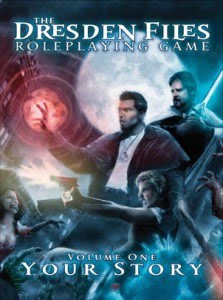

6) The Dresden Files Role Playing Game

Based on Jim Butcher's New York Times Bestselling urban fantasy series Evil Hat Productions' Dresden Files rpg is proof positive that small independent companies can make games that look, feel, and play like those made by the big corporations. Dresden Files uses an adapted version of the FATE rules system to create an easy to play game that incorporates player involvement beyond mere character creation. The entire group gets together to create the setting, the stakes, and the opposition that will occur in the campaign. The systems are innovative and the planning sessions are as fun as typical rpg game play sessions.


5) Deathwatch

For years fans of the Warhammer 40K Universe have awaited a role playing game where we could explore our own stories in the Dark Millenium. Dark Heresy satisfied that need for many, but for those of us who find 40k to be synonymous with "Space Marines" Dark Heresy didn't quite scratch that itch. Fantasy Flight Games' release of Deathwatch satisfies that desire quite nicely. Now players who recreate tactical skirmishes on their kitchen table tops where Ultramarines face off against the terrors of the Warp can experience the struggles of the individual Space Marine as he serves the Emperor and protects the remnants of human empire.

What more can you ask for really? A good rules system with a beautiful rulebook filled with detailed narrative information? Oh...this has that too.

Now all I need is an Eldar 40K rpg and my world will be complete.


4) Gamma World

For decades TSRs Gamma World has been a kind of awkward stepchild of D&D. The game has always had interesting ideas, and has had a couple of quality releases, but it never seemed to receive the corporate marketing support that it deserved. When Wizards of the Coast released the latest version of Gamma World, written using the 4th Edition D&D rules, they could have treated it as it had been treated in the past. They could have published a single volume with little fan fare, or released a game that lacked mechanical similarities to the company's flagship rpg. Instead Wizards created a product that they fully promoted that had monsters that were compatible with the 4th Edition rules set.

They also released a game that is one of the most entertaining gaming experiences around. If you've ever wanted to play around in a post-apocalyptic wasteland as a Pyrokinetic Yeti, as a Telekinetic Plant, or as one of a number of other combinations, then this is the game for you.


3) Castle Ravenloft

With Castle Raventloft, Wizards of the Coast managed to create an entertaining cooperative dungeon crawl board game that was also a perfect introduction to the role playing game hobby. As with super hero games, I am a dungeon crawl board game completist. When I purchased Castle Ravenloft, I expected it to be a good game, instead it was a great game. This is easily one of the best dungeon crawl games ever published. It is no surprise that the initial print run of the game sold out rapidly and forced Wizards of the Coast to delay the production of a similar follow up board game just to ensure there were sufficient copies of this game to go around.


2) Smallville Role Playing Game

I bought this game for two reasons. First, I am a super hero game completist. I own every published super hero role playing game to date, and this was a must have for that reason alone. Second, Cam Banks was one of the lead designers on the game. Banks has done some excellent work in the past on Dragonlance game products, as well as on the Supernatural RPG, and I was interested to see how he would treat super hero soap opera action.

The resulting game is one of the most exciting and innovative role playing games ever produced. From character creation to how the games mechanical resolution system emphasizes character's relationships to each other, this game breaks new ground in the role playing game field. The fact that it does all of this while creating a game that is easy to learn and understand due to its relatively simple mechanics is a wonder. If your mind was ever baffled by the concept of how a game could mechanically represent Superman while still providing mechanics that allow Lois Lane to meaningfully participate in play, then Bank's accomplishment with this game becomes even more clear. This is the first super hero rpg where playing a normal person is just as exciting and rewarding as playing the hero. Like Dresden Files this game incorporates player input in campaign and relationship creation.


1) D&D Essentials

I had been on the fence about playing 4th Edition D&D. I owned the books, but I was more than content to play in my 3.5 Eberron Game and my Pathfinder game -- then came Essentials. I was intrigued by the nostalgia appealing new Dungeons and Dragons: Starter Set that was reminiscent of the Metzger edition of the old D&D Basic Set. I read the box and was impressed by the manner in which it presented the D&D rules, but I was disappointed by some of the small errors and typos. This all changed when I read the Heroes of the Fallen Lands and Heroes of the Forgotten Kingdoms books. These books presented the new 4th edition rules not merely in a clear and easy to learn format, as was intended, but in an entertaining way as well. The narrative text made these fun to read, and it's not an easy task to make role playing game rules fun to read -- especially D&D rules. The entire product line is worth owning and broke the final layer of resistance I had to playing the 4th edition game. I am now a 4e fan and regularly run an Encounters session at my local game store. For the first time in years, I cannot wait to see what product Wizards releases next.

If you've ever wondered why D&D appeals to so many people, you cannot do much better than to start with the Essentials books.

*[edited 1/7/11 9:31 am]Thanks to Anonymous for pointing out the error in attribution. I could blame my error on the fact that I have been enjoying reading/running Parsley games lately, but that would be lame. Luke Crane is the mad genius behind Burning Wheel (or is he?). As penance, I will be buying another set of the three core books.

Tuesday, January 04, 2011

Ticket To Ride Adds Giant Monsters


Alan R Moon's Ticket to Ride is one of the best board game series of the past decade. The games combine easily understood rules, quick game play, quality game components, and "gateway" game appeal. Ticket to Ride was the game that established Days of Wonder as a prominent games manufacturer -- Memoir '44 proved they were here to stay. As the years have gone by, Days of Wonder has released a number of fun alternate versions and expansions to the original game. Most of them have been strong entries, and I have enjoyed them all, but none have excited me the way that the game's next offering has.


When I saw the announcement for Ticket to Ride: Alvin and Dexter my heart jumped a little. The high concept combination of classic train game with Giant Monsters and Alien Invaders is a sniper shot into my geek heart. The game expansion should be available in February, but you can read the rules for the expansion online today.

Monday, January 03, 2011

UK's Channel 4 Ranks D&D as 3rd Greatest Toy

Last year, on December 19th, Channel 4 aired a special hosted by Jonathan Ross discussing what he, a panel of experts, and popular vote thought were the 100 Greatest Toys. The show featured the 100 most popular toys and games in England, and my beloved D&D ranked 3rd on the list.

Looking at the list of toys and games, it quickly became apparent that D&D was being used as shorthand for Role Playing Games. RPGs were also the only category of game/toy that featured only one entry on the list. This just strikes me as off somehow. There are an abundance of wonderful RPGs that I think deserve notice, and it is debatable that D&D is even the best RPG available. It isn't really debatable that D&D created the role playing marketplace and its place as the first role playing game deserves quite a bit of recognition (pedantic discussions by patricidal game developers regarding pre-D&D role playing games aside), but should it have been the only game on the list?

What about DC Heroes, James Bond 007, Traveller, Call of Cthulhu to name just a few games that I think deserve mainstream recognition.

I can understand leaving a couple of great rpgs, like Pathfinder and Lamentations of the Flame Princess off the list as they are "pastiche versions" of games that precede their existence.

What are some games that you think deserve to be in the Top 100 games and toys of all time? How about just a list of the top 100 RPGs? I'll submit my list of the Top 30 RPGs, all of which will be games I have played, with some discussion of my criteria on Thursday.

Wednesday, December 29, 2010

Jim Ward, Creator of the First Science Fiction RPG, Needs Your Help

Jim Ward is one of the founding fathers of the role playing game hobby and the creator of the first Science Fiction role playing game, Metamorphosis Alpha. Ward's 1976 SF creation didn't merely extend the boundaries of roleplaying beyond the simulation of Fantasy novels, it offered a different style of play altogether.

Metamorphosis Alpha wasn't a game of far flung galactic empires or post-apocalyptic Earths. The game was set in a universe where interstellar travel was possible, but the game's action takes place on a single space craft. As the game's introduction describes it:

Mankind's urge to explore and expand its frontiers finally caused another push into the vastness of space -- first interplanetary, then interstellar. By the 23rd Century a great migration wave was spreading from Old Terra to the hundreds of inhabitable worlds which had been discovered in the Milky Way galaxy. During the next hundred years colonization ships of all types and descriptions went out to the stars, bearing seedling colonies seeking a better life. Many found their new homes -- for better or for worse -- but for one reason or another scores of these starships never reached their destination. This game is based on just such an event, the fact of a colony ship which became lost...

Ward's creation was more than a mere emulation of the fiction of Heinlein, Van Vogt, and Asimov, it contained it's own narrative ideas. These ideas allowed for a new experience in the role playing game genre. Players were still exploring multi-leveled complexes, dungeons if you will, but their reason for doing so was different. Instead of glory and wealth, the characters might be seeking mere survival or knowledge of a lost time.

Ward has contributed much to the hobby. He was the founding editor of Dragon Magazine, the creative force behind the Gamma World role playing game (a post-apocalyptic offshoot of Metamorphosis Alpha), and the Spellfire card game.

Sadly, Ward has been diagnosed with a serious neurological disorder. The condition is treatable, but the costs are significant and he needs the support of the gaming community. Visit the Friends of Starship Warden and do your part to help one of the original gamers.

Tuesday, December 28, 2010

Jeff Dee and Jack Herman to Release Villains and Vigilantes 3.0


Earlier this year Jeff Dee and Jack Herman, the creators of the Villains and Vigilantes role playing game, reacquired the rights to their creation and started their own company Monkey House Games in order to distribute new product for the classic superhero game. Villains and Vigilantes was the second superhero role playing game to enter the gaming market and it helped to launch superhero gaming as a legitimate genre in the hobby. The first edition of V&V was eventually pushed aside by Hero Games flagship Champions game, which became the standard against which all superhero games would be measured. Dee and Herman responded to Hero Games' entry with a streamlined and much improved second edition of Villains and Vigilantes.


While V&V was never able to match the sales of Champions during the superhero rpg heyday of the late 80s to early 90s, it had a loyal following and its creators wrote many excellent gaming products that reflected the "indie" sensibilities of the game's creators. These product included two modules written by indie comic stalwart Bill Willingham whose Elementals comics were among the most influential of the era. Where Champions could be cumbersome to play at times, and absolutely required a battlemap, V&V was a looser game that featured quick and dirty combat rules and a deep sense of fun.

Since forming Monkey House Games, Dee and Herman have released a cleaned up version of the second edition of Villains and Vigilantes -- a version 2.1 -- that featured a new cover and provided errata and clarifications to material in the Fantasy Games Unlimited published second edition. The book also features new interior artwork. While I found the new cover disappointing in comparison to Dee's older artwork, the new interior artwork is up to Dee's normal professional standards. Monkey House has also released a number of new products for the 2.1 version of the rules, and their production schedule has been sufficient to maintain the V&V momentum their start-up began with.

In fact, they have been so successful that Fantasy Games Unlimited, the successor company to the original publisher of V&V, has released new product for the game for the first time in over 15 years. This product appears to be published without proper license, but I will leave the legal wrangling to Dee and Herman. I will say this though. Don't buy a copy of the second edition V&V rules from Fantasy Games Unlimited or copies of the Willingham modules, you can purchase a more recent version of the rules from the actual creators of the game and Willingham's adventures will be available shortly.


Fans had been wondering if Dee and Herman planned on merely supporting their cleaned up version of the second edition, or whether they had plans for a new edition for the new millennium. After all, the rules are good and Monkey House was bringing back into print some of the old classic adventures in addition to publishing new ones.

Monkey House Games answered that question on Christmas Day when they officially announced that they were developing Villains and Vigilantes 3.0 and that the game would be available in 2011.

I look forward to seeing what innovations Dee and Herman have to offer.

Monday, December 27, 2010

Author of Fabled Lands Gamebooks Offers Free e-Gamebook

Fabled Lands 1: The War-Torn Kingdom


I mentioned in an earlier post that Dave Morris' excellent, and hard to find, Fabled Lands game book series was available in a new edition. I recently purchased the four available books and eagerly await further volumes in the series. One of the intriguing things about the Fabled Lands series is that choices in one book can lead you to paragraphs in other volumes. It makes for a robust experience, and demonstrates the strengths of design in the series.

Morris is making available -- for a very limited time -- an electronic copy of a relatively hard to find Gamebook. The original printing of the gamebook is easier to find if you live in the UK, but for us in the states this is a wonderful opportunity to play an engaging gamebook. It is also a good starter gamebook for those who have never played one before. It uses a simple role playing resolution system and explains the rules clearly.

If you are interested in playing a rare adventure, or interested in finding out what this game book thing is all about, head on over to Dave's Fabled Land blog and download it while you can. It should be noted that the file is in xps format. The format reads well in Explorer, and not so well in Firefox which redownloads the file every time I try to open it, and can be easily converted into a pdf if you have a full version of Acrobat.

You only have until New-Year's Eve to download the book. Do it...NOW!

D&D Morale Through the Ages

The discussion below is only for those who are really into role playing games. It deals in minutiae and might irritate non-gamers to no end. If you are not a gamer, please don't become annoyed as you will only have yourself to blame for reading deeply into the post.


I was reading through the Troy Denning Black Box the other day. The box has a nice "toy value" quality about it and is my personal favorite "introductory box" edition of D&D. I love the Moldvay/Cook Basic and Expert Sets as rules sets to play, but I think that Denning's "Dragon Cards" system is one of the best pedagogical approaches to teaching role playing games I have ever seen.


To make a long story short, I noticed an interesting rule in the Morale section of the rulebook. According to the Denning box, "A monster or NPC who rolls 12 for his morale check has become a fanatic. A fanatic need not check morale again during this particular encounter." This quote got me wondering as to what the specific morale rules were in earlier editions of "traditional" Dungeons and Dragons, since this rule seemed to go against my understanding of how morale worked in the Basic/Expert rules set.

The Denning boxed set was published in 1991, and republished with some changes to presentation in a tan box in 1994 as The Classic Dungeons & Dragons, which makes it the last edition of the Basic/Expert rules for the Dungeons & Dragons game. The Denning box was meant to serve as the introductory product that led people to purchase the Dungeons and Dragons: Rules Cyclopedia which had the "complete" rules for the Dungeons and Dragons role playing game. It should be noted that these rules were produced during a time when TSR had two D&D product lines that cannibalized some sales from one another, Dungeons & Dragons and Advanced Dungeons & Dragons.

For those of you who don't know what morale is, it is a system by which the "spiritedness" of a given monster or opponent is represented. It simulates the courage of units and how they react when they are under fire, fighting a superior force, have sustained significant casualties etc. In essence, it answers the question "do the survivors flee or keep on fighting?" A historical example of a fighting force with extremely high morale would be the 300 who fought at Thermopylae. They fought to the last with no thought of surrender. Moral rules are a legacy of role playing games war game roots. Morale is extremely important in simulation war games, and is important in some role playing games.

The above quote regarding morale checks in the Denning edition is a typical description of the mechanical resolution of checking morale in the Basic/Expert series of products, but it also -- as I will discuss later -- seems to counter mechanical to that system and I believe is based on a misreading of the rules set. It was this sense that the Denning Morale rule ran contrary to the underlying mechanics of Basic/Expert morale that made me wonder what the rules had been historically and how they changed. Maybe Denning's solution was an upgrade and not a mistake. In order to find out, let's explore the morale rules of the various editions.

Chainmail


Before there was Dungeons & Dragons there was Chainmail. The "fantasy supplement" introduced in the 3rd edition of Chainmail is one of the direct descendants of the D&D game. The morale rules are fairly arcane and lack internal consistency. Chainmail morale can be divided into three categories -- Melee Morale, Casualty Morale, and Cavalry Charge Response Morale. Units in Chainmail respond using the morale rules appropriate to the situation. Chainmail defines morale in the following manner:

In addition, the mental and physical condition of the men (their morale) is taken into consideration in this game.

Morale is checked before and after combat, basing the determination on historical precedent, just as the fighting ability in actual cases was drawn upon to calculate melee results. The loss of "heart" is at least as serious as a defeat in combat, and perhaps more so, for most battles are won without the necessity of decimation of the losing side.

In the definition we see not only a description of morale and its effects, but a justification as well. It is a justification that fits well with early editions of D&D where many of the enemies players defeat flee rather than fight to the death. The game would have been much more deadly for the player's characters if the villains always fought to the death.

Melee Morale

Chainmail evaluates morale at the end of each round of combat. This is done through a relatively arcane system, which I have paraphrased below to make the rules clearer.

1. Compare the number of casualties on each side and subtract losses of the side that lost fewer troops from the side with greater casualties. Multiply this score by the roll of a six sided die and credit these points to the side with lower casualties.

For example: Steven's 10 Heavy Cavalry attacks Charlie's 20 Heavy Foot soldiers. Two of Steven's figures are killed in the melee, but 8 of Charlie's troops are defeated. We subtract the two troops Steven lost from eight Charlie lost and get a difference of 6. We roll a six-sided die and get a 3. We multiply this die roll by 6 (the loss differential) and get 18. Steven's base post melee morale is 18.

2. We now look at how many troops each unit contains. We subtract the number of troops in the smaller unit from the number of troops in the larger unit and credit those points to the player who controls the larger unit as a bonus to his or her base morale.

For example: Charlie's unit of 12 surviving Heavy Foot soldiers contains more units than Steven's unit of 8 Heavy Cavalry. We add this difference to Charlie's post melee morale score giving Charlie a base post melee morale of 4.

3. The player now examines their surviving figures and adds up their total "morale ratings." Different troop types have different morale ratings and this number is multiplied by the number of figures of that unit type and added to that player's post melee morale rating.

For example: Steven has 8 Heavy Cavalry surviving at the end of the battle. Heavy cavalry have a morale rating of 9. Since Steven has 8 figures with a rating of 9 (9 x 8 = 72), he gains an additional 72 post morale points for a total of 90. Charlie has 12 remaining Heavy Foot soldiers who have a morale rating of 5 (12 x 5 = 60), he gains an additional 60 morale points for a total of 64.

4. We now subtract the lower post morale rating from the higher value and compare the results to the morale result chart. If there are fewer than 20 figures per side of combat, then we double the result before comparing the results.

For example: We subtract Charlie's 64 post melee morale points from Steven's 90 points and get a result of 26. Since there are now fewer than 20 individual figures per side, we multiply this result by two and get a total morale differential of 52. After looking at the chart (which I am not including as this is wordy enough), we find that Charlie's troops back up 1 full move in good order and are not fully routed.

As you can see, this system is fairly arcane and fairly involved, but it is workable for a miniatures war game. It isn't particularly effective at the "man to man" combats that typically occur in a role playing game and only takes into account group morale after a round of engagement.

Casualty Morale

In addition to using a morale system that represents the effects of changes in the comparative strengths of units, Chainmail has a morale rule that is to be used when a unit becomes unstable due to an excess of casualties. Not only can a unit become routed due to comparative losses in an immediate engagement, it can become routed due to long term (or short term) attrition as well. This kind of morale is reflected in what I call Chainmail's "casualty morale" system. It is this system which provides the framework that will inspire the morale systems of the Dungeons & Dragons role playing game.

Instability Due to Excess Casualties: When casualties from any and all causes exceed a certain percentage of a unit's original total strength, morale for that unit must be checked by rolling two dice. If the loss is brought below the set percentage by missile fire, the unit must check before the melee portion of the turn. If the loss is brought about by melee, the unit must check morale after melees have been completed for that turn. If the unit remains stable, it need not again check morale until such time as it suffers losses to the stated percentage of its original strength, but at that time it must be removed from the table for the remainder of the game.

Under this system, each unit type has a different casualty rate and required morale roll. Less "professional" units have to check morale at smaller levels of loss and need to roll higher to remain stable. A peasant levy might need to check morale after losing 25% of its membership, and would thus be completely eliminated if it ever lost a total of 50% of its starting membership. This peasant levy would have to roll an 8 or better on two six sided dice. In comparison, mounted knights might only check morale if they lose 50% of their membership and would thus require a total loss to eliminate them if they made their initial morale test. The knights might only require a roll of 4 or better to succeed on their morale check. Failure at the roll means that the troops are totally defeated. Unlike the arcane comparative system used during melee, this system is quick and easy to use.

As I mentioned earlier, it is this system that eventually inspired the morale system of the D&D role playing game. The use of percentage of troop strength lost (which could be group members or total hit points) is easier to translate to an rpg, and the use of a simple roll of two dice for resolution ensures a quick resolution.

Cavalry Charge Response Morale

The final representation of morale effects in Chainmail is their "cavalry charge response" system. Mounted troops have historically had a significant advantage over their more earthbound foes due to the fact that a cohort of well armed men on horseback is an extremely intimidating thing to face. There were rare armies, like the Romans or Swiss pikemen, who had the discipline and courage to stand firm when confronted with a mounted charge, but these were the exception rather than the rule. To represent the fear most troops experience when confronted with a charge, Chainmail uses the following system:

Cavalry Charge: In order to withstand a charge by mounted men, the defending unit must check morale. Fear of the charge was usually more dangerous than the impact of the cavalry. Units that fail to score the required total retreat 1 1/2 moves, backs to the enemy, and must rally. If both units are charging, both must check morale, adding 1 to the dice score if Foot, and two to the dice score if Horse.

This awkwardly phrased paragraph is followed by a chart that compares defending unit type to attacking unit type and gives a number that must be rolled in order for the defending unit to stand firm. For example, a force of Heavy Foot soliders must roll a 9 or better (on 2d6) or flee the charging cavalry. This system is very similar mechanically to the casualty morale system with some modification allowing for the differing ability of some troops to withstand charges from different kinds of cavalry. Like the casualty morale system, some legacy of the cavalry charge system can be seen in later editions of D&D.

Dungeons & Dragons (First Edition)


The first edition of the Dungeons & Dragons game uses the morale systems as they are presented in Chainmail and provides no specific guidelines for a morale system. All references to morale in the original 3 D&D books refer to modifiers that are applied to morale checks with one exception in the section discussing the "Loyalty of Non-Player Characters (Including Monsters)." This additional rule is a demonstration of how the morale rules were developing away from war game considerations and into narrative role playing situations. This was done by essentially combining the casualty morale rules with the cavalry charge morale rules. The additional rule reads as follows:

Non-player characters and men-at-arms will have to make morale checks (using the above reaction table or "Chainmail") whenever a highly dangerous or un-nerving situation arises. Poor morale will mean that those in question will not perform as expected.

Periodic re-checks of loyalty should be made. Length of service, rewards, etc. will bring additional pluses. Poor treatment will bring minuses.

The emphasis on "highly dangerous situations" rather than a quantified representation of damage or unit loss signifies a major shift away from mechanics and demonstrates one of the ways that D&D began to emphasize how the player's characters interacted with non-player characters could affect behavior in the long run. This is one of the early rules hinting at how to incorporate the "acting" portion of role playing games into a game by mechanically rewarding the behavior when it is done in a particular manner. Though the rule mentions the possible use of a reaction chart for morale reactions, when one looks at that chart it becomes clear that the Chainmail morale system gives more individualized results that represent the specific kind of non-player character being modeled by the rules. The reaction chart is useful as a quick and dirty solution, but it gives uniform results regardless of troop type. It should be noted that no monster is given a morale rating in this edition of D&D, though Chainmail does provide morale scores for fantastic creatures that can be used in the melee morale resolution system. How much braver a dragon is than a goblin is only reflected in the fact that goblins subtract 1 from all morale checks in sunlight.

Dungeons & Dragons (Basic -- Holmes Edition)


The word morale is only used three times in the Holmes Basic Set. The Bless spell is listed as adding 1 to morale checks, Hobgoblins are listed as adding 1 to morale checks, and the rules mention that the morale of retainers might be affected if players continually force hirelings to test potentially dangerous magic items. It appears that the Holmes set assumes that players who are interested in adding details like morale can find them in the other rules available at the time, which included both the original three D&D rulebooks as well as Advanced Dungeons & Dragons. That said, it is possible that monsters will surrender in the Holmes set if the dungeon master decides that is the case, or if the monster has a positive reaction to the player's characters when it first encounters them.

Dungeons & Dragons (Basic -- Moldvay)


It could be argued that the Tom Moldvay edited D&D Basic Set -- published in 1981 -- is the first version of D&D that can be "played out of the box." Previous editions of D&D almost required aspiring players to find a group of existing players who could explain the mechanics of the game so that the new player could play the game at all. Dr. Holmes attempted to create a version of the game that could be played by neophytes with the earlier Basic Set, but there are those who believe that he failed at the task. I think that the failure to have any morale rules, while including references to morale effects, is indicative of Holmes' failure to deliver on his intentions. He certainly laid the foundations for how a Basic Set could be written, and articulated clearly the task of a Basic Set, but it is arguable whether he succeeded or not.

Holmes described the purpose of a Basic Set in Dragon Magazine #53 as follows, "the D&D Basic Rulebook is written for people who have never seen a game. It is intended to teach the game to someone who's coming to it for the first time. All other considerations should be secondary to teaching how to play the game with a minimum of confusion." Holmes believed, and I agree, that "the first Dungeons & Dragons rule sets...were intended to guide people who were already playing the game. As a guide to learning the game, they were incomprehensible." As I have demonstrated above, the morale rules are clearly an area where this was true. Early morale rules were difficult to understand and inconsistent in mechanics, and Holmes' Basic did not dispel any obfuscation in the original rules.

Moldvay's Basic Set, the set that I learned to play D&D from, was different. It was not only clear in its presentation of the game's mechanics, it was also fun to read and contained some writing that sparked the imagination. The prose wasn't high art, but it was fuel for starving fantasy fans. It was also the first edition of D&D to have a quickly resolved, and easy to understand, morale system.

Knowing that morale rules added complexity to the game, the morale rules in the Moldvay Basic Set are optional. That said, they are easy to understand and clearly articulated:

MORALE (Optional)

Any creature in battle may try to run away or surrender. Characters are never forced to do this; a character always reacts in the way the player wishes. NPCs and monsters, however, may decide to run away or surrender. To handle this situation, each monster is given a morale score...

MORALE SCORES: ...This number is from 2-12. The higher the morale score, the better the morale. A score of 6-8 is average. A score of 2 means that the monster will not fight. A score of 12 means that the monster will fight to the death without checking morale. Creatures with a score between 2 and 12 will need to "check morale" at some time during battle, as explained below.

HOW TO CHECK MORALE: ...To check morale, roll 2d6. If the result is greater than the monsters' morale score, the monster will try to retreat...If the result is less than or equal to the morale score, the monster will continue to fight.

There are a couple of interesting points here. I believe that the Moldvay book is the first time that player's characters don't have to check for morale. Older editions of D&D are more rooted in miniatures war gaming, and morale checks would equally apply to PCs as to monsters. At least, this is the first reference I have seen to pure player empowerment with regard to moral. This is an important innovation in role playing as it gives full decision making to players. If they want to play cowards, they can. If they want to play foolhardy combatants, they can.

You can see how the Moldvay rule runs contrary to the Denning morale rule. Denning's presentation of the morale system is almost identical, save for the "if you roll a 12 on the morale check the monster becomes fanatic and won't surrender rule." Under Moldvay's system, the roll won't ever make a monster fanatic, only an initial score will. More on this difference later.

Dungeons & Dragons (Basic -- Mentzer)


In 1983, TSR published a third edition of the Basic Set. This time the rules were edited by Frank Mentzer. Mentzer brought some innovations to the presentation of the rules, including dividing the rules into a player's booklet and a dungeon master's booklet. This edition keeps the morale rules as optional and expands on Moldvay's description of how and why the rules work. Though the language is expanded, the rules are the same as those in the Moldvay edition.


Dungeons & Dragons (Basic -- Denning)

As you may remember from the beginning of this post, at least those of you still reading this will, the Denning Basic Set -- published in 1991 -- contains a change from the earlier morale rules. In Denning, "A monster or NPC who rolls 12 for his morale check has become a fanatic. A fanatic need not check morale again during this particular encounter." This is in contrast to the Moldvay and Mentzer rules where only a score of 12 indicates a fanatical opponent, and where the roll only determines incidental success or failure.

What is interesting about this rule, and why I believe it to be rooted in a misreading of the earlier rules by Denning, is that it effectively removes any difference between an 11 morale and a 12 morale. Under the Denning system, these scores are statistically identical. This is because a roll of 11 or less gives a successful morale check for the monster and a roll of 12 makes the monster fanatical. At first, I wondered if the rule was an intentional change as it gives any monster (including one with a morale of 2) the chance to become a fanatical opponent. This could lead to some interesting, and amusing, encounters, but when I checked the D&D Rules Cyclopedia -- the rules set that the Denning rules are supposed to be an introduction to -- it turned out that the Cyclopedia did not have the "roll a 12 and monster becomes fanatic" rule. This is something that only exists in the Denning version.

Having written all of this, I am pondering whether to use the Denning "mis-reading" of the rule precisely because of its fun possibilities and the randomness it adds to the game. The rule will only come into play 3% of the time for monsters with other than an 11 morale as one only rolls a 12 once in every 36 rolls on average, and it might create situations that surprise my players.

What are your thoughts on whether to use the Denning rule or not?

Post Apocalyptic Home Alone

I have always been a big fan of the Vincent Price The Last Man on Earth, as well as Charlton Heston's The Omega Man, both of which were based on Richard Matheson's story I am Legend. The story is one of the primary sources for the Zombie Apocalypse genre in film and literature -- a genre that has a fairly basic premise, but seems to continually inspire inventive narratives. One might imagine that the genre would be completely played out by now, but with shows (based on comics) like The Walking Dead and films (and books) like Book of Eli and The Road it's pretty clear that the cannibal apocalypse genre still has a lot to offer.

If you want to get into an argument about how cannibal apocalypse films and zombie apocalypse films aren't the same thing, we can talk about distinctions without differences if you really want -- but I'd rather not.

Instead, I'd like to share a small clip that I think would make a wonderful addition to the genre. It's called "I Am Home Alone." I would have gone with "I Am Alone," but that's just me. It's a mash up of Home Alone and the more recent Will Smith I Am Legend. It's pretty enjoyable. In fact, I wouldn't mind seeing a real version of this story.

Friday, December 17, 2010

Dave Morris and Jamie Thomson's Fabled Lands Adventure Gamebooks Return

In the mid-90s during the dwindling days of the vibrant Fantasy Adventure Gamebook phenomenon, Dave Morris and Jamie Thomson released their Fabled Lands series. It was a "mythical" and much talked about series among gamebook fans, but one that wasn't often seen in the United States. Dave Morris was one of the authors responsible for the Dragon Warriors role playing game (one of the most narratively driven role playing games of its time) and the books featured artwork from Fighting Fantasy artist Russ Nicholson, so the difficulty in finding the books was frustrating to many gamebook fans. I personally wondered if I would ever be able to find copies of the books, and thankfully my wait is over. Fabled Lands Publishing has recently published the first four books in the Fabled Lands series and has eight more listed on their publication schedule.


The adventure gamebook was a genre created by Ian Livingstone and Steven Jackson in 1982, with the publication of the classic Warlock of Firetop Mountain adventure. The genre combined the gaming experience of role playing games like Dungeons and Dragons with the narrative choice pathing of the Choose Your Own Adventure series. For over a decade publishers released a wide variety of these gamebooks.

The Fighting Fantasy gamebooks, being the first, set the standard for the industry. The vast majority of the Fighting Fantasy series were entertaining and inventive, but they didn't contain epic narratives that used the same character that traveled from book to book. The majority of the Fighting Fantasy series were episodic, and they failed to capture the feel of a role playing game campaign. The first series to truly capture the campaign feeling was Joe Dever's Lone Wolf series, where a player could use the same character for over 20 books as that character changed and grew and faced increasingly challenging foes.

Like the Dever books, the Fabled Lands series contains innovations that separate them from the typical gamebook. In Fabled Lands players have a wider array of character choices to play from than are typically offered. In your standard gamebook, players are typically limited to one "character class." There are books that allow you to play fighters, wizards, superheroes, kai disciples, and more, but each volume typically offers only one archetype. Steve Jackson's Sorcery is one exception, as are the Fabled Lands books. In Fabled Lands, players can choose from one of six professions which cover the majority of fantasy archetypes a player might find interesting. Additionally, Morris and Thomson included a "keyword" mechanic where players acquire keywords as they progress through the series. Possessing these keywords will affect future encounters and shape the playing experience. For ease of play, all keywords within a particular volume begin with the same letter. In The War-Torn Kingdom all keywords begin with A and the progression continues in later volumes. Fabled Lands uses a quick and effective combat system that allows for more variety in results than the Fighting Fantasy series without the use of a chart like in Lone Wolf.

My books came in the mail today, and I am eagerly anticipating my first foray into Sokara and the rest of the Fabled Lands

Light Grammatical Amusement for Your Friday Pleasure

David Mitchell, on behalf of the Queen's English, conveys a small grammatical lesson to Americans. Quite funny and quite useful.


Thursday, December 16, 2010

Harry Potter Flashmob at The University of San Diego

Students at the University of San Diego planned and performed a wizard's duel at one of the school's libraries during finals season. The performance seems a little clumsy, and the filming isn't the best, but there are a couple of magic moments and the student's hearts are definitely in the right place. I hope that these students get together for another duel with more planning time, and they definitely have to reuse the "waaaagh!" guy again. He makes the video worth every moment.

Friday, December 10, 2010

INCEPTION in Real Time

As a strong supporter of Intellectual Property rights, I am often hesitant to post links to videos that might cross the line away from "fair use" of other's IP. This video featuring a "real time" interpretation of the "heist" sequence from INCEPTION is a rare exception. I think that its imaginative use of footage and the way it presents a concept discussed in the film, combined with the fact that it in no way presents an alternative to the original IP make this video a clear example of fair use. This is one of those rare instances where the creator of a derivative property has not only made an interesting work of art, but has added to my affection for the originating IP and reminded me that I need to buy the DVD of INCEPTION as soon as possible.

Friday, November 19, 2010

Will Winnie the Pooh Be the First Film I See WIth My Daughters on the Big Screen?

Next summer Disney's newest version of Winnie the Pooh will make its appearance in theaters.   From the looks of the trailer, it appears that it will be a wonderful presentation of the classic children's character.  I cannot wait to see the film, and my twin girls should be ready to sit through an entire feature by next summer.  What a wonderful graduation present from my MBA a theater experience with all of my ladies would be.

Thursday, November 18, 2010

Wizards of the Coast Makes Virtual Table Announcement

Just prior to the release of the 4th edition of D&D, Wizards of the Coast promoted a number of computer based tools that would go live shortly after the release of the game in support of play.  It was one of the most exciting things about the build up and announcement, and the failure of Wizards to "deliver the goods" was one of the things that most fed into the Edition Wars that flamed through internet forums after 4e's release.

I have been a big fan of 4e since the get go, and run the Encounters program for a local game store, but even I have succumbed to the disappointment bug from time to time.  I wanted all those cool toys that Wizards "promised" me.

Today they sparked hope that they would be delivering the goods on one of the most anticipated of the gaming tools they promoted, the Virtual Table.  This computer application will help to speed up play at real tables and expands play opportunities for those who live far from other gamers.

From the initial screenshot, this is looking good.


If I could just get in on the beta...

Ryan Reynold's Green Lantern Preview...Two Words -- "Kilowog Woot!"

Some of my fondest memories are night time readings of the Giffen/DeMatteis Justice League back when I was proving to her how wonderful comic books could be. The wonder of the Giffen/DeMatteis issues is that they presented the lives of super heroes in a way that comics had never done before, and hasn't really done since. We got to see the day to day dynamics of a super hero team. The Giffen/DeMatteis work was a combination comic book, sit com, action movie, and drama.

Wonderful stuff.


Among the joys of those books was a Green Lantern named Kilowog. Someone had the good sense to put him into the upcoming Green Lantern movie.


Wednesday, November 17, 2010

A 70s Chevy Van Mural Come to Life? Or...a Film Representation of a 70s D&D Campaign?

I just saw the Red Band trailer for Your Highness. The Danny McBride and James Franco fantasy follow up to Pineapple Express. Like Pineapple, Highness is a fusion of stoner jokes and genre film making -- in this case Fantasy.

I don't know what to think of this kind of movie. I've never been big on the Cheech and Chong style of comedy, even when well done. As amusing as parts of this film look, the pot joke in the film's title, like most stoner jokes, is as stale as hard tack left over from the Civil War. Get it? "Your Highness?" ahuh ahuh

I like comedy aimed at shock value a great deal, but I don't like stale comedy. After all of the anti-Prop 19 editorials published this year, I've had enough stale pot jokes. Hopefully this film will have something more to offer. There are glimpses that it might.

That said... I have a compulsion to watch every Fantasy film ever made and I have a crush on Zooey Deschanel.


I can say that this trailer reminds me of the gaming sessions that one of my best friend's older brothers used to have in the late 70s and early 80s. Those sessions were a gonzo fusion of Led Zeppelin, Tolkien, and Thongor.

Friday, November 12, 2010

Raging Phoenix -- Does it Rise to the Occassion?

Martial Arts films are continually attempting to push boundaries. Sometimes, especially in Wuxia films, the boundaries they are pushing are visually and narratively artistic. Typically, the boundaries being pushed relate to the sophistication of the choreography and the danger (perceived or otherwise) of the stunts being performed by the martial artists and stunt men and women working on the production.

A quick look at the final battle sequence in Five Deadly Venoms versus the end fight in Flash Point provides a nice demonstration of just how far martial arts films have pushed their performers to provide exciting viewing experiences. Five Deadly Venoms may be the more coherent and entertaining film overall, but the final fight scene in Flash Point is more than worth the price of admission.

Throughout the 80s and 90s, Hong Kong was the place to look for exciting and adventurous action. When some of the HK talent migrated into Hollywood, there were those who argued that HK had lost some of its edge and looked for new markets to find the next big thing in action and excitement. These cinephiles didn't have to look very far. Thailand has been producing entertaining action fare for decade, but the charismatic personalities of Tony Jaa and Jeeja Yanin have attracted an audience of loyal fans. Both Jaa and Jeeja have demonstrated a strong work ethic and a willingness to follow in the tradition of boundary pushing action. I would argue that Donnie Yen's past few films, with their breakneck pace, are a reaction to the fast paced action of the Thai productions.

While martial arts films are continuously attempting to push boundaries, there are those rare films that push them so far as to redefine genre expectations. Jackie Chan's performances in Wheels on Meals and Armor of God and Jet Li's Bodyguard from Beijing and Fist of Legend quickly leap to mind as just these kinds of films. Jeeja Yanin's latest film Raging Phoenix is attempting to be one of these genre redefining films. Raging Phoenix combines Muay Thai with break dancing and drunken fighting in an attempt to create a visually dynamic action style.


Raging Phoenix has a fairly straightforward plot. Young woman barely escapes being kidnapped by the Jaguar gang of human traffickers when she is rescued by an opponent of the Jaguar gang. The woman's rescuer becomes her martial arts trainer and she joins a rag tag band of people who have lost loved ones to the gang. The members of the band hope to put an end to the Jaguar gang's reign of terror and to rescue the fiance of one of the band's members from the clutches of evil. There isn't much new in the story's formula, but if well executed it can be an entertaining ride.

Sadly, Raging Phoenix -- at least in the subtitled American release -- doesn't convey the narrative of the film particularly well. Time jumps come at seemingly random intervals and the audience seems to be expected to fill in the narrative gaps in the story. This isn't a difficult task, but as in Ong Bok's American theatrical release, it can be annoying as it creates a stutter in the storytelling.

What was particularly frustrating about the stuttering narrative was that the film did in fact have an interesting twist on the main premise. The Jaguar gang is kidnapping women, not for ransom or to sell into prostitution or organ "donation," instead they are harvesting their victims tears in order to create a pheromone based perfume -- perfume made from the tears of the hopeless. It's not just any perfume either, the tears of the hopeless apparently add to the martial and physical prowess of those who use them.

The stilted transition of scenes is additionally frustrating due to the fact that the acting performances by Jeeja and Kazoo are pretty solid. Certainly the performances are theatrical and melodramatic at times, but when they need to be they are quite powerful. The actors portray their emotional losses well, and the film would have been better served if it had all the necessary filler scenes.

But enough of the narrative and its merits. How well does Raging Phoenix achieve its goal of pushing the boundaries of martial arts action through the inclusion of break dancing based techniques? In short, not so well. Overall, the martial arts in the film is quite exciting. Of particular merit is the battle between Jeeja Yanin and Marc Ngai Hoang. There are some great fight scenes in the film, but whenever a character inserts a "hip hop" move the fight seems to slow down and the choreography becomes readily apparent. The break dancing elements typically shatter the illusion that you are viewing anything remotely spontaneous.

Thankfully, the hip hop insertions are minimal and when the fights get really rolling the fluidity of drunken Muay Thai take over. The flying elbows and knees are impressive, and the damage they deal to opponents is believable.

Had the film eliminated the hip hop, focused on the action, and added some narrative filler scenes, this could have been an instant classic. As it is, it is a film that I will fast forward to a couple of fight scenes just to experience them again. None of those fight scenes come close to matching the brutal dynamism of Flash Point.

Monday, November 08, 2010

D&D Essentials Continues to Impress -- Heroes of the Forgotten Kingdoms


Last week I picked up my copy of the latest D&D Essentials book, Heroes of the Forgotten Kingdoms. Like its predecessor, Heroes of the Fallen Lands, Heroes of the Forgotten Kingdoms is meant to be an evergreen starter book for people interested in playing the Dungeons and Dragons role playing game. Where Fallen Lands featured rules for characters who fall within the four "classic" D&D archetype classes (Fighter, Cleric, Wizard, and Thief) and major races (Human, Halfling, Elf, and Dwarf) that made up the core of the Moldvay Basic Set when D&D was young, Forgotten Kingdoms introduces "classic" archetypes from the pages of the Advanced Dungeons and Dragons (Paladin, Ranger, Druid, and Ranger) game with one addition -- the Hexblade -- as well as a host of new races (Dark Elves, Half Orcs, Dragonborn, and Half-Elves).

Both Fallen Lands and Forgotten Kingdoms are excellent products that accomplish the tasks they are attempting. The first three chapters of each book is identical and provides an overview of the basic mechanics of the D&D game system. If someone wants to play D&D as a player, all they need is one of these books and they are good to go. Their taste in archetypes can be used to determine which book they wish to buy, or they can buy both books which is my recommendation. None of the class builds in the books exist in other books and the classes are presented in a way that is easy to understand and learn.

But one question lingers at the back of many players brains.

What exactly are the Fallen Lands and Forgotten Kingdoms that are referred to in the titles and how do they relate to the characters and races presented in the books?

This is where the books truly shine. While the information is only hinted at in the flavor text throughout the books, after reading The Mark of Nerath I had a bit of an epiphany.

The "Fallen Kingdoms" are the recently fallen kingdoms of man, chief among them the Empire of Nerath. The Empire of Nerath was a strong empire that once ruled the dangerous area that makes up the Points of Light setting, but which fell victim to a curse due to a bargain that Nerath's founder, Morgath, entered into 500 years ago with Orcus the Lord of the Undead. As a recently memorable kingdom, having "fallen" within the past century, the character archetypes and races depicted are of the more mundane sort. Nerath was less fantastic than the kingdoms of the past and was filled with Fighters, Mages, Clerics, and Thieves. Elves (both Woodland and Fey), Dwarves, Humans, and Halflings walked its streets. These are the classes and races that the book presents to the characters.

The "Forgotten Kingdoms" of Arkoshia and Bael Turath collapsed long ago and their origins are lost and filled with mythical imagery. The Dragonborn Empire of Arkoshia was founded by those who sought to glorify Bahamut the Drakonic god of Honor and Duty. The land was filled with the stoic (in the philosophic sense) and sturdy Dragonborn and its Paladins are things of legend. Bael Turath was an Empire founded when a band of humans made a pact with Asmodeus, a pact that magically cursed those humans to become Tieflings, in order to attain glory. The events that collapsed these great empires are "forgotten," but their legacy remains. "Forgotten Kingdoms" presents classes and races that are more "magical" and alien to the world, or that echo those ancient empires. For example, today's Essential Paladins are no longer able to summon the wondrous and magical Holy Steeds that Paladins of the ancient kingdoms could summon. The modern Paladin can only summon an echo of that great ability by channeling the spirits of those glorious Holy Steeds into the mundane beasts they and their companions ride into battle. The powers of the epic Paladins are lost to time, but the residual essence remains.

I am mesmerized by the presentation. My only critique is how this relationship must be trepanned out of the text rather than openly stated. I remember the old AOL Greyhawk group, where we would mine for minor details in each D&D module to find a kernel of information about the World of Greyhawk. These two Essential rulebooks are filled with nuggets that hint at the glory of the Points of Light setting and the Nentir Vale.

I hope they give us some more explicit information, as I am enjoying the subtle hints.

Monday, November 01, 2010

Ultramarines DVD in the Mail

This past weekend I ordered a copy of the limited edition Ultramarines Warhammer 40k animated movie. I found out about the limited edition of the film at the last minute, but the second trailer makes the film look remarkable. If it lives up to its presentation, this could be the best rpg/wargame based movie of all time -- a title currently held by Fantasy Flight Games' Midnight Chronicles.

Tuesday, October 26, 2010

Insert Quarter, Gets Rejected! -- LITERAL TRON: LEGACY Trailer

I know this was posted five months ago, and that everyone else knows about Tobuscus, but I found this amusing. Especially the quote, "Insert Quarter, Gets Rejected!"


I am so excited about TRON: LEGACY, even with all the mockitude.

Thursday, October 21, 2010

Gamma World Supers -- Out of the Box

I mentioned in my recent Gamma World review that the games mechanics felt very much like a super hero role playing game to me and that my current GW game was being run with a post-apocalyptic super hero theme. In my world, the mutant heroes have decided to pick up the legacy of the heroic legends of the Ancients and defend the defenseless. Consider it a Legion of Superheroes meets Ralph Bakshi's Wizards.

But the game could be run as a straight modern super hero game straight out of the box with minimal changes to keep the tone heroic and to avoid comedic randomness. I will make a list of recommendations and follow this with two examples, one a randomly created character and the other a "modeled" character based on an existing superhero.

  • Interpret the origins broadly. Look at what the powers and abilities affect the world around them and use the descriptive text second.
  • To simulate super strong characters do the following. First, use skill checks to simulate lifting capability and base lifting cars etc on an Athletics check (scaled by level). "Hard" difficulties for 10 tons or so and as per page 95, "a super-challenging" check for 100 tons. Require that the character be themed super strong to gain the benefit. Second, use the weapons table on page 74 as your ally. There are no rules for disarming in GW and who says that a "Heavy Two-Handed Melee Weapon" isn't a haymaker? Third, use the abstract armor rules to help you simulate characters like a certain rock covered blue eyed strongman. He's got innate Heavy Armor. It's simple, abstract, and freeform. Go with it.
  • Speaking of that weapons chart, don't be afraid to have it simulate all kinds of super hero attacks. A patriotic shield wielding brawler obviously is using a light one handed ranged weapon. Since the game assumes you "can find or make new projectiles as needed," you can simply rule that the shield returning to his hand is automatic. The "ricochet" ability of said patriot might require a power, but the basic throw doesn't.
  • Take off your Hero System Microscopic Glasses. Don't be afraid to be abstract instead of granular. Rather than requiring a specific rule be crafted for your specific action, modify broad rules to specific applications.

Now for a couple of examples.

Random Hero
Plant/Yeti

Interpreting Plant -- Plant Characters have a high Con (18), a bonus to overcharging biological powers, are trained in nature, have high Fort, are vulnerable to fire, and once an encounter can damage and slow all enemies in a large burst.

Interpreting Yeti -- Yeti are Strong (16) as secondary, are also trained in nature, have a bonus to AC for being tough, resist cold, and can rake with their claws once an encounter, which slows their opponent.

Got it...


Doctor Chillbourne

Doctor Thaddeus Chadbourne was a undergraduate student assisting a professor who researching the polar ice caps when he came upon an amulet in one of his deep core samples. Upon examining the amulet Thaddeus body was altered. He acquired the ability to generate cold and manipulate the water in the air around him to create armor and weaponry. He also discovered that his body structure had become more hardy. He was now super strong and resistant to cold, but alterations in his body make up have made him vulnerable to heat based attacks.

STRENGTH: 16 (+3)
  • Atheletics -- +4
CONSTITUTION: 18 (+4)
DEXTERITY: 8 (-1)
  • Acrobatics +0
  • Stealth +0
INTELLIGENCE: 11 (+0)
  • Conspiracy +1
  • Mechanics +1
  • Science +1
WISDOM: 9 (-1)
  • Insight +0
  • Nature +8
  • Perception +0
CHARISMA: 11 (+0)
  • Interaction +1

HP: 30 Movement: 5 (Heavy Ice Sheath)
AC: 19 (Heavy Ice Sheath)
FORT: 17
REFL: 11
WILL: 11
RESIST: Cold 10, Vuln Fire 5

ATTACKS (Interpreted from Weapons on Page 74)
Blast of Cold (Heavy One Handed Ranged)
Intense Cold Wave (Heavy Two Handed Ranged)
"Ice" Claws (Heavy One Handed Melee)

ARMOR
Heavy Ice Sheath (Heavy Armor)

POWERS
Chillwave (Encounter as per Lashing Creepers)
Devastating Ice Claw Blow (Encounter as per Big Claws)

ALPHA POWER
BRAIN FREEZE (As per LMAO Base Card)

OMEGA TECH
AMULET OF NEGESTH (As per Flash Neurojack)

I have left out some of the specifics of how the powers work, I want you to buy the game after all, but I am ready to play this character. As you can see, it didn't take much to adapt existing power titles based on their effects. Lashing Creepers does damage and then slows the opponent. That seems like a wave of cold to me. His Athletics check, and Yeti Origin (one of the super strong origins), will let him lift 10 tons on a 13 or better and more on higher rolls, but topping out at 20 tons if I choose a +5 to skill check for double the weight rule with categories doubling with each level increase as well.

Now for the "modeled" character:


THE HUMAN TORCH
SPEEDSTER/PYROKINETIC

STRENGTH: 10 (+0)
  • Atheletics -- +1
CONSTITUTION: 14 (+2)
DEXTERITY: 18 (+4)
  • Acrobatics +9 (Flying Tricks Only)
  • Stealth +5
INTELLIGENCE: 10 (+0)
  • Conspiracy +1
  • Mechanics +1
  • Science +1
WISDOM: 16 (+3)
  • Insight +4
  • Nature +4
  • Perception +4
CHARISMA: 16 (+3)
  • Interaction +8

HP: 26 Movement: 8
AC: 18 (Flame On!)
FORT: 13
REFL: 17
WILL: 14
RESIST: Fire 10

ATTACKS (Interpreted from Weapons on Page 74)
Fiery Energy Blast (Light One Handed Ranged)
Double Fiery Blast (Light Two Handed Ranged)
Fiery Punch (Light One Handed Melee)

ARMOR
Flame On! (Light Armor)

POWERS
Fiery Aura (see page 49, house rule auras can be turned off per 4e standard)
Mobile Assault (Encounter - as per Quick Attack)
Intense Flame (At Will as per Fiery Flare)

ALPHA POWERS (Deck of 7 Selected Cards, Can only use 1 at a time):
WALL OF FIRE x1 (as per Force Field Generation)
FLIGHT x2 (as per Fire Wings)
ENHANCED FLAME AURA x2 (As per Shimmershield)
SMALL NOVA BLAST x1 (as per Body of Light)
LARGE NOVA BLAST x1 (as per Explode!)


OMEGA TECH
None Selected

I had to use cards from the booster to do this particular modeling of Johnny Storm, but I could have gone a different route to simulate his powers had I wanted. I think that this looks like a highly playable character. He won't be flying in every encounter, though he will be flying in about 30% of them and the odds increase as he goes up in level. I don't foresee adding more Alpha Powers as he levels up and with eventually being able to use 3 alpha powers at the same time, he will be able to fly in most encounters. That's if I use the "core" rules and make the players change Alphas after each encounter and on a roll of 1. House rules could guarantee the use of core powers.

My thoughts are that super heroes tend to have more powers than they actually use in any given encounter, so it isn't too big a deal for Johnny to only fly 30% of the time. Otherwise, I'd have given him the Hawkoid type which has a flight speed to start with.

Gaming Paper Launches Patronage Project

Erik Bauer and the good folks at Gaming Paper are currently asking for patrons for the first product in their Gaming Paper Adventures line of combination map packs/rpg adventures.

This first product features the cartography of industry stalwart Christopher West who has created a giant map for the "Citadel of Pain," and an adventure written by Lou Argresta and Rone Barton.

Erik Bauer has found a way to use his industry competitive advantage, the production of high quality paper gaming maps, to differentiate his rpg adventure offerings. A complaint I have about many modern adventures is their lack of "out of the box" playmats. Some gamers prefer to keep their adventuring purely within their imagination, and I have participated in many successful campaigns that did so. The gaming group I have been playing with for the past 10 years isn't one of those groups. We have a combination of strategy game and eurogame veterans in addition to the pure role players in my group. All of the players like to role play out narrative scenes, but the majority of my players feel most comfortable when they have a nice batch of terrain in front of them during battles. This is one of the main reasons I own so many battle tile style products. I am constantly in need of terrain and maps to use in my adventures.

I am also very busy and rely heavily on prepublished adventures. Sometimes it can become irritating inventorying my tiles/maps to make sure I have the right ones on hand during the session since too few modules provide robust maps for use during play -- Paizo and Wolfgang Baur I'm looking at you.

This product addresses that issue, but it has one added bonus. The map tiles are designed to be GEOMORPHIC! How "old school" is that? What this means that I can use them even if I don't run the module they are associate with because any tile should be able to attach to any other tile. This expands the usefulness of the product to include those who need maps, but don't run published adventures.

I could continue with my thoughts on the product, but I think I'll let the Huckster in Chief (Erik Bauer) sell you on the merits himself.


Make sure that you support the project. I put a widget along the right hand column of the blog where you can help Kickstart the project.