Monday, January 31, 2011

The Eye of Traldar and House Rules

Some of my players and I played some of The Eye of Traldar this past weekend and it got me thinking.


The Eye of Traldar is one of the rarer modules for "Basic" Dungeons & Dragons. It was written as a part of their "Challenger" series of introductory modules that expanded the Troy Denning boxed set. The story behind the module is relatively straightforward. The Iron Ring, a nefarious band of slavers under the leadership of Baron Ludwig von Hendriks, has acquired a potent magic item called the Eye of Traldar and brought it into their stronghold of Fort Doom. The Baron and his chief magical advisor are currently patrolling the borders of the Barony and evaluating the military strengths of their neighbors. Should the Baron and his advisor return to the Fort and discover how to unleash the power of the Eye, the Baron will be able to increase his domain and subjugate entire populations to his will with the mind coercing powers of the Eye.

It is up to our stalwart band of adventurers to infiltrate Fort Doom, through its "underdungeons," and retrieve the Eye before that can happen. It sounds like exciting -- if standard -- stuff, and it is...after the first act full on narrative railroading has passed.

Carl Sargent has presented a perfectly entertaining scenario, but it suffers from two key flaws. The first flaw is in the presentation of the narrative. The second flaw is a common "flaw" in "Basic" Dungeons & Dragons itself, and is what gave rise to this post in the first place.

In an attempt to start the adventure in medias res, Sargent begins the module with the players encountering a man named Alexei who is fleeing the Iron Ring. Within seconds of Alexei's arrival in their camp, the Iron Ring arrives. The encounter clearly establishes who the good guys and the bad guys are, and quickly involves the PCs in the dangerous business of combat related "action" (more on this in flaw 2). After the encounter is complete though, the adventure provides no opportunity for the players to abandon the rest of the quest. They are forced from encounter to encounter, with no options to decline to aid Alexei. It is possible for a DM to "wing it" and have the necessary encounters happen as a result of them not helping Alexei, but even then the players will feel railroaded into a forced narrative. Essentially, the players must endure three ambuscades before they begin their quest proper -- whether they want to or not. Given the difficulty of the first encounter, I think many groups might decide that abandoning the life of adventure is the higher calling.

Which brings me to what I view is the adventure's second flaw -- and a flaw in "Basic" Dungeons & Dragons -- its shear lethality.


Let's take the first encounter as an example. The players meet a 2nd level Fighter named Alexei and must face his pursuers which include 3 1st Level Fighters, 2 1st Level Thieves, and a 1st Level Elf (a fighter/magic-user hybrid in "Basic").

Let's assume a typical party of a 1st Level Cleric, a 1st Level Magic User, a 1st Level Thief, and 2 1st Level Fighters -- this wasn't the make up of the group playing. My group had a Cleric, a Fighter, and a Magic User.

Let's also assume that the characters have 2 statistics valued at 14-15, which is actually pretty good in a roll 3d6 in order char gen system, associated with their class (I'll also show my player's actual characters) and average hit points rolled for their respective class. This will give us characters that look roughly like the following:


Average Party
Name Armor Class Hit Points THACO High Stats Weapon
Cleric 2 5 19 Wis/Con Warhammer 1d6
Magic User 9 4 19 Int/Con Dagger 1d4
Thief 6 4 19/18 Dex/Con Short Sword 1d6
Fighter 2 6 18 Str/Con Longsword 1d8+1

Opponents
Name Armor Class Hit Points THACO High Stats Weapon
Fighters 5 5 19 none Longsword 1d8
Elf 4 6 18 Str/Dex Longbow 1d6/Longsword 1d8
Thieves 6 4 19 none Short Sword 1d6

A quick look at these charts, as well as a basic understanding of D&D, reveals that the average "Opponent" Fighter has the following chances to hit the Average party.


Opponents
Character Type Attacked Percent Hit Avg Damage Avg Hits to Kill
Fighters 20% 5 2
Mages 55% 5 1
Clerics 20% 5 1
Thieves 40% 5 1

As you can see, the average "non-Fighter" 1st Level character dies the first time that they are hit and Fighters are killed on the second hit. This is modified by the percentage chance to be hit. If we look at it as a Damage Per Round Equation (DPR = %toHit*AvgDam), we can determine the average number of rounds of combat a particular character will survive at First Level.

Opponents
Character Type Attacked Percent Hit Avg Damage DPR DPR/HP
Fighters 20% 5 1 6
Mages 55% 5 2.75 1+
Clerics 20% 5 1 5
Thieves 40% 5 2 2

This demonstrates a couple of things. While your average Fighter can only take 2 hits before being killed, he is still likely to last 6 rounds due to his low likelihood of being hit. Clerics are also have a fair chance of staying around for a while in a fight. Magic Users and Thieves, on the other hand, drop like flies.

Which brings my to my group on Saturday. It consisted of a Cleric, a Fighter, and a Magic User. The module specifically states that the Elf aims at any non-armored individuals with his Longbow. In this particular case, he had a 60% chance of hitting the Mage and his average damage was enough to kill the Mage outright -- and that's what happened.

For some, the fragility of low level characters isn't a problem. For them, the lethality of "Basic" D&D is one of its charms. I am not one of these people. I love the simplicity of the "Basic" system, but I also like to have my characters feel heroic. For me role playing games are about telling a story and having fun. Having your character killed in the first round of combat might be fun for some people, but it wasn't fun for my player. I had rolled the damage in "public view" and couldn't fudge the damage done, so this led me to institute one of my old house rules -- a house rule that I believe vital to "Basic."

DAMAGE HOUSE RULE #1 (0 HP Is Incapacitated Not Dead -- Unless a Coup de Grace is Delivered)

One of the things that led me to instituting this house rule was that some of the most "lethal" role playing games, Warhammer Fantasy and Dragon Warriors come quickly to mind, have systems that do not allow for low level characters to be "one hit killed." Instead they have "Fate Points" which can be spent to avoid death, or starting hit point totals that are greater than a single blow can deal in damage.

I don't mind players being incapacitated, so both of these are out. What I have ruled is that when I am running a "Basic" game, no character dies until the end of an encounter. If you are at zero or fewer hit points at the end of a combat, then you are dead. If you are healed before the last opponent is defeated/flees, then you can participate until you are incapacitated again. Given that the only way to heal a character in "Basic" is with magic items or spells, this isn't too "forgiving" of a rule, but it did allow our party to treat the mage's wound with a potion of healing and kept the player involved.

HOUSE RULE #2 (The 1st Rolled Hit that Does Damage Against PCs Doesn't Count Rule)

This isn't a rule that I used last night, but it is one that I am considering using. Given the fragility of "Basic" characters, it might be nice to give them a chance to automatically take zero damage from the first attack that hits them. Each player essentially has one "ablative" hit that cancels the first time they are struck in combat. This way players can feel heroic, after all they survived the first hit against them this combat, without being too powerful. This has the added effect of having diminishing value as the characters go higher in level. Higher level creatures tend to have more attacks and PCs have higher hit points so giving an additional hit doesn't alter the fear of death too much.

Since Fighters, Clerics, and similar Classes are so hard to hit in the first place, I might limit this to just Magic Users. It could be a class feature called "protective ward" or some such. Since Magic Users have such a low survivability rate at low levels, this seems a natural addition.

Mind you, if your group doesn't have a problem with one hit kills and finds that challenge rewarding than these rules aren't for you. I will be using them with my group though.

Friday, January 28, 2011

30 Days of "Oscar Nominee..." -- A Fun Tradition

Every year during Oscar Season TCM runs its annual "30 Days of Oscar" programming. During this time viewers are treated with a wonderful romp through the history of film. Viewers know they are watching the best of the best and can watch the films that inspired great filmmakers -- past and present.

At my house, we have a slightly different tradition. It's a game I call it "Oscar Nominee/Winner...," and it is wonderful fun and makes for its own kind of viewing pleasure. The rules of the game are simple. Make a calendar of films or TV shows featuring this year's nominees for Best Actor, Best Actress, Best Supporting Actor, Best Supporting Actress, and Best Director. The films themselves must not be the "best of the best." In fact, the quirkier the film or TV show the more amusing the calendar. After compiling your list, you share it with friends, vote for which films or TV shows your will all watch, and share the experience by discussing the merits of the films/talents during an Oscar viewing party. For example, if Tom Hanks and Hilary Swank were up for Oscars this year your list might include Bachelor Party and The Next Karate Kid. In this case, you would discuss how Hanks' performance in Bachelor Party prepared him for his nominated role etc.

One might think that this tradition is merely as a way to make light of Oscar nominees, but that would be incorrect.

The thing I respect more from talent working in the industry (in front of and behind the camera) is hard work. Maybe it's the blue collar kid in me, but I really admire people who crank out the work like the studio system actors used to do. I find that Hong Kong actors and British actors often have some of the "deepest" work filmographies. I don't like pretentious actors who spend to much time talking about "craft," I prefer those who consider acting work. Some of the best performances aren't always those in important films and the ability to work hard in smaller -- less serious -- projects is a demonstration of character.

So... what are my entries in this year's calendar?


BEST ACTOR

Actor "Classic Role"
Jesse Eisenberg Cursed
Colin Firth The Last Legion
James Franco Flyboys
Jeff Bridges Stick It
Javier Bardem Perdita Durango

BEST ACTRESS

Actress "Classic Role"
Natalie Portman Mars Attacks
Nicole Kidman Days of Thunder
Jennifer Lawrence The Bill Engvall Show
Michelle Williams Halloween H20
Annette Bening The Great Outdoors

BEST SUPPORTING ACTOR

Actor "Classic Role"
Christian Bale Reign of Fire
Geoffrey Rush House on Haunted Hill
Jeremy Renner S.W.A.T.
John Hawkes From Dusk 'Til Dawn
Mark Ruffalo 54


BEST SUPPORTING ACTRESS

Actress "Classic Role"
Melissa Leo Deadtime Stories
Helena Bonham Carter Planet of the Apes
Amy Adams Psycho Beach Party
Hailee Steinfeld Back to You
Jacki Weaver Cosi

BEST PICTURE

Director "Classic Project"
Darren Aronofsky The Fountain
David Fincher Alien³
Tom Hooper The Damned United
David O. Russell Spanking the Monkey
Ethan Coen & Joel Coen Raising Arizona

That's my list and I think it looks entertainingly watchable. It actually has a couple of my favorite films and favorite guilty pleasures.

What's your list?

Thursday, January 27, 2011

One Reason Kurt Suzuki (C -- Oakland A's) is So Impressive

Work ethic.


Have you ever tried to jump out of 3 1/2 feet of water onto a pool deck 43" tall? Me either because I would fail. The kind of work ethic it takes to develop that kind of leg strength is impressive, but it is that kind of work ethic that Kurt Suzuki embodies. Catcher is one of the toughest positions in baseball for a player who wants to perform consistently as a hitter. Even good hitters can feel the weight of their legs pulling at them, slowing them down, affecting their timing as a game (or even more profoundly the season) drains their energy.

Kurt Suzuki's 2010 season saw a small drop in number of games played, a large drop in batting average, but little change in number of strikeouts or walks to plate appearances. Given the added reduction in doubles, but not home runs, it is possible that Suzuki's performance at the plate was affected by fatigue. It also appears that Suzuki is taking the time this off season to make sure that he can return to the solid numbers he produced in his first two full seasons in the Majors.

When I first saw Suzuki playing for the Sacramento River Cats, I could see that I was watching a remarkably talented player. He is a 1st Team All-American our of Cal-State Fullerton, winner of the Johnny Bench Award, and a joy to watch play.

Zombies, Robots, GI Joe, and Star Trek?

Um...

Dan Abnett is officially my favorite person.


It appears that comic book publisher IDW has released their first "Universe Spanning Crisis Like Event," and it is so high concept that my mind is about to explode. Here's the company's description.

It begins here! The first-ever IDW event, which affects the Transformers, G.I. Joe, Ghostbusters, and Star Trek universes! This dimensions-spanning storyline begins with a specially priced 40-page story by Abnett & Lanning (The Thanos Imperative) and David Messina (True Blood). Something goes horribly awry in the Zombies vs Robots universe, threatening to tear many of IDW’s biggest realities asunder! Don’t miss the IDW event ten years in the making!

James T. Kirk, Optimus Prime, Snake Eyes, and Venkman vs. Zombies!

I'm overwhelmed.

All that remains is to begin stating up the "Infestation" using Wizards of the Coasts' Gamma World rules set. I think it should do quite nicely for the task. Either that, or Savage Worlds...or the Pacesetter system from Chill/Timemaster/Star Ace...or Risus

Which game system gets your vote?

Wednesday, January 26, 2011

The Obligatory Open Letter to Wizards of the Coast (Hasbro) Regarding Dungeonand Dragon Magazines

Dear Wizards of the Coast and Hasbro,

Like most of your fans, I read your recent Ampersand column where your revealed some of what we have in store for us this year with regard to your Dungeons and Dragons line of products. There were some things that I liked -- Heroes of Shadow is going to be a hard back -- and there were some things that were disappointing -- the end of miniatures sales -- but I was grateful that you gave us some hints as to what are going on.

I understand that you are a corporation and as such have to worry about things like Net Present Value and Return on Investment. I know that you want the best for the product line for all stakeholders -- investors, employees, and consumers -- and that this can lead to some decisions that consumers may find confusing. I also understand that you are dealing with the changing modes of product delivery that are emerging in the new century. I know that you value me as a fan, but that as a publicly traded company you cannot always tell me everything that is going on.

When you let the Paizo license to publish Dragon and Dungeon magazines expire, it disappointed a lot of people. I wasn't as shocked. After all, Paizo had been positioning themselves as a competitor in this particular market segment and it isn't really good business practice to give an emerging competitor more money. I was also impressed with your initial digital offerings. Over the past couple of years there have been inconsistent months, but that is true of any magazine. I would like to see more published submissions and less staff writing, but I wonder if the internet (and companies like Open Design) haven't diluted the pool of possible quality submissions. There are some excellent gaming companies, and gaming support companies releasing products and that has to affect the number of submissions you are receiving.

I also have to say that with the focus on adapting your online content delivery model, which included your recent cancellation of the online version of Dungeon and Dragon magazine, I wonder if you aren't overlooking an opportunity.

I think it is important that you generate revenue and provide content for gamers, and I am perfectly content to have that content delivered through your website absent the magazines themselves as digital Wizards products. Over the past two years, Dungeon and Dragon behaved less like magazines and more like web content updates as it was. You have the numbers on single article vs. issue downloads and I am sure made a rational decision based on that data. Digital products work differently than print ones. With a print product, you get everything at once. With a digital one, you update it continuously. I can see favoring digital over print, or "print behavior" digital. So I fully understand why Wizards will no longer be collecting Dungeon and Dragon articles into "digital issues."

That doesn't mean I don't have a recommendation. I do.

While it would be foolishness of the highest order to license the two magazines back to Paizo, a major competitor, have you considered licensing Dungeon and Dragon magazines to another provider? I think that Goodman Games or Open Design could do a bang up job producing the magazines as print magazines. Licensing them out again wouldn't affect your bottom line, we'll still subscribe to DDI with its product offerings. I'm liking how the new Web Based Character Builder is developing -- it isn't "there" yet, but I love where it is heading and can see how well it is integrating into your other tools. The official updates adventures and rules on your website will be read regularly by me and other subscribers to your online service whether or not the content areas are called Dungeon and Dragon.

So let someone else use those names to publish magazines that support your material. Let fans submit to a company that is more agile and "closer" to the customer. As hard as you try, as a major corporation we'll always feel distant from you. We'll love your products and your employees, but most of management will be alien to us. Let the magazines find a new home that is friendly to you, and that can do some grassroots promotion for you in ways that a large corporation cannot.

Just an idea.

I'm looking forward to seeing your upcoming products this year and from what I've read of the "Mistwatch" article I'm happy that you've moved the Nentir Vale Gazetteer into the digital world.

Christian Lindke

Friday, January 21, 2011

In Memory of Robert E Howard -- Jan 22, 1906 to June 11, 1936

When I saw the first Conan movie (1982) I had never heard of Robert E Howard. Even after that movie inspired me to purchase a couple of Conan paperbacks at the local paperback exchange, the name of Conan's creator was unknown to me as the books I purchased were of the pastiche variety. It wasn't until the Christmas after I had seen the film when my parents bought me the Dungeon Master's Guide and I read Gary Gygax's famous "Appendix N" that I remember encountering the name. I quickly found copies of Conan stories that were written by Howard, though the editions also contained some "co-written" stories, and I could instantly see a difference between the dark prose of Howard and the more juvenile writing of the imitators. There was something more to the Howard stories (as I have written before). They weren't the immature wish fulfillment tales of a lusty and violent young man in a loincloth of some of the imitators. Contrary to the Schwarzenegger portrayal, Howard's Conan was cunning, quick witted, joyful and somber.

It wasn't long before I was hunting down everything I could find written by Howard. Eventually, I stumbled upon my favorite Howard character Solomon Kane. The wrathful puritan's tales combined horror and action in a way that sparked my imagination.


In recent years, I have read a good deal of Howard's fiction as more publishers release collections of his writings. Recently, I have been paging through Del Rey's The Horror Stories of Robert E. Howard and came across a story that is wonderfully Poe-esque. In honor of Howard's 105th birthday, here is a sample of "The Touch of Death."

Old Adam Farrel lay dead in the house wherein he had lived alone for the last twenty years. A silent, churlish recluse, in his life he had known no friends, and only two men had watched his passing.

Dr. Stein rose and glanced out the window into the gathering dusk.
"You think you can spend the night here, then?" he asked his companion.
This man, Falred by name, assented.
"Yes, certainly. I guess it's up to me."
"Rather a useless and primitive custom, sitting up with the dead," commented the doctor, preparing to depart, "but I suppose in common decency we will have to bow to precedence. Maybe I can find some one who'll come over here and help you with your vigil."
Falred shrugged his shoulders. "I doubt it. Farrel wasn't liked -- wasn't known by many people. I scarcely knew him myself, but I don't mind sitting up with a corpse."
Dr. Stein was removing his rubber gloves and Falred watched the process with an interest that almost amounted to fascination. A slight, involuntary shudder shook him at the memory of touching these gloves -- slick, cold, clammy things, like the touch of death.

The story proceeds from this opening to a perfectly rewarding Twilight Zone style resolution. The tone has been set.

I often wonder at what tales Howard would have written had he lived beyond the age of 30. Sadly, we can only speculate.

Thursday, January 20, 2011

Interactive Gamma World Character Sheet and How Even When They Do Some Thing Awesome WotC Drops the Communication Ball

One of the best games of 2010 was Wizards of the Coast's latest edition of Gamma World. The game not only demonstrated how adaptable the 4th Edition D&D rules were to new settings, it also ably demonstrated how easy those rules are to learn. I have raved about Gamma World in the past, discussed how it makes an excellent superhero game with very little modification, and included it in my top ten games of 2010.


Wizards of the Coast has done a bang up job with the game, provided excellent follow up products, and allowed for an engaged fan base to create aids and material for the game on their boards.

Oh...they also created an excellent interactive character sheet that can make characters for the game that is fully updated to include the latest supplement.

You might have missed the article announcing the tool. I know I did. I found it one day when rifling through the site as I am wont to do from time to time.

The character sheet was released online on 12/21/2010, right about the time that Wizards became very quiet about their plans for 2011 and when products were falling off of their Product Schedule.

There was little fan fare and the fan base was spending so much time scrutinizing every Twitter post by Wizards employees in speculation regarding the fate of D&D. So much so that they missed this awesome tool. Fans have every right to complain about the new Online Digital Character Creation tool, but they have no excuse to have missed this spot where Wizards got it exactly right.

Well...exactly right except for the effective communication part.

The product isn't behind the pay wall. It includes all the character types from both rules booklet and it's web based without the need for unique plug-ins. It's exactly what players of Gamma World need...

Okay, it doesn't save the characters and isn't downloadable, but I don't care. It's awesome and I can make 20 Gamma World characters in less than three minutes.

I wish they had promoted it a little more boldly.

Wednesday, January 19, 2011

Dungeon Crawl Classics RPG in Playtest Phase

This November Goodman Games will be releasing their Dungeon Crawl Classics role playing game. Goodman Games describes the game as "an OGL system that crossbreeds Appendix N with a streamlined version of 3E." I have enjoyed reading the Dungeon Crawl Classics line of adventures that Goodman has published, and will be purchasing the game when it comes out.

One of the things I find most interesting about the game is that it will be using all the "weird" Zocchi dice -- like the 24 sided die. It reminds me of my friend Ron's idea to create an rpg that only used 12 sided dice for resolution. His reason for the idea? He liked d12s. Apparently the folks at Goodman Games like the "weird" dice, and incorporating them into game play sounds plain fun.

The game is currently in playtest.

I am envious of all those who are playtesting the game. I'll just have to pre-order it and count the days.

BTW, this book has a cover I can appreciate.

In My Mailbox Today -- The Wildside Press Robert E. Howard Reader

For the past few months I had contemplated purchasing The Robert E Howard Reader from Wildside Press. I have purchased some of their Howard publications in the past, in particular Gates of Empire and have been quite happy with the purchases. Wildside is one of the many excellent smaller SF/F publishers and are the current publisher of Weird Tales, Sherlock Holmes Mystery Magazine and Adventure Tales.

What struck me as particularly interesting about the Reader was its ecumenical approach to Howard scholarship. The book features writings about Howard from Poul Anderson, Fritz Leiber, Robert M. Price, and the pariah of many modern Howard fans L. Sprague de Camp. In fact, the book is dedicated to de Camp (I can see James at Grognardia cringing as I write this).

As much as I disagree with de Camp's analysis of Howard's psyche as pure psychobabble, I have always admired his promotion of Howard's work and I was impressed that the Reader included and acknowledged him.

There was only one thing that kept me from ordering the book day one...

It has a horrible cover! It's worse than a Baen books cover, and that's not easy folks. What would your average plane/bus/train passenger think I was reading if they saw it?


I finally overcame my hesitation. After all, if I can admit to being a Hellcats fan how bad can walking around with this book be?

Looking at the contents, I am impressed so far. There is just one thing that keeps grating against my nerves. In the introduction of the book, and on the back cover, it says "A century after Robert E. Howard's death, it is evident that this amazing Texan achieved something unique in the annals of American literature." Conceptually, I agree with the sentence. Factually, I am irked. Robert E. Howard died in 1936 -- 75 years ago. The book was written for publication in 2007 -- you can still buy the author's Lulu version -- so it is intended as a Howard Centennial book. This is great, and I'm sure the writer meant "a century after Robert E. Howard's birth," but the lack of editing/review irks me.

I'll let you know how the book holds up as soon as I can get my mental nitpicker to take a nap.

Tuesday, January 18, 2011

Adventure Gamebooks as RPGs Part 1 -- Fighting Fantasy's Warlock of Firetop Mountain

Inspired by Dungeons & Dragons and Tunnels & Trolls role playing games, as well as the Choose Your Own Adventure series of interactive novels, Steve Jackson and Ian Livingstone released the first of their trend setting series of Fighting Fantasy Adventure Gamebooks The Warlock of Firetop Mountain in 1982. The first American edition of Warlock was published in 1983. The Fighting Fantasy gamebooks were the first time that a publication featured both a fully usable set of rules for role playing game play along with a fully interactive solo narrative adventure.


Flying Buffalo was the first company to publish "solo adventures" for role playing games -- and there are quite a few excellent adventures in their Tunnels and Trolls line -- but their adventures required a copy of the Tunnels and Trolls role playing game in order to actually "play" them rather than just read them. Given that some of the early T&T solos were fairly straightforward dungeon crawl style adventures, they play significantly better than they read. They are filled with humor, but lacked an extensive story. This was the result of the adventures' format and not the skill of the writers. Later T&T adventures become more narrative as the marketplace developed and the format adapted to enable more in depth stories to be told. It should also be added that Flying Buffalo's adventures were primarily written for "existing" gamers who were familiar with D&D's genre conventions -- as they stood in the mid to late 70s.

The Choose Your Own Adventure series had entertaining interactive narratives aimed at younger readers. They featured exciting adventures where readers could travel through time, explore vast wildernesses, or investigate haunted houses. They could also be extraordinarily frustrating as certain narrative paths ended with annoying authorial fiat. When/if the reader encountered certain villains, they were doomed. The books satisfied the puzzle solving obsessions of young minds, but the lack of any game rules made the books feel less "alive" than they otherwise could have.

The Fighting Fantasy Gamebooks took the best elements of T&T's solos and combined them with the puzzle solving fun of the Choose Your Own Adventure series. The books sparked a mini-craze that lasted until the early 90s.

The internet is full of fan sites dedicated to the memory and recent resurgence of the Fighting Fantasy series and the Gamebook genre in general. Let me just say that I am a big fan, but that the purpose of the "Adventure Gamebooks as RPGs" series of posts -- at least I hope it will be a series -- is to look at the rules in the gamebooks themselves to see how they work as a rules set.

I hope to answer the following question in each post, "How much fun would this particular rules set be as the foundation for a campaign?"


I am starting with The Warlock of Firetop Mountain for a couple of reasons. It was the first book of its kind, and was thus an innovator in the field. It also eventually inspired two separate complete rules sets for group table top gaming -- Fighting Fantasy Introductory Roleplay and Advanced Fighting Fantasy which has a new version coming from Arion Games later this year. These stand alone rules sets will be reviewed as a part of the series at a later date.

How good are the rules in The Warlock of Firetop Mountain for a regular table top role playing game?

THE RULES

The rules set in The Warlock of Firetop Mountain is very simple to understand and implement, perfect for the new gamer. The game uses two mechanical systems to resolve the challenges facing characters. An opposed roll system is used to resolve combat, and a statistic test is used to determine the success of non-combat actions and one in combat action.

STATISTICS

Each character is rated in three categories: Skill, Stamina, and Luck. These statistics form the "core three" for the entire Fighting Fantasy line. While future products add additional statistics or use a skill system to enhance the statistics, Warlock uses these exclusively.

SKILL represents a character's fighting skill and his/her physical capabilities. Heroes have a rating of 7 to 12 in this statistic, while creatures/non-heroic characters potentially range from 2 to 12. The rules section of the book describes SKILL as a character's ability in combat, but it becomes clear as one plays through the adventure that SKILL is a measurement of the character's competence at all physical tasks. It is a measurement of the characters combat ability, strength, and agility.

STAMINA represents how much damage a character can absorb before dying. If a character's STAMINA is reduced to zero, the adventure is over and the player has been defeated. Heroes have a rating of 14 to 24 in this area. Given that successful attacks in Warlock typically do 2 points of stamina damage, this means that heroes can typically be injured between 7 and 12 times during an adventure before they perish.

LUCK represents how lucky a character is. In many ways this is a catch all statistic used to determine if the hero can avoid some otherwise awful fate. It can be used outside of combat to determine of a character stepped on a trap, or during combat to do more/take less damage from an attack.

COMBAT MECHANICS

Combat in Fighting Fantasy Gamebooks is highly abstract, but easy to learn. The player rolls two six-sided dice and adds that result to their SKILL value. The player then rolls two six-sided dice and adds that result to the SKILL value of the player's opponent. The character with the higher result successfully attacks the other combatant and damages him/her. If the result is a tie, then no character lands a blow. As an opposed system that relies on rolls that create a bell shaped probability curve, even a difference of only one point in skill makes a significant difference whether one opponent can harm another. Kit has a nice introductory guest post at Giant Battling Robots discussing the impact of relative advantage that I'd love to see expanded.

This is one of the areas where the cracks of the game system show when attempting to translate the game from a Gamebook environment to a table top environment. The Fighting Fantasy method of generating skill (roll 1d6 and add that to 6) results in some characters with widely different abilities. This can lead to player frustration.

For example, let's say that David has a character with a SKILL of 9 and Phil has one with a SKILL of 11. Let's imagine that their characters are attacked by two Orcs who each have a SKILL of 5. David would have an 84.1% chance of hitting his Orc, while Phil would have a 94.6% chance of hitting his. At first glance, this doesn't seem like such a huge disparity due to the fact that David and Phil are both significantly more SKILLED than their opponents. A 10% difference from a SKILL two points higher seems like it shouldn't bother the players too much, but let's change the parameters a bit. Let's give Phil and David an opponent with a SKILL of 11. In this case, David has a 23.92% chance of hitting the foe while Phil has a 44.37% chance of striking the opponent. The 10% advantage has shifted to a 20% advantage. This is because the differential in target number falls within the steep portion of the bell curve meaning that a +1 penalty can have a significant impact. If the two players were to fight one another, David would still have a 23.92% chance of striking Phil where Phil would have a 66.44% chance of hitting David.

If the system used a linear die -- like a d12 -- for combat resolution, the system would be more fair to the character with a lower SKILL. As it is, it takes a good deal of luck for a character with even two SKILL points less than his opponent to be victorious.

TASK RESOLUTION

In Warlock, everything from bashing down doors to checking to see if a character can successfully balance on a beam is resolved by rolling two six-sided dice and comparing that result to the character's SKILL. LUCK checks are resolved using the same system with the addition that a character's LUCK is reduced by one each time it is checked (though the LUCK can return as the character performs certain tasks successfully).

This system suffers from some of the same downfalls as the combat mechanics when used for group play. A character with a 11 SKILL will succeed 91.67% of the time if the character must roll "less" than SKILL to succeed, where the character with a 9 SKILL will succeed 72.22% of the time, and a character with a 7 will succeed 41.67%.


One of the key pitfalls that game masters, and one imagines game designers, have to consider when running/designing a game is how the players will feel in comparison to other players. Aaron Allston's excellent Strike Force sourcebook lists rules for making sure your players don't have any fun and one of these rules is to make sure that your player's are never the best at anything. Inversely, one might imagine that one could increase the likelihood that their player's do have fun by making sure that each player is good at something that no one else is good at. Since SKILL is so central to the success or failure of a character in combat and in task resolution, players can quickly become frustrated with the discrepancies in character performance. Characters with higher stats are significantly better than their comrades. This is exacerbated by the fact that SKILL and LUCK have a linear distribution in generation, but a standard distribution in action. On a roll of one six-sided die, every number has an equal chance of coming up. This isn't true when rolling two.

The Fighting Fantasy system is easy to learn, quick to play, but can lead to certain players dominating the group storytelling. This is not typically a good thing in a role playing session/campaign. Every character wants some time in the spotlight.

RECOMMENDATIONS

My recommendations are to separate SKILL into three categories: COMBAT ABILITY, PHYSICAL STRENGTH, AGILITY. Once this is done, you can move to a "point buy" system for the statistics rather than random attribute determination. I would think that giving the players 9 points to spend, which are added to values of 6 in each category, would be sufficient. That way if a character wants to be excellent at combat, he/she suffers in other areas where other characters can shine. Note that this recommendation is based solely on the rules as presented in Warlock and ignores rules from later books and the role playing games.

I might also recommend using a d12 for resolving tasks and conflicts. This would make penalties easier to determine for the GM. A -1 penalty to a check has a uniform meaning in a linear resolutions system where it has a dynamic nature in one with a standard distribution. If you prefer the standard distribution, that is fine, just understand that a -1 penalty to a character with an 11 isn't as significant as for one with an 8 in a statistical area. You can see why in the chart above.

Warlock lacks a magic system which means that its use is limited to low magic settings, but that isn't a disadvantage mechanically.

Overall, I think that the game has enough systems to handle most role playing necessities, but that the statistics need to be expanded to make the underlying mechanics more useful. All you really need in an rpg is a combat resolution system and a task resolution system, but I think that the task resolution system needs to be slightly more granular to take into account different areas of expertise. The ability to lift a weight is very different from the ability to walk a tightrope after all. The game would need more "stats" if it were to be translated to table top. As it stands, it is excellent for the adventure for which it was written.

Friday, January 14, 2011

New Season of "Gold" Lives Up to Its Namesake

Though I am a fan of role playing games and sf/f fiction, it was difficult for me to get the proper suspended disbelief mindset to truly appreciate the first season of "Gold -- The Webseries that Does Double Damage." I even titled my review "The Series that Does Half Damage" as a reflection of how incredible -- by which I mean non-credible -- I found the narrative of the story. I just couldn't buy into the background world rules.

It wasn't that the concept of "professional role players" was new, Steven Barnes and Larry Niven wrote an excellent series of novels that contained an incarnation of the concept. I think it was the representation of what professional gaming looked like that rubbed me as somehow false. Though the show wasn't able to cloud my most skeptical critical eye, I still found myself deeply engaged by the acting and the character based interactions of the actual story taking place.

By the time I first watched the series, they had already announced that they would be streaming a sequel at the end of 2010. I eagerly awaited the sequel, hoping that it would expand upon the strengths of the original series while leaving the more problematic aspects behind. My hopes have been more than exceeded with the new season "Night of the Zombie King."

The first season of "Gold" was the tale of a "fallen athlete" trying to pull his life back together to compete on the national stage, and as such it felt somewhat hollow at times. "Night of the Zombie King" starts with a much more mundane premise. A group of friends get together to relive their days of gaming glory and fun. "Zombie King's" premise is one has verisimilitude and nostalgic power for those of us who have been gaming for decades, and who have fond memories of playing games with friends. Where attempting to emotionally related to a professional gamer is an act of pure fiction, empathizing with someone awkwardly re-connecting with old friends comes naturally.

"Night of the Zombie King" is in all ways an improvement on the first season. As before, the actors in the series provide solid performances, but David Nett and company have found a way to make the game a more natural part of the story's environment. Additionally, by making the interpersonal conflicts of the story less grandiose, "Night of the Zombie King" has managed to make the relationships more emotionally powerful.

"Night of the Zombie King" has the same kind of mournful celebratory quality of a film like Fandango. People who thought they would never see each other again meet to finish telling an interactive story they once started together. Watching each episode brings to mind memories of the adventures I have had with my friends over the years. I can still see vividly the time one of my favorite characters faced "Beast-Man" from "The Masters of the Universe" toy line in a friends home brew adventure, the time a player character was intentionally swallowed by the Tarrasque because it was easier to hit the creature from inside its stomach, or the time a friend's superhero character (a character who thought it was the archangel Gabriel) in an attempt to intimidate a small time thug managed to manifest his aura of fear so strongly it cowed all of Europe.

These are the reasons we game, and "Night of the Zombie King" is about those moments.


BTW, if you watch the interview for their DVD, you'll see that it was filmed at my local game store.

Thursday, January 13, 2011

Klarkash-Ton the Oft Overlooked Master


Today, in 1893, one of the great trinity of Weird Fiction authors was born. Of the big three Weird Fiction authors, Clark Ashton Smith is the one who has least captured the popular imagination. Robert E. Howard's Conan is a figure that looms large in the popular psyche, and Lovecraft's Weird Tales inspired countless authors and a number of films and television episodes. Awareness of Lovecraft's "Cthulhu Mythos" has long been lurking in the depths of the popular subconscious and is slowly surfacing into full awareness. When one reads Smith's prose, one is quickly taken with its poetic qualities.

Then, with ineffable terror, I beheld the thing to which the light clung like a hellish nimbus, moving as it moved, and revealing dimly the black abomination of head and limbs that were not those of any creature wrought by God. The horror stood erect, rising to the height of a tall man, and it moved with the swaying of a great serpent, and its members undulated as if they were boneless. The round black head, having no visible ears or hair, was thrust foreward on a neck of snakish length. Two eyes, small and lidless, glowing hotly as coals from a wizard's brazier, were set low and near together in the ^noseless^ [formless] face above the serrate gleaming of bat-like teeth. -- The Beast of Averoigne


Sadly, it is likely the very poetic nature of Smith's prose is one of the reasons that generations of readers have been unaware of this great weird author. For a good portion of the 20th century expansive "Victorian" style prose was ostracized in favor of the more "clean" and "direct" writings of the so-called Modern literary tradition. Critics and academia didn't value expansive and rich descriptions, the writing they favored followed the guidelines set forth in George Orwell's Politics and the English Language. Ironically, the academic community which has failed to recognize and promote Smith as a writer has been a far worse violator of Orwell's criticisms than Smith ever was. It is true that things can be overwritten to the point where their meaning is unclear, or even that the writing itself is meaningless, but this is not true of Smith's writing.

When will the popular psyche become aware of Klarkash-Ton's literary influence on modern fantasy? Let us hope that day comes sooner rather than later.

I first encountered the writings of Clark Ashton Smith when I read the X2 Castle Amber module for the Dungeons and Dragons Expert Set game written by Tom Moldvay. Castle Amber was one of the first truly narrative adventures written for the Dungeons and Dragons game. It influenced the structure and tone of the classic Ravenloft module, and permanently embedded the name "Etienne D'Amberville" into the hearts of fans of the Known World D&D setting.


I had purchased Castle Amber believing it had some relation to the Amber stories of Roger Zelazny. I was wrong, but I have rarely been so glad to be incorrect. The Castle Amber module is a celebration of the Weird Tale, combining narrative elements from Edgar Allan Poe, H P Lovecraft, and Clark Ashton Smith. The Poe references were obvious to me, even though I was quite young when I first read the module, but the references to a wondrous place called Averoigne were entirely new to me. I had never heard of the "Beast of Averoigne, (nor the Beast of Gévaudan for that matter) "The Colossus of Ylourgne," or "The Holiness of Azédarac." I likely never would have, but for the fact that Moldvay had a brief bibliography listing the stories that influenced Castle Amber.

Up to that time, I had not encountered anything quite like Smith's writing. My fantasy experience had been primarily limited to Tolkien, Brooks, Greek Myths, Arthurian Legend, Moorcock, Zelazny, and Lewis. The truly weird tale had escaped me, but that small bibliography opened new avenues of fantastic fiction to me.

In recent years, publishers have printed some very nice collections of Clark Ashton Smith's works. The University of Nebraska Press has printed Lost Worlds and Out of Space and Time. Night Shade Books has been compiling Smith short stories in wonderful editions. I highly recommend purchasing physical copies of Smith's works, but for the digital reader Eldritch Dark has collected much of Smith's written work -- with proper concern for copyright.

I could write, and talk, about Smith for hours. When I discovered he had lived in Auburn, CA (a city close to my wife's home town), I began a brief obsession with Smith. I even began reading his correspondence...for fun mind you, much of which you can read at the Eldritch Dark website.

I am not the only person on the interwebs celebrating CAS's birthday, the excellent gaming and weird fiction website Grognardia has a wonderful post up today.

Wednesday, January 12, 2011

Neuroshima Hex -- One of My Favorite Apps of 2010

Michal Oracz's Neuroshima Hex was initially released in 2006 to much deserved critical acclaim. The game combined traditional territorial control wargame interactions with Eurogame game play and card game style interactions. The resulting product is easy to learn, quick to play, and a rewarding repeat experience. I consider my imported copy of the game -- which is now sold in the US by the excellent Z-Man Games -- one of the treasures of my collection.

Shortly after purchasing my iPhone, I discovered that Neuroshima Hex was being offered as an application for the bargain price of $2.99. I quickly purchased the app and it has been one of the four or five apps I turn to when I need a quick bit of entertainment.

Rather than write a full review of the game, I have attached the two videos below. The first is a trailer for the game and the second is a tutorial which goes over gameplay.

I have to say that one of the things I find most endearing about the app revolution, for both smartphones and tablets, is how quickly it has become a platform for distributing excellent versions of quality board games to users who might never encounter the game otherwise. To buy a copy of the Neuroshima Hex board game requires finding a niche hobby game store, but to buy the app one only need visit iTunes. Now if we could just spread the word about this excellent game.


H.P. Lovecraft and Gameshows

When was the last time an American game show featured questions about H.P. Lovecraft?

I think we should invite this woman to GenCon this year for a charity competition against Kenneth Hite. My money is on Hite for the victory.

Friday, January 07, 2011

Some Notable Additions to My Blogroll in 2010

2010 saw the creation of a number of blogs that I have found myself enjoying, as well as my discovery of blogs that had been posting for a while that I hadn't seen before. I ended up adding a good number of blogs to my various blogroll categories last year, and I thought I'd point out some of the better additions.

1) Grognardia -- James Maliszewski's "Grognardia" blog is one of the best old school gaming blogs on the internet. James' musings about games of yore, his thoughts on game design, and his commentary about classic SF/F are well worth your attention. James is one of my favorite "indie" game designers, having worked on "Sword, Spell, and Shadow" and "A Thousand Suns." I don't always agree with his opinions, but I always enjoy reading them.

2) Fabled Lands -- This is the official blog of Dave Morris and Jamie Thomson where they share information about their "Fabled Lands" line of Fantasy Game books, as well as examples of their past work. Want to see what a roleplaying game about Feudal Japan using the Warhammer Fantasy RPG rules would look like? Head on over to "Fabled Lands" and find out.

3) Fantasy Game Book -- This is a blog that examines fantasy gamebooks with a bit of academic rigor. I added the blog to my list just the other day based on the strength of recent entries by Andrew Wright. His thoughts on "One True Path" vs. "Multi-Path" gamebooks make for interesting reading.

4) Jordan Mechner's Blog -- Before Jordan Mechner, the terms "narrative" and "video game" would rarely be used in a sentence. That changed with Mechner's "Karateka." Though the narrative of the game was simple, his use of musical cues and dramatic elements hinted that video games could be more than tests of reflexes and memory. They could be interactive narrative experiences, and that experience didn't require the use of a laser disk that linked animated sequences through a decision tree.

Wednesday, January 05, 2011

It's That Time Again -- Christian's Favorite RPGs from 2010

2010 was an excellent year for the role playing game player. Every niche of the market -- from indie to mainstream -- had significant offerings that are must have editions to the gamer's library. Some of the offerings premiered at Gen Con, the industry's equivalent of the CES, but others had their own release timelines and marketing schemes. These schemes alternated between viral pre-order campaigns to structured "in store" celebrations, but all of them were fun to watch. I have to say that while the past few years have had some great game offerings, 2010 was the first time in a couple years that so many games screamed out to me to actually play them and not just to read them and add them to my collection.

So...what products made my Top 10 Role Playing Game products for 2010?


10) The Burning Wheel: Adventure Burner

The Burning Wheel role playing game is a fine example of how the indie role playing game market is capable of making not only good products, but ones that shape the field as well. The game was first published in 2002 and some of its innovations found their way into the 4th edition of Dungeons and Dragons. The game is an rpg by game theorists and designers for game theorists and designers. That doesn't mean that the game isn't fun to play, it is, but it does mean that the way the game is presented changes the way you view other games and inspires tinkering. Once one has read The Burning Wheel books, one cannot read the Skill Challenges in 4e without seeing the game's influence on the hobby. The game encourages player to game master interaction in a way that some might find intimidating when used in play, but the rewards for doing so are grand.

The only complaint fans of the game can legitimately voice is that the release schedule for support products is pretty slim, and adventure support had been non-existent. This year Jared Sorensen* Luke Crane, Thor Lavsrud, and crew released The Adventure Burner supplement for the game which contained three adventures to aid game masters in designing their own scenarios. Like all Burning Wheel offerings, this book has applications well beyond use within the Burning Wheel system. It is a must have product for game masters of any system, as much of its advice is universal in application.


9) All for One: Regime Diabolique

Paul "Wiggy" Wade Williams is one of the most prolific authors in the history of role playing games. More than that, he is one of the most consistently entertaining authors writing games today. One of the reasons for Williams' high output is his ability to take ideas from history/fiction/television and to transform them into his own interpretation. His Hellfrost campaign setting combines the dark fiction of George R.R. Martin, the Icelandic Sagas, Roman History, and Arthurian legend and is one of the best RPG settings available today.

After I learned that Williams would be writing a game using the Ubiquity game system, most of his past work had been for the Savage Worlds game rules, I was intrigued. The Ubiquity rules system was created by Exile Games Studio for their excellent Hollow Earth Expedition game. When I saw that this game would be a swashbuckling adventure set in 30 Year's War France and would include Musketeers, Werewolves, Witchcraft, and Demons, I was sold. I purchased the volume at last year's Gen Con and was delighted by the product. If you loved "Brotherhood of the Wolf" or any of the Three Musketeers stories, but thought they would be slightly improved with the inclusion of the supernatural, then this game is for you.


8) Pathfinder: Advanced Player's Guide

For fans of the 3rd Edition of D&D, Paizo's Pathfinder role playing game was a god send. Typically, when a company updates a rules set players are left with the decision to either grudgingly shift over to the new rules or to continue to play using the old rules knowing that they won't be receiving any product support in the future. This is even more the case when the rules update is so dramatic as the shift between the third and fourth editions of D&D. Thanks to the Open Gaming License and the talented game designers at Paizo Publications, this wasn't the case for 3rd Edition players. Paizo thoroughly, and publicly, playtested their adaptation of the 3rd edition rules and published them as the Pathfinder role playing game. The game is beautiful to look at and corrects some of the flaws of 3rd Edition, while only introducing a couple of its own. It certainly isn't a game that I would use to introduce people to role playing games, but it is one of the premiere games in hobby -- and for good reason.

Last year Paizo released their Advanced Player's Guide which added new core classes and numerous options to the already robust game system. This is a must have for Pathfinder fans, and for 3e fans of all stripes. Paizo's work on this product is excellent.


7) Fabled Lands Gamebooks

Dave Morris, Jamie Thompson, and Russ Nicholson are names that harken back to the Golden Age of White Dwarf Magazine, back before it became a house organ promoting only Warhammer miniatures. Toward the end of the gamebook explosion of the 1980s Morris and crew released a series of gamebooks under the Fabled Lands title. Six books were published, but only three were made available in the States. The books featured complex puzzles, a simple but robust game mechanic, and interactions between the volumes. Choices in one book could lead directly into another volume. Sadly, the market for gamebooks had dwindled by the time these books were released and they never caught on.

Recently, there has been a resurgence of the gamebook market both in print and as applications on the iPhone/Pad. The Fighting Fantasy gamebooks are available as apps and excellent new offerings like those of Tin Man Games have emerged to create interest in the genre. The time was ripe for the Fabled Lands books to reemerge and last Christmas they were republished by a company owned by the books' creators. Give these a chance.


6) The Dresden Files Role Playing Game

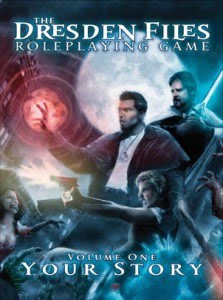
Based on Jim Butcher's New York Times Bestselling urban fantasy series Evil Hat Productions' Dresden Files rpg is proof positive that small independent companies can make games that look, feel, and play like those made by the big corporations. Dresden Files uses an adapted version of the FATE rules system to create an easy to play game that incorporates player involvement beyond mere character creation. The entire group gets together to create the setting, the stakes, and the opposition that will occur in the campaign. The systems are innovative and the planning sessions are as fun as typical rpg game play sessions.


5) Deathwatch

For years fans of the Warhammer 40K Universe have awaited a role playing game where we could explore our own stories in the Dark Millenium. Dark Heresy satisfied that need for many, but for those of us who find 40k to be synonymous with "Space Marines" Dark Heresy didn't quite scratch that itch. Fantasy Flight Games' release of Deathwatch satisfies that desire quite nicely. Now players who recreate tactical skirmishes on their kitchen table tops where Ultramarines face off against the terrors of the Warp can experience the struggles of the individual Space Marine as he serves the Emperor and protects the remnants of human empire.

What more can you ask for really? A good rules system with a beautiful rulebook filled with detailed narrative information? Oh...this has that too.

Now all I need is an Eldar 40K rpg and my world will be complete.


4) Gamma World

For decades TSRs Gamma World has been a kind of awkward stepchild of D&D. The game has always had interesting ideas, and has had a couple of quality releases, but it never seemed to receive the corporate marketing support that it deserved. When Wizards of the Coast released the latest version of Gamma World, written using the 4th Edition D&D rules, they could have treated it as it had been treated in the past. They could have published a single volume with little fan fare, or released a game that lacked mechanical similarities to the company's flagship rpg. Instead Wizards created a product that they fully promoted that had monsters that were compatible with the 4th Edition rules set.

They also released a game that is one of the most entertaining gaming experiences around. If you've ever wanted to play around in a post-apocalyptic wasteland as a Pyrokinetic Yeti, as a Telekinetic Plant, or as one of a number of other combinations, then this is the game for you.


3) Castle Ravenloft

With Castle Raventloft, Wizards of the Coast managed to create an entertaining cooperative dungeon crawl board game that was also a perfect introduction to the role playing game hobby. As with super hero games, I am a dungeon crawl board game completist. When I purchased Castle Ravenloft, I expected it to be a good game, instead it was a great game. This is easily one of the best dungeon crawl games ever published. It is no surprise that the initial print run of the game sold out rapidly and forced Wizards of the Coast to delay the production of a similar follow up board game just to ensure there were sufficient copies of this game to go around.


2) Smallville Role Playing Game

I bought this game for two reasons. First, I am a super hero game completist. I own every published super hero role playing game to date, and this was a must have for that reason alone. Second, Cam Banks was one of the lead designers on the game. Banks has done some excellent work in the past on Dragonlance game products, as well as on the Supernatural RPG, and I was interested to see how he would treat super hero soap opera action.

The resulting game is one of the most exciting and innovative role playing games ever produced. From character creation to how the games mechanical resolution system emphasizes character's relationships to each other, this game breaks new ground in the role playing game field. The fact that it does all of this while creating a game that is easy to learn and understand due to its relatively simple mechanics is a wonder. If your mind was ever baffled by the concept of how a game could mechanically represent Superman while still providing mechanics that allow Lois Lane to meaningfully participate in play, then Bank's accomplishment with this game becomes even more clear. This is the first super hero rpg where playing a normal person is just as exciting and rewarding as playing the hero. Like Dresden Files this game incorporates player input in campaign and relationship creation.


1) D&D Essentials

I had been on the fence about playing 4th Edition D&D. I owned the books, but I was more than content to play in my 3.5 Eberron Game and my Pathfinder game -- then came Essentials. I was intrigued by the nostalgia appealing new Dungeons and Dragons: Starter Set that was reminiscent of the Metzger edition of the old D&D Basic Set. I read the box and was impressed by the manner in which it presented the D&D rules, but I was disappointed by some of the small errors and typos. This all changed when I read the Heroes of the Fallen Lands and Heroes of the Forgotten Kingdoms books. These books presented the new 4th edition rules not merely in a clear and easy to learn format, as was intended, but in an entertaining way as well. The narrative text made these fun to read, and it's not an easy task to make role playing game rules fun to read -- especially D&D rules. The entire product line is worth owning and broke the final layer of resistance I had to playing the 4th edition game. I am now a 4e fan and regularly run an Encounters session at my local game store. For the first time in years, I cannot wait to see what product Wizards releases next.

If you've ever wondered why D&D appeals to so many people, you cannot do much better than to start with the Essentials books.

*[edited 1/7/11 9:31 am]Thanks to Anonymous for pointing out the error in attribution. I could blame my error on the fact that I have been enjoying reading/running Parsley games lately, but that would be lame. Luke Crane is the mad genius behind Burning Wheel (or is he?). As penance, I will be buying another set of the three core books.

Tuesday, January 04, 2011

Ticket To Ride Adds Giant Monsters


Alan R Moon's Ticket to Ride is one of the best board game series of the past decade. The games combine easily understood rules, quick game play, quality game components, and "gateway" game appeal. Ticket to Ride was the game that established Days of Wonder as a prominent games manufacturer -- Memoir '44 proved they were here to stay. As the years have gone by, Days of Wonder has released a number of fun alternate versions and expansions to the original game. Most of them have been strong entries, and I have enjoyed them all, but none have excited me the way that the game's next offering has.


When I saw the announcement for Ticket to Ride: Alvin and Dexter my heart jumped a little. The high concept combination of classic train game with Giant Monsters and Alien Invaders is a sniper shot into my geek heart. The game expansion should be available in February, but you can read the rules for the expansion online today.

Monday, January 03, 2011

UK's Channel 4 Ranks D&D as 3rd Greatest Toy

Last year, on December 19th, Channel 4 aired a special hosted by Jonathan Ross discussing what he, a panel of experts, and popular vote thought were the 100 Greatest Toys. The show featured the 100 most popular toys and games in England, and my beloved D&D ranked 3rd on the list.

Looking at the list of toys and games, it quickly became apparent that D&D was being used as shorthand for Role Playing Games. RPGs were also the only category of game/toy that featured only one entry on the list. This just strikes me as off somehow. There are an abundance of wonderful RPGs that I think deserve notice, and it is debatable that D&D is even the best RPG available. It isn't really debatable that D&D created the role playing marketplace and its place as the first role playing game deserves quite a bit of recognition (pedantic discussions by patricidal game developers regarding pre-D&D role playing games aside), but should it have been the only game on the list?

What about DC Heroes, James Bond 007, Traveller, Call of Cthulhu to name just a few games that I think deserve mainstream recognition.

I can understand leaving a couple of great rpgs, like Pathfinder and Lamentations of the Flame Princess off the list as they are "pastiche versions" of games that precede their existence.

What are some games that you think deserve to be in the Top 100 games and toys of all time? How about just a list of the top 100 RPGs? I'll submit my list of the Top 30 RPGs, all of which will be games I have played, with some discussion of my criteria on Thursday.

Wednesday, December 29, 2010

Jim Ward, Creator of the First Science Fiction RPG, Needs Your Help

Jim Ward is one of the founding fathers of the role playing game hobby and the creator of the first Science Fiction role playing game, Metamorphosis Alpha. Ward's 1976 SF creation didn't merely extend the boundaries of roleplaying beyond the simulation of Fantasy novels, it offered a different style of play altogether.

Metamorphosis Alpha wasn't a game of far flung galactic empires or post-apocalyptic Earths. The game was set in a universe where interstellar travel was possible, but the game's action takes place on a single space craft. As the game's introduction describes it:

Mankind's urge to explore and expand its frontiers finally caused another push into the vastness of space -- first interplanetary, then interstellar. By the 23rd Century a great migration wave was spreading from Old Terra to the hundreds of inhabitable worlds which had been discovered in the Milky Way galaxy. During the next hundred years colonization ships of all types and descriptions went out to the stars, bearing seedling colonies seeking a better life. Many found their new homes -- for better or for worse -- but for one reason or another scores of these starships never reached their destination. This game is based on just such an event, the fact of a colony ship which became lost...

Ward's creation was more than a mere emulation of the fiction of Heinlein, Van Vogt, and Asimov, it contained it's own narrative ideas. These ideas allowed for a new experience in the role playing game genre. Players were still exploring multi-leveled complexes, dungeons if you will, but their reason for doing so was different. Instead of glory and wealth, the characters might be seeking mere survival or knowledge of a lost time.

Ward has contributed much to the hobby. He was the founding editor of Dragon Magazine, the creative force behind the Gamma World role playing game (a post-apocalyptic offshoot of Metamorphosis Alpha), and the Spellfire card game.

Sadly, Ward has been diagnosed with a serious neurological disorder. The condition is treatable, but the costs are significant and he needs the support of the gaming community. Visit the Friends of Starship Warden and do your part to help one of the original gamers.